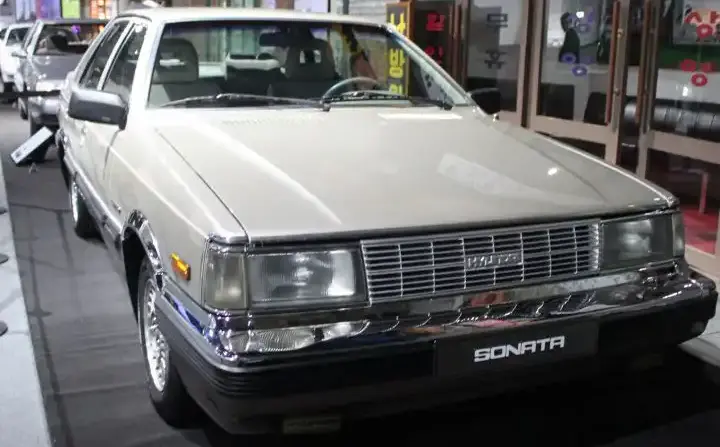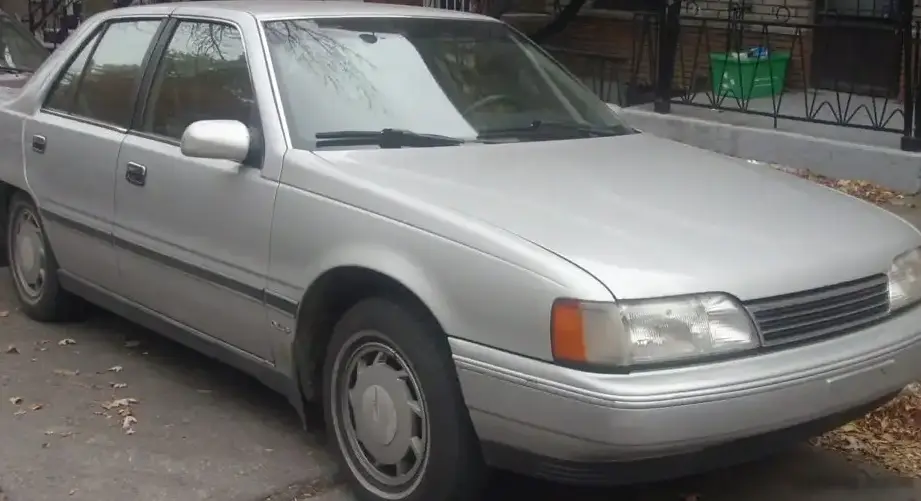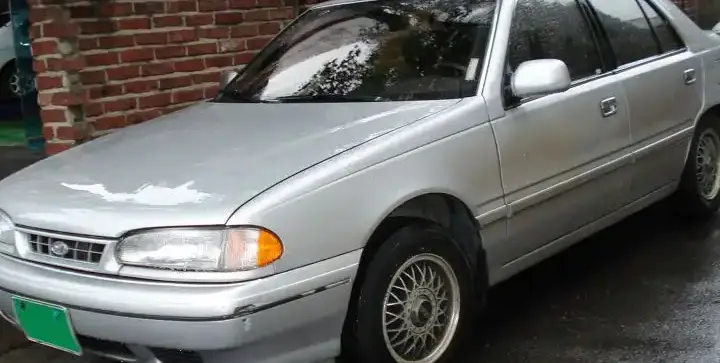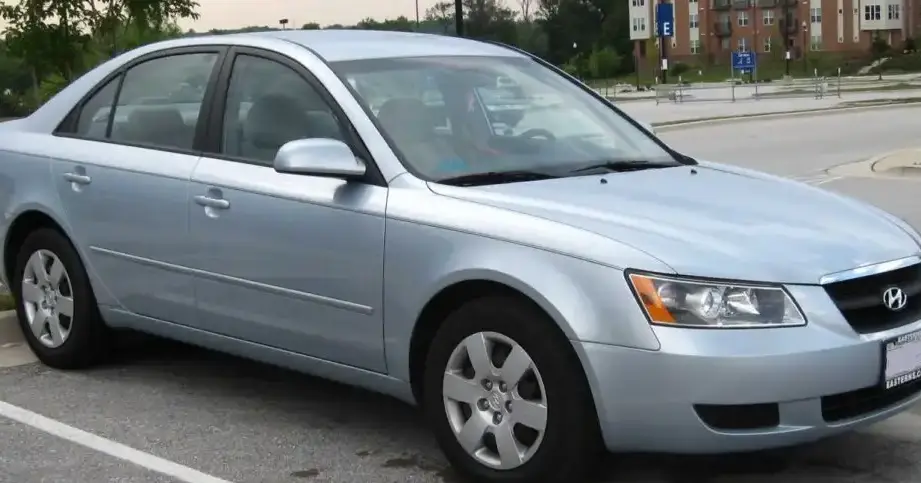
The Hyundai Sonata V (NF), produced between 2004 and 2007, represented a significant step forward for the South Korean automaker in the mid-size sedan segment. The NF generation, internally designated as the ‘NF’ platform, aimed to challenge established Japanese and American competitors with a combination of modern styling, improved interior space, and a focus on value. Within the NF lineup, the 2.0i 16V variant, producing 144 horsepower, served as the entry-level engine option in many markets, including North America, offering a balance between affordability and acceptable performance. This model was positioned below the more powerful 2.4L and V6 options, targeting buyers prioritizing fuel efficiency and a lower purchase price.
Technical Specifications
| Brand | Hyundai |
| Model | Sonata |
| Generation | Sonata V (NF) |
| Type (Engine) | 2.0i 16V (144 Hp) |
| Start of production | 2004 |
| End of production | 2007 |
| Powertrain Architecture | Internal Combustion engine |
| Body type | Sedan |
| Seats | 5 |
| Doors | 4 |
| Fuel consumption (urban) | 10.4 l/100 km (22.6 US mpg) |
| Fuel consumption (extra urban) | 6.6 l/100 km (35.6 US mpg) |
| Fuel Type | Petrol (Gasoline) |
| Acceleration 0 – 100 km/h | 10.5 sec |
| Acceleration 0 – 62 mph | 10.5 sec |
| Acceleration 0 – 60 mph | 10 sec |
| Maximum speed | 202 km/h (125.52 mph) |
| Weight-to-power ratio | 10.2 kg/Hp |
| Weight-to-torque ratio | 7.8 kg/Nm |
| Power | 144 Hp @ 6000 rpm |
| Torque | 189 Nm @ 4250 rpm (139.4 lb.-ft. @ 4250 rpm) |
| Engine layout | Front, Transverse |
| Engine Model/Code | Theta II / G4KA |
| Engine displacement | 1998 cm3 (121.93 cu. in.) |
| Number of cylinders | 4 |
| Engine configuration | Inline |
| Cylinder Bore | 86 mm (3.39 in.) |
| Piston Stroke | 86 mm (3.39 in.) |
| Compression ratio | 10.5:1 |
| Number of valves per cylinder | 4 |
| Fuel injection system | Multi-port manifold injection |
| Engine aspiration | Naturally aspirated engine |
| Engine oil capacity | 4.3 l (4.54 US qt | 3.78 UK qt) |
| Coolant capacity | 7.3 l (7.71 US qt | 6.42 UK qt) |
| Kerb Weight | 1465 kg (3229.77 lbs.) |
| Max. weight | 2030 kg (4475.38 lbs.) |
| Max load | 565 kg (1245.61 lbs.) |
| Trunk (boot) space – minimum | 523 l (18.47 cu. ft.) |
| Fuel tank capacity | 70 l (18.49 US gal | 15.4 UK gal) |
| Length | 4800 mm (188.98 in.) |
| Width | 1832 mm (72.13 in.) |
| Height | 1475 mm (58.07 in.) |
| Wheelbase | 2730 mm (107.48 in.) |
| Front track | 1565 mm (61.61 in.) |
| Rear track | 1550 mm (61.02 in.) |
| Ride height (ground clearance) | 160 mm (6.3 in.) |
| Drag coefficient (Cd) | 0.32 |
| Minimum turning circle | 12.0 m (39.37 ft.) |
| Drivetrain Architecture | Front wheel drive |
| Number of gears | 5 |
| Gearbox type | Manual transmission |
| Front suspension | Independent, McPherson with coil spring and anti-roll bar |
| Rear suspension | Independent multi-link with stabilizer |
| Front brakes | Ventilated discs |
| Rear brakes | Disc |
| Assisting systems | ABS (Anti-lock braking system) |
| Steering type | Steering rack and pinion |
| Tires size | 215/60 R16 |
| Wheel rims size | 6.5J x 16 |
Powertrain & Engine Architecture
The heart of the Sonata 2.0i is the Hyundai Theta II engine, specifically the G4KA code. This 1.998-liter inline-four cylinder engine utilizes a cast iron block with an aluminum cylinder head. It features dual overhead camshafts (DOHC) operating four valves per cylinder, contributing to its 16-valve configuration. Fuel delivery is managed by a multi-point fuel injection system, providing a balance between efficiency and performance. The Theta II engine was a significant improvement over previous Hyundai engines, offering increased refinement and durability. The 5-speed manual transmission paired with this engine was a standard offering, providing direct control over the engine’s power. While an automatic transmission was available, the manual was favored by drivers seeking a more engaging driving experience and slightly improved fuel economy.
Driving Characteristics
The 144 horsepower and 189 Nm (139.4 lb-ft) of torque produced by the 2.0i engine provided adequate, though not exhilarating, performance. Acceleration from 0 to 60 mph took approximately 10 seconds, making it competitive with other similarly sized and priced sedans. The manual transmission allowed for precise gear selection, but the engine’s relatively narrow powerband meant frequent shifting was necessary to maintain momentum, especially when overtaking or climbing hills. Compared to the more powerful 2.4L and V6 Sonata models, the 2.0i felt noticeably less responsive. However, its lighter weight and more efficient engine contributed to better fuel economy, making it a practical choice for daily commuting.
Equipment & Trim Levels
The 2.0i trim level typically included standard features such as air conditioning, power windows and locks, a basic audio system, and cloth upholstery. Safety features like dual front airbags and ABS were also standard. Optional extras included a sunroof, upgraded audio system, alloy wheels, and cruise control. Interior appointments were generally functional and durable, though not particularly luxurious. The dashboard layout was straightforward and easy to use, prioritizing practicality over aesthetic flair.
Chassis & Braking
The Sonata NF utilized a front-wheel-drive layout with an independent McPherson strut suspension in the front and an independent multi-link suspension in the rear. This suspension setup provided a comfortable ride quality, absorbing bumps and irregularities in the road surface effectively. Front disc brakes and rear disc brakes provided adequate stopping power, while ABS helped to maintain control during emergency braking situations. The steering was a rack-and-pinion system, offering reasonable precision and feedback.
Market Reception & Comparison
The Hyundai Sonata 2.0i was generally well-received by critics as a value-oriented option in the mid-size sedan segment. It offered a compelling combination of features, space, and fuel efficiency at a competitive price point. However, its performance was often criticized as being underwhelming compared to some of its rivals. Compared to the higher-trim Sonata models, the 2.0i offered a more economical choice, but at the expense of performance and some features. The 2.4L engine provided a noticeable performance boost, while the V6 offered even more power, but both came with a higher price tag and reduced fuel economy.
Legacy
The Hyundai Sonata NF 2.0i, while not the most powerful or luxurious version of the model, proved to be a reliable and affordable option for many buyers. The Theta II engine, in general, has a reputation for durability, and well-maintained examples of this powertrain can still be found on the road today. In the used car market, these Sonatas represent a budget-friendly choice for those seeking a practical and dependable mid-size sedan. While not a collector’s item, the NF generation Sonata played a crucial role in establishing Hyundai as a credible competitor in the global automotive market.