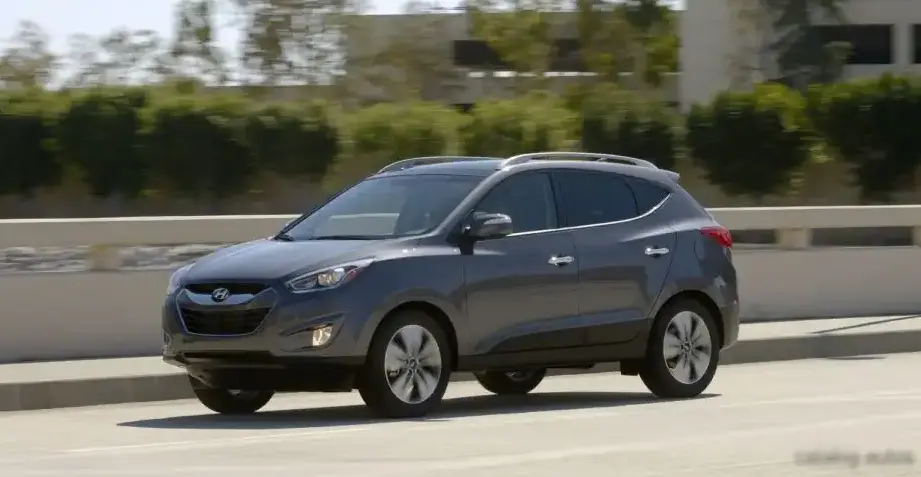
The Hyundai Tucson II (facelift, produced from September 2013 to 2015) 2.4 GDI (182 Hp) AWD Shiftronic represents a significant iteration of Hyundai’s popular compact SUV. This variant, positioned as a mid-range offering within the Tucson II lineup, combined a naturally aspirated 2.4-liter gasoline direct injection (GDI) engine with a six-speed automatic transmission and Hyundai’s all-wheel-drive system. It aimed to provide a balance of performance, fuel efficiency, and all-weather capability for North American and other markets where SUVs were gaining prominence. The facelift brought updated styling, improved interior materials, and enhanced technology compared to the pre-2013 Tucson models.
| Brand | Hyundai |
| Model | Tucson |
| Generation | Tucson II (facelift 2013) |
| Type (Engine) | 2.4 GDI (182 Hp) AWD Shiftronic |
| Start of production | September, 2013 |
| End of production | 2015 |
| Powertrain Architecture | Internal Combustion engine |
| Body type | SUV |
| Seats | 5 |
| Doors | 5 |
| Fuel consumption (urban) | 11.8 l/100 km (19.9 US mpg) |
| Fuel consumption (extra urban) | 9.4 l/100 km (25 US mpg) |
| Fuel consumption (combined) | 10.7 l/100 km (22 US mpg) |
| Fuel Type | Petrol (Gasoline) |
| Emission standard | ULEV |
| Weight-to-power ratio | 8.6 kg/Hp |
| Weight-to-torque ratio | 6.5 kg/Nm |
| Power | 182 Hp @ 6000 rpm |
| Torque | 240 Nm @ 4000 rpm (177.01 lb.-ft. @ 4000 rpm) |
| Engine layout | Front, Transverse |
| Engine Model/Code | Theta II |
| Engine displacement | 2359 cm3 (143.96 cu. in.) |
| Number of cylinders | 4 |
| Engine configuration | Inline |
| Cylinder Bore | 88 mm (3.46 in.) |
| Piston Stroke | 97 mm (3.82 in.) |
| Compression ratio | 11.3:1 |
| Number of valves per cylinder | 4 |
| Fuel injection system | Direct injection |
| Engine aspiration | Naturally aspirated |
| Valvetrain | DOHC, D-CVVT |
| Engine oil capacity | 4.8 l (5.07 US qt | 4.22 UK qt) |
| Coolant capacity | 7.1 l (7.5 US qt | 6.25 UK qt) |
| Kerb Weight | 1560 kg (3439.21 lbs.) |
| Max. weight | 2090 kg (4607.66 lbs.) |
| Max load | 530 kg (1168.45 lbs.) |
| Trunk (boot) space – minimum | 728 l (25.71 cu. ft.) |
| Trunk (boot) space – maximum | 1580 l (55.8 cu. ft.) |
| Fuel tank capacity | 58 l (15.32 US gal | 12.76 UK gal) |
| Permitted trailer load (braked) | 907 kg (1999.59 lbs.) |
| Permitted trailer load (unbraked) | 454 kg (1000.9 lbs.) |
| Length | 4400 mm (173.23 in.) |
| Width | 1820 mm (71.65 in.) |
| Height | 1685 mm (66.34 in.) |
| Wheelbase | 2640 mm (103.94 in.) |
| Front track | 1585 mm (62.4 in.) |
| Rear track | 1586 mm (62.44 in.) |
| Ride height (ground clearance) | 170 mm (6.69 in.) |
| Drag coefficient (Cd) | 0.37 |
| Minimum turning circle | 10.6 m (34.78 ft.) |
| Drivetrain | All wheel drive (4×4) |
| Number of gears | 6 |
| Gearbox type | Automatic transmission Shiftronic |
| Front suspension | Independent, McPherson with coil spring and anti-roll bar |
| Rear suspension | Independent multi-link with stabilizer |
| Front brakes | Ventilated discs |
| Rear brakes | Disc |
| Steering type | Steering rack and pinion |
| Power steering | Electric |
| Tire size | 225/60 R17; 225/55 R18 |
| Wheel rim size | 6.5J x 17; 6.5J x 18 |
Powertrain & Engine Architecture
The heart of this Tucson variant is the Hyundai Theta II 2.4-liter inline-four cylinder engine. This engine, designated as a GDI (Gasoline Direct Injection) unit, utilizes direct fuel injection technology to deliver fuel directly into the combustion chamber, improving efficiency and power output. The Theta II engine family was a significant step forward for Hyundai, offering improved refinement and performance compared to earlier designs. The engine features a double overhead camshaft (DOHC) valvetrain with Hyundai’s D-CVVT (Dual Continuously Variable Valve Timing) system, optimizing valve timing for both intake and exhaust to enhance performance across the rev range. The 2.4 GDI produces 182 horsepower at 6000 rpm and 240 Nm (177 lb-ft) of torque at 4000 rpm. The Shiftronic six-speed automatic transmission provides smooth gear changes and allows for manual gear selection, offering drivers some control over the driving experience. The AWD system is primarily front-wheel drive, engaging the rear wheels when slip is detected, providing enhanced traction in adverse conditions.
Driving Characteristics
The 2.4 GDI engine paired with the six-speed automatic delivers adequate performance for everyday driving. Acceleration is reasonably brisk, but it doesn’t offer the sporty feel of some competitors with turbocharged engines or more powerful V6 options. The automatic transmission is tuned for comfort and fuel efficiency, with gear changes being smooth and unobtrusive. The AWD system provides confident handling in slippery conditions, making it a suitable choice for regions with inclement weather. Compared to the base 2.0-liter engine option, the 2.4 GDI offers a noticeable improvement in power and responsiveness. However, it falls short of the performance offered by the optional 2.0-liter turbocharged engine available in some markets. The gear ratios are optimized for cruising, providing a relaxed driving experience on the highway, but may require more frequent downshifts when overtaking or climbing hills.
Equipment & Trim Levels
The 2.4 GDI AWD Shiftronic trim typically included a good level of standard equipment. This generally included features such as air conditioning, power windows and locks, a touchscreen infotainment system with Bluetooth connectivity, a rearview camera, and alloy wheels. Higher trim levels offered additional features like leather upholstery, a panoramic sunroof, heated front seats, and a premium audio system. Interior upholstery was typically cloth on the base trims, with leather options available on higher-spec models. The dashboard layout was functional and user-friendly, with logically placed controls. Optional extras included navigation systems, advanced safety features, and various cosmetic enhancements.
Chassis & Braking
The Tucson II utilizes a McPherson strut front suspension and an independent multi-link rear suspension. This setup provides a comfortable ride quality while maintaining reasonable handling characteristics. Stabilizer bars are fitted to both the front and rear axles to reduce body roll during cornering. The braking system consists of ventilated disc brakes at the front and solid disc brakes at the rear. Anti-lock braking system (ABS) is standard, enhancing safety by preventing wheel lockup during hard braking. The steering is electrically assisted, providing light and precise steering feel.
Market Reception & Comparison
The Hyundai Tucson II 2.4 GDI AWD Shiftronic was generally well-received by critics as a practical and well-equipped compact SUV. It offered a good balance of features, performance, and fuel economy. However, some reviewers noted that the engine lacked the refinement and power of some competitors. Fuel economy figures were competitive for its class, averaging around 22 mpg in combined driving. Compared to other trims in the Tucson lineup, the 2.4 GDI offered a step up in performance and refinement compared to the base 2.0-liter engine, but at a higher price point. Reliability was generally good, with few major issues reported.
Legacy
The Hyundai Tucson II, particularly the 2.4 GDI variants, established Hyundai as a serious contender in the compact SUV segment. The Theta II engine proved to be a reliable and durable powerplant, and many examples are still on the road today. While not without its minor quirks, the 2.4 GDI Shiftronic offers a comfortable and practical driving experience. In the used car market, these Tucsons represent a good value proposition, offering a lot of features for the price. Regular maintenance, including timely oil changes and fluid checks, is crucial for ensuring the long-term reliability of this powertrain.