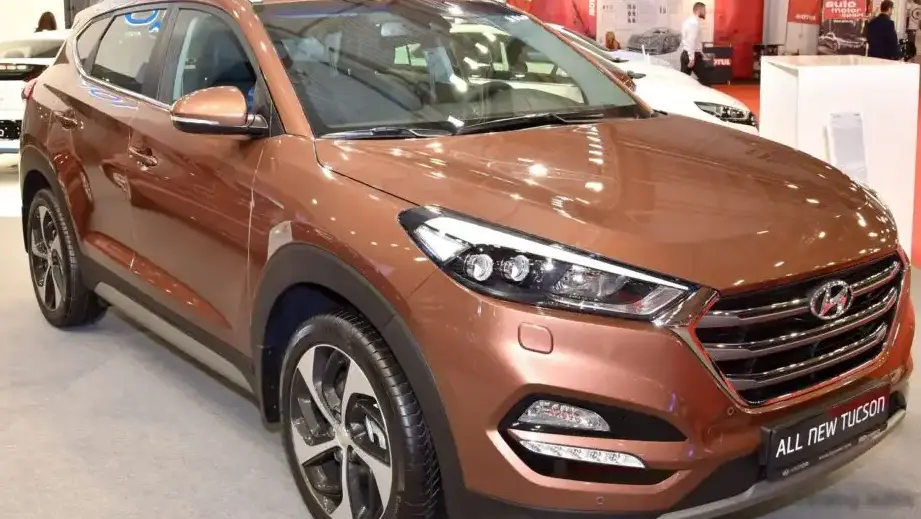
The Hyundai Tucson III 1.6 GDI, producing 132 horsepower, was a key variant in the third generation of Hyundai’s popular compact SUV, sold from 2015 to 2018. Positioned as an entry-level to mid-range option within the Tucson III lineup, it offered a balance of fuel efficiency and practicality for buyers seeking a versatile family vehicle. This model played a significant role in expanding Hyundai’s presence in the European and global SUV markets, offering a competitive alternative to established Japanese and European brands.
Technical Specifications
| Brand | Hyundai |
| Model | Tucson |
| Generation | Tucson III |
| Type (Engine) | 1.6 GDI (132 Hp) |
| Start of production | 2015 |
| End of production | 2018 |
| Powertrain Architecture | Internal Combustion engine |
| Body type | SUV |
| Seats | 5 |
| Doors | 5 |
| Fuel consumption (urban) | 8.6 l/100 km (27.4 US mpg, 32.8 UK mpg, 11.6 km/l) |
| Fuel consumption (extra urban) | 5.6 l/100 km (42 US mpg, 50.4 UK mpg, 17.9 km/l) |
| Fuel consumption (combined) | 6.7 l/100 km (35.1 US mpg, 42.2 UK mpg, 14.9 km/l) |
| CO2 emissions | 156 g/km |
| Fuel Type | Petrol (Gasoline) |
| Acceleration 0 – 100 km/h | 11.5 sec |
| Acceleration 0 – 62 mph | 11.5 sec |
| Acceleration 0 – 60 mph | 10.9 sec |
| Maximum speed | 182 km/h (113.09 mph) |
| Emission standard | Euro 6 |
| Weight-to-power ratio | 10.4 kg/Hp, 95.7 Hp/tonne |
| Weight-to-torque ratio | 8.6 kg/Nm, 116.8 Nm/tonne |
| Power | 132 Hp @ 6300 rpm |
| Power per litre | 83 Hp/l |
| Torque | 161 Nm @ 4850 rpm (118.75 lb.-ft. @ 4850 rpm) |
| Engine layout | Front, Transverse |
| Engine Model/Code | G4FD |
| Engine displacement | 1591 cm3 (97.09 cu. in.) |
| Number of cylinders | 4 |
| Engine configuration | Inline |
| Cylinder Bore | 77 mm (3.03 in.) |
| Piston Stroke | 85.44 mm (3.36 in.) |
| Compression ratio | 11:1 |
| Number of valves per cylinder | 4 |
| Fuel injection system | Direct injection |
| Engine aspiration | Naturally aspirated engine |
| Valvetrain | DOHC |
| Engine oil capacity | 3.6 l (3.8 US qt | 3.17 UK qt) |
| Coolant | 7.7 l (8.14 US qt | 6.78 UK qt) |
| Kerb Weight | 1379 kg (3040.17 lbs.) |
| Max. weight | 1895 kg (4177.76 lbs.) |
| Max load | 516 kg (1137.59 lbs.) |
| Trunk (boot) space – minimum | 513 l (18.12 cu. ft.) |
| Trunk (boot) space – maximum | 1503 l (53.08 cu. ft.) |
| Fuel tank capacity | 62 l (16.38 US gal | 13.64 UK gal) |
| Max. roof load | 100 kg (220.46 lbs.) |
| Permitted trailer load with brakes (12%) | 1400 kg (3086.47 lbs.) |
| Permitted trailer load without brakes | 650 kg (1433 lbs.) |
| Length | 4475 mm (176.18 in.) |
| Width | 1850 mm (72.83 in.) |
| Height | 1655 mm (65.16 in.) |
| Wheelbase | 2670 mm (105.12 in.) |
| Front track | 1604-1608 mm (63.15 – 63.31 in.) |
| Rear (Back) track | 1615-1620 mm (63.58 – 63.78 in.) |
| Ride height (ground clearance) | 172 mm (6.77 in.) |
| Minimum turning circle (turning diameter) | 10.6 m (34.78 ft.) |
| Drivetrain Architecture | The Internal combustion engine (ICE) drives the front wheels of the vehicle. |
| Drive wheel | Front wheel drive |
| Number of gears and type of gearbox | 6 gears, manual transmission |
| Front suspension | Independent type McPherson |
| Rear suspension | Independent multi-link suspension |
| Front brakes | Ventilated discs |
| Rear brakes | Disc |
| Assisting systems | ABS (Anti-lock braking system) |
| Steering type | Steering rack and pinion |
| Tires size | 215/70 R16; 225/60 R17; 245/45 R19 |
| Wheel rims size | 6.5J x 16; 7.0J x 17; 7.5J x 19 |
INTRODUCTION
The Hyundai Tucson III 1.6 GDI, launched in 2015, represented a significant step forward for Hyundai in the competitive compact SUV segment. Built on the 1HX0 platform (shared with the Kia Sportage), this variant was specifically tailored for markets prioritizing fuel economy and affordability. The 1.6 GDI engine was a relatively new addition to Hyundai’s lineup, designed to offer a balance between performance and efficiency. This trim level served as a gateway into the Tucson III range, appealing to families and individuals seeking a practical and well-equipped vehicle without the higher price tag of the more powerful engine options.
Powertrain & Engine Architecture
At the heart of the Tucson III 1.6 GDI lies the G4FD engine, a 1.6-liter inline-four cylinder gasoline engine. This engine utilizes direct fuel injection (GDI) technology, which improves combustion efficiency and power output compared to traditional port fuel injection systems. The G4FD boasts a compression ratio of 11:1 and a double overhead camshaft (DOHC) valvetrain with four valves per cylinder. The engine’s design emphasizes reduced friction and optimized airflow for improved fuel economy. The 132 horsepower and 161 Nm (118.75 lb-ft) of torque are delivered at 6300 rpm and 4850 rpm respectively. Typically paired with a six-speed manual transmission, it was also available with a six-speed automatic transmission, though the automatic slightly impacted fuel economy. The automatic transmission featured a conventional torque converter and aimed for smooth shifts, prioritizing comfort over outright performance.
Driving Characteristics
The Tucson III 1.6 GDI, particularly in its manual transmission guise, offered a reasonably engaging driving experience. However, with 132 hp, acceleration was not its strong suit. The 0-60 mph time of around 10.9 seconds reflects this. The engine felt responsive enough for everyday driving, but overtaking maneuvers required careful planning. The automatic transmission, while providing convenience, further dulled acceleration due to its programming and the inherent efficiency losses of the torque converter. Gear ratios were tuned for fuel efficiency, meaning the engine often operated at lower RPMs during cruising. Compared to the 1.7 CRDi diesel or the 2.0-liter gasoline variants, the 1.6 GDI offered less outright power but a smoother, quieter operation. The suspension, tuned for comfort, provided a compliant ride, absorbing bumps and imperfections in the road well.
Equipment & Trim Levels
The 1.6 GDI trim typically came with a respectable level of standard equipment. Base models included air conditioning, power windows, central locking, and a basic audio system with USB connectivity. Higher trim levels, such as SE and Limited, added features like alloy wheels, a touchscreen infotainment system with navigation, rear parking sensors, and a reversing camera. Interior upholstery was typically cloth, with options for leather upgrades on higher trims. Safety features included ABS, Electronic Stability Control (ESC), and multiple airbags. Optional extras included a panoramic sunroof, heated seats, and advanced driver-assistance systems (ADAS) like lane departure warning and automatic emergency braking, depending on the market and year.
Chassis & Braking
The Tucson III utilized a front-wheel-drive layout as standard, with all-wheel drive available as an option on some trims. The front suspension employed an independent McPherson strut setup, while the rear featured an independent multi-link suspension. This configuration provided a good balance of ride comfort and handling. Braking duties were handled by ventilated discs at the front and solid discs at the rear. ABS (Anti-lock Braking System) was standard across the range, enhancing braking performance and stability. Steering was rack and pinion, providing precise and responsive control. The chassis was designed to minimize weight while maintaining structural rigidity, contributing to improved fuel efficiency and handling.
Market Reception & Comparison
The Hyundai Tucson III 1.6 GDI was generally well-received by automotive critics as a practical and affordable SUV. Reviewers praised its comfortable ride, spacious interior, and generous equipment levels for the price. However, the engine’s performance was often cited as a weakness, particularly when compared to more powerful alternatives. Fuel economy was a strong point, with combined figures around 35.1 US mpg being competitive in its class. Compared to the diesel variants, the 1.6 GDI offered lower running costs in terms of fuel, but potentially higher maintenance costs due to the complexities of the GDI system. Against competitors like the Nissan Qashqai and Kia Sportage, the Tucson III 1.6 GDI offered a compelling value proposition.
Legacy
The Hyundai Tucson III 1.6 GDI has proven to be a relatively reliable vehicle in the used car market. The G4FD engine, while requiring regular maintenance, is generally durable. However, owners should be aware of potential issues with the direct injection system, such as carbon buildup on the intake valves, which can affect performance over time. The six-speed automatic transmission has also been reported to have occasional issues, though these are not widespread. Today, the Tucson III 1.6 GDI represents a good value for buyers seeking a practical and affordable compact SUV, offering a comfortable ride and a decent level of equipment. Its fuel efficiency and relatively low running costs make it an attractive option for those seeking a budget-friendly family vehicle.