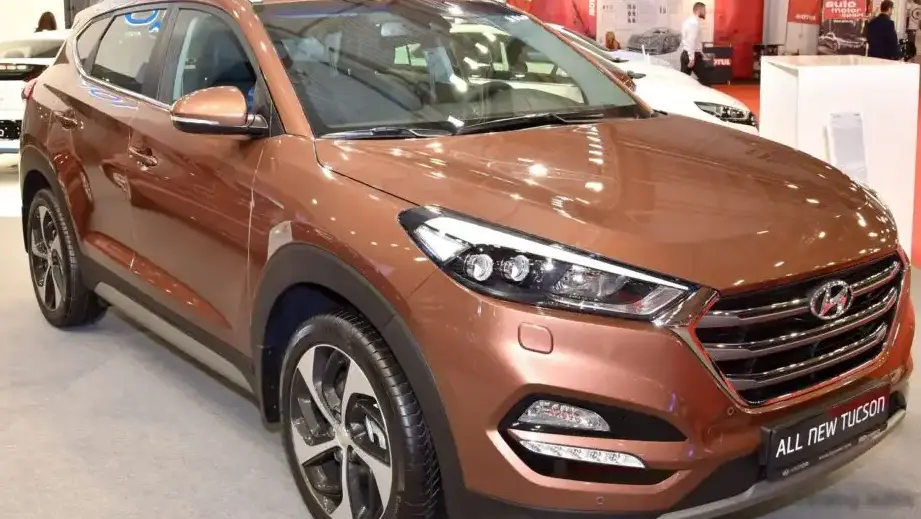
The Hyundai Tucson III 2.0 GDI (164 Hp) SHIFTRONIC, produced from April 2015 to 2018, represents a significant iteration of Hyundai’s popular compact SUV. Positioned as a mid-range offering within the Tucson III generation (internally designated TL), this variant combined a naturally aspirated 2.0-liter gasoline direct injection (GDI) engine with a six-speed automatic transmission featuring Hyundai’s SHIFTRONIC manual shift mode. It aimed to balance fuel efficiency with adequate performance for everyday driving, appealing to a broad customer base seeking a practical and comfortable SUV. The Tucson III itself was a crucial model for Hyundai, building upon the success of its predecessors and solidifying the brand’s reputation for value and reliability in the increasingly competitive crossover segment.
Technical Specifications
| Brand | Hyundai |
| Model | Tucson |
| Generation | Tucson III |
| Type (Engine) | 2.0 GDI (164 Hp) SHIFTRONIC |
| Start of production | April, 2015 |
| End of production | 2018 |
| Powertrain Architecture | Internal Combustion engine |
| Body type | SUV |
| Seats | 5 |
| Doors | 5 |
| Fuel consumption (economy) – urban (EPA) | 10.1 l/100 km (23.3 US mpg, 28 UK mpg, 9.9 km/l) |
| Fuel consumption (economy) – extra urban (EPA) | 7.6 l/100 km (30.9 US mpg, 37.2 UK mpg, 13.2 km/l) |
| Fuel consumption (economy) – combined (EPA) | 9 l/100 km (26.1 US mpg, 31.4 UK mpg, 11.1 km/l) |
| Fuel Type | Petrol (Gasoline) |
| Weight-to-power ratio | 9.2 kg/Hp, 108.8 Hp/tonne |
| Weight-to-torque ratio | 7.4 kg/Nm, 135.9 Nm/tonne |
| Power | 164 Hp @ 6200 rpm |
| Power per litre | 82 Hp/l |
| Torque | 205 Nm @ 4000 rpm (151.2 lb.-ft. @ 4000 rpm) |
| Engine layout | Front, Transverse |
| Engine Model/Code | Nu / G4NC |
| Engine displacement | 1999 cm3 (121.99 cu. in.) |
| Number of cylinders | 4 |
| Engine configuration | Inline |
| Cylinder Bore | 81 mm (3.19 in.) |
| Piston Stroke | 97 mm (3.82 in.) |
| Compression ratio | 11.5:1 |
| Number of valves per cylinder | 4 |
| Fuel injection system | Direct injection |
| Engine aspiration | Naturally aspirated engine |
| Valvetrain | DOHC, D-CVVT |
| Engine oil capacity | 4 l (4.23 US qt | 3.52 UK qt) |
| Coolant | 7.9 l (8.35 US qt | 6.95 UK qt) |
| Kerb Weight | 1508-1560 kg (3324.57 – 3439.21 lbs.) |
| Max. weight | 2080 kg (4585.62 lbs.) |
| Max load | 520-572 kg (1146.4 – 1261.04 lbs.) |
| Trunk (boot) space – minimum | 877 l (30.97 cu. ft.) |
| Trunk (boot) space – maximum | 1754 l (61.94 cu. ft.) |
| Fuel tank capacity | 62 l (16.38 US gal | 13.64 UK gal) |
| Max. roof load | 100 kg (220.46 lbs.) |
| Permitted trailer load with brakes (12%) | 680 kg (1499.14 lbs.) |
| Permitted trailer load without brakes | 454 kg (1000.9 lbs.) |
| Length | 4475 mm (176.18 in.) |
| Width | 1850 mm (72.83 in.) |
| Height | 1650 mm (64.96 in.) |
| Wheelbase | 2670 mm (105.12 in.) |
| Front track | 1608 mm (63.31 in.) |
| Rear (Back) track | 1620 mm (63.78 in.) |
| Front overhang | 910 mm (35.83 in.) |
| Rear overhang | 895 mm (35.24 in.) |
| Ride height (ground clearance) | 162 mm (6.38 in.) |
| Drag coefficient (Cd) | 0.33 |
| Minimum turning circle (turning diameter) | 10.6 m (34.78 ft.) |
| Approach angle | 17.2° |
| Departure angle | 23.9° |
| Drivetrain Architecture | The Internal combustion engine (ICE) drives the front wheels of the vehicle. |
| Drive wheel | Front wheel drive |
| Number of gears and type of gearbox | 6 gears, automatic transmission SHIFTRONIC |
| Front suspension | Independent, type McPherson with coil spring and anti-roll bar |
| Rear suspension | Independent multi-link spring suspension with stabilizer |
| Front brakes | Ventilated discs, 305×25 mm |
| Rear brakes | Disc, 302×10 mm |
| Assisting systems | ABS (Anti-lock braking system) |
| Steering type | Steering rack and pinion |
| Power steering | Electric Steering |
| Tires size | 225/60 R17 |
| Wheel rims size | 7J x 17 |
Powertrain & Engine Architecture
The heart of the Tucson III 2.0 GDI SHIFTRONIC is Hyundai’s Nu family of engines, specifically the G4NC code. This 1999cc inline-four cylinder engine utilizes gasoline direct injection (GDI) technology, injecting fuel directly into the combustion chamber for improved efficiency and power. The G4NC features a double overhead camshaft (DOHC) valvetrain with Hyundai’s Dual Continuously Variable Valve Timing (D-CVVT) system, optimizing valve timing for varying engine speeds and loads. This contributes to a broader torque curve and improved responsiveness. The engine produces 164 horsepower at 6200 rpm and 205 Nm (151.2 lb-ft) of torque at 4000 rpm. Paired with this engine is a six-speed automatic transmission with Hyundai’s SHIFTRONIC feature, allowing drivers to manually select gears for more control. The transmission is designed for smooth shifting and efficient power delivery.
Driving Characteristics
The 2.0 GDI SHIFTRONIC Tucson offers a comfortable and predictable driving experience. While not particularly sporty, the 164 hp engine provides adequate power for everyday driving situations, including highway merging and passing. The SHIFTRONIC transmission allows for some driver engagement, but it’s primarily geared towards fuel efficiency and ease of use. Compared to the more powerful 1.6L Turbo or diesel variants available in some markets, this version feels less urgent in its acceleration. The automatic transmission’s gear ratios are tuned for economy, meaning it doesn’t always hold gears as long as a performance-oriented transmission would. However, this contributes to quieter operation and better fuel consumption. The front-wheel-drive configuration provides decent traction in normal conditions, but lacks the all-weather capability of available all-wheel-drive models.
Equipment & Trim Levels
The 2.0 GDI SHIFTRONIC trim typically included standard features such as air conditioning, power windows and locks, a touchscreen infotainment system with Bluetooth connectivity, and a rearview camera. Higher trim levels added features like leather upholstery, heated front seats, a panoramic sunroof, and advanced safety technologies such as lane departure warning and automatic emergency braking. Interior upholstery was generally cloth on base models, with leather options available on higher trims. Dashboard configuration was consistent across the range, featuring a modern and functional design. Optional extras included navigation systems, premium audio systems, and various cosmetic enhancements.
Chassis & Braking
The Tucson III utilizes a McPherson strut front suspension and a multi-link rear suspension, providing a comfortable ride and reasonable handling characteristics. The suspension is tuned for comfort rather than outright sportiness. Braking duties are handled by ventilated discs on the front wheels and solid discs on the rear. Anti-lock Braking System (ABS) is standard. The front stabilizer bar helps to reduce body roll during cornering. The chassis is designed to provide a stable and predictable driving experience, prioritizing comfort and safety.
Market Reception & Comparison
The Hyundai Tucson III 2.0 GDI SHIFTRONIC was generally well-received by critics as a practical and well-equipped SUV. Its fuel economy was considered competitive within its class, although not class-leading. Reliability was generally good, with few widespread issues reported. Compared to the 1.6L Turbo variant, the 2.0 GDI offered a smoother, more linear power delivery, but lacked the turbo’s extra punch. Compared to diesel options, it offered lower maintenance costs but sacrificed fuel efficiency. The automatic transmission was praised for its smoothness, but some reviewers found it to be somewhat hesitant in certain situations.
Legacy
The Hyundai Tucson III 2.0 GDI SHIFTRONIC powertrain has proven to be relatively reliable in the long term. The Nu engine family is known for its durability, and the six-speed automatic transmission has a good track record. In the used car market, these models represent a good value proposition, offering a comfortable and well-equipped SUV at an affordable price. Regular maintenance, including oil changes and timing belt replacements (where applicable), is crucial for ensuring long-term reliability. The Tucson III continues to be a popular choice for buyers seeking a practical and dependable compact SUV.