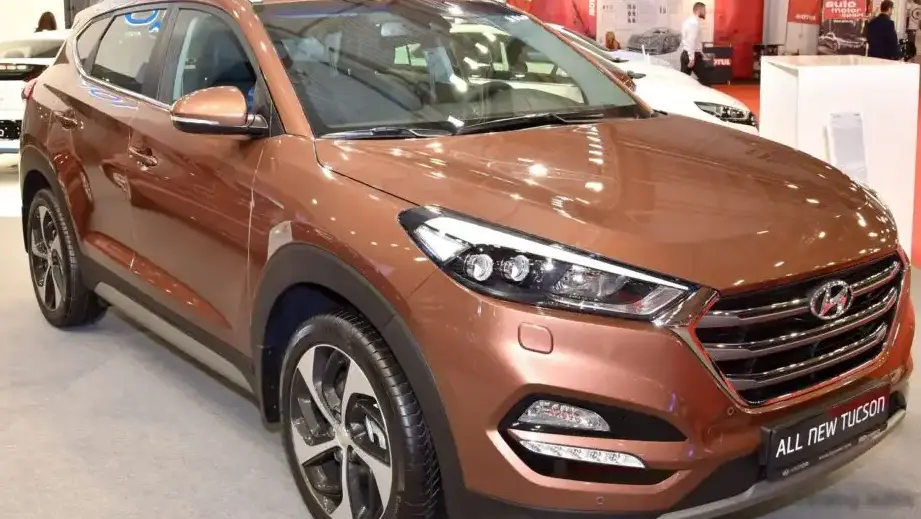
The Hyundai Tucson III 2.0 MPI (153 Hp) was a popular configuration of Hyundai’s third-generation Tucson compact SUV, produced from 2015 to 2018. Positioned as a mainstream offering within the Tucson III lineup – which also included diesel and more powerful gasoline options – this variant aimed to provide a balance of affordability, fuel efficiency, and practicality for family buyers. It was primarily sold in markets where gasoline engines remained dominant, including North America and parts of Latin America. The Tucson III, internally designated as the TL, represented a significant step forward in design and refinement for Hyundai, moving the Tucson into a more competitive segment against established rivals like the Honda CR-V and Toyota RAV4.
Technical Specifications
| Brand | Hyundai |
| Model | Tucson |
| Generation | Tucson III |
| Type (Engine) | 2.0 MPI (153 Hp) |
| Start of production | 2015 |
| End of production | 2018 |
| Powertrain Architecture | Internal Combustion engine |
| Body type | SUV |
| Seats | 5 |
| Doors | 5 |
| Fuel consumption (urban) | 10.7 l/100 km (22 US mpg, 26.4 UK mpg, 9.3 km/l) |
| Fuel consumption (extra urban) | 6.3 l/100 km (37.3 US mpg, 44.8 UK mpg, 15.9 km/l) |
| Fuel consumption (combined) | 7.9 l/100 km (29.8 US mpg, 35.8 UK mpg, 12.7 km/l) |
| CO2 emissions | 184 g/km |
| Fuel Type | Petrol (Gasoline) |
| Weight-to-power ratio | 9.2 kg/Hp, 108.5 Hp/tonne |
| Weight-to-torque ratio | 7.3 kg/Nm, 136.2 Nm/tonne |
| Power | 153 Hp @ 6200 rpm |
| Power per litre | 76.5 Hp/l |
| Torque | 192 Nm @ 4000 rpm (141.61 lb.-ft. @ 4000 rpm) |
| Engine layout | Front, Transverse |
| Engine Model/Code | Nu / G4NA |
| Engine displacement | 1999 cm3 (121.99 cu. in.) |
| Number of cylinders | 4 |
| Engine configuration | Inline |
| Cylinder Bore | 81 mm (3.19 in.) |
| Piston Stroke | 97 mm (3.82 in.) |
| Compression ratio | 10.3:1 |
| Number of valves per cylinder | 4 |
| Fuel injection system | Multi-port manifold injection |
| Engine aspiration | Naturally aspirated engine |
| Valvetrain | DOHC, D-CVVT |
| Engine oil capacity | 4 l (4.23 US qt | 3.52 UK qt) |
| Coolant | 7.4 l (7.82 US qt | 6.51 UK qt) |
| Kerb Weight | 1410-1572 kg (3108.52 – 3465.67 lbs.) |
| Max. weight | 2070 kg (4563.57 lbs.) |
| Max load | 498-660 kg (1097.9 – 1455.05 lbs.) |
| Trunk (boot) space – minimum | 488 l (17.23 cu. ft.) |
| Trunk (boot) space – maximum | 1478 l (52.2 cu. ft.) |
| Fuel tank capacity | 62 l (16.38 US gal | 13.64 UK gal) |
| Max. roof load | 100 kg (220.46 lbs.) |
| Permitted trailer load with brakes (12%) | 1600 kg (3527.4 lbs.) |
| Permitted trailer load without brakes | 750 kg (1653.47 lbs.) |
| Permitted towbar download | 120 kg (264.55 lbs.) |
| Length | 4475 mm (176.18 in.) |
| Width | 1850 mm (72.83 in.) |
| Height | 1660 mm (65.35 in.) |
| Wheelbase | 2670 mm (105.12 in.) |
| Front track | 1608 mm (63.31 in.) |
| Rear (Back) track | 1620 mm (63.78 in.) |
| Ride height (ground clearance) | 172 mm (6.77 in.) |
| Minimum turning circle (turning diameter) | 10.6 m (34.78 ft.) |
| Approach angle | 17.9° |
| Departure angle | 24.5° |
| Ramp-over (brakeover) angle | 19.5° |
| Drivetrain Architecture | The Internal combustion engine (ICE) drives the front wheels of the vehicle. |
| Drive wheel | Front wheel drive |
| Number of gears and type of gearbox | 6 gears, manual transmission |
| Front suspension | Independent, type McPherson with coil spring and anti-roll bar |
| Rear suspension | Independent multi-link spring suspension with stabilizer |
| Front brakes | Ventilated discs, 305×25 mm |
| Rear brakes | Disc, 302×10 mm |
| Assisting systems | ABS (Anti-lock braking system) |
| Steering type | Steering rack and pinion |
| Power steering | Electric Steering |
| Tires size | 225/60 R17; 225/55 R18 |
| Wheel rims size | 7J x 17; 7J x 18 |
INTRODUCTION
The Hyundai Tucson III 2.0 MPI (153 Hp) represented a core offering in the Tucson range, produced between 2015 and 2018. Built on the Hyundai-Kia ‘TL’ platform (also underpinning the Kia Sportage of the same era), this version of the Tucson aimed to deliver a practical and affordable SUV experience. It served as the entry point to the Tucson III lineup in many markets, offering a balance between fuel economy and acceptable performance for everyday driving. The 2.0 MPI engine was a naturally aspirated four-cylinder, designed for reliability and ease of maintenance, making it a popular choice for buyers prioritizing long-term cost of ownership.
Powertrain & Engine Architecture
At the heart of the Tucson III 2.0 MPI is Hyundai’s Nu family of engines, specifically the G4NA code. This 1999cc (2.0-liter) inline-four cylinder engine utilizes multi-point fuel injection and a double overhead camshaft (DOHC) valvetrain with Hyundai’s Dual Continuous Variable Valve Timing (D-CVVT) technology. D-CVVT optimizes valve timing based on engine load and speed, improving both fuel efficiency and power delivery. The engine produces 153 horsepower at 6200 rpm and 192 Nm (141.61 lb-ft) of torque at 4000 rpm. The engine’s architecture is relatively simple, favoring durability over outright performance. The 6-speed manual transmission was standard, offering a direct connection to the engine. While an automatic transmission was available in some markets, the manual was often preferred for its efficiency and driver engagement.
Driving Characteristics
The 2.0 MPI engine, paired with the 6-speed manual transmission, provided adequate, though not exhilarating, performance. Acceleration from 0 to 60 mph was typically in the 9-10 second range. The engine felt most comfortable in the mid-range, offering sufficient power for highway merging and overtaking. Compared to the more powerful 1.6L Turbo GDI engine offered in some markets, the 2.0 MPI lacked the immediate punch of forced induction. However, it offered a smoother, more linear power delivery. The manual transmission featured well-spaced gear ratios, allowing drivers to keep the engine in its optimal power band. The front-wheel-drive configuration contributed to reasonable fuel economy, but also limited traction in adverse weather conditions.
Equipment & Trim Levels
The 2.0 MPI variant of the Tucson III typically came with a respectable level of standard equipment. Base models included air conditioning, power windows and locks, a basic audio system with USB connectivity, and steel wheels with wheel covers. Higher trim levels, often designated as ‘SE’ or ‘Limited’ depending on the market, added features such as alloy wheels, a touchscreen infotainment system with Bluetooth connectivity, a rearview camera, and cruise control. Optional extras included a panoramic sunroof, leather upholstery, and advanced safety features like lane departure warning and automatic emergency braking. Interior upholstery was typically cloth on base models, with leather available as an upgrade. The dashboard layout was functional and user-friendly, with a focus on ergonomics.
Chassis & Braking
The Tucson III utilized a McPherson strut front suspension and a multi-link rear suspension, providing a comfortable and controlled ride. Stabilizer bars were fitted to both axles to reduce body roll during cornering. Braking duties were handled by ventilated discs at the front and solid discs at the rear. Anti-lock Braking System (ABS) was standard. The suspension tuning was geared towards comfort rather than sporty handling, making it well-suited for everyday driving. The relatively modest power output of the 2.0 MPI engine meant that the braking system was generally adequate for the vehicle’s weight and performance.
Market Reception & Comparison
The Tucson III 2.0 MPI was generally well-received by automotive critics as a practical and affordable family SUV. It was praised for its comfortable ride, spacious interior, and good value for money. However, some reviewers noted that the engine lacked the refinement and performance of some of its rivals. Compared to the diesel variants of the Tucson III, the 2.0 MPI offered lower torque but better fuel economy in city driving. Against the more powerful gasoline options, it provided a more economical choice, albeit with a trade-off in performance. Fuel economy figures averaged around 29.8 US mpg (combined), making it a competitive option in its class.
Legacy
The Hyundai Tucson III 2.0 MPI has proven to be a reliable and durable vehicle, with many examples still on the road today. The Nu engine family is known for its longevity, provided it receives regular maintenance. Common issues are relatively minor, often related to wear and tear on suspension components or electrical systems. On the used car market, the 2.0 MPI variant represents a good value proposition, offering a practical and affordable SUV experience. Its simplicity and relatively low running costs make it an attractive option for budget-conscious buyers. The Tucson III, in general, helped solidify Hyundai’s reputation for building well-equipped and reliable vehicles, paving the way for the brand’s continued success in the global automotive market.