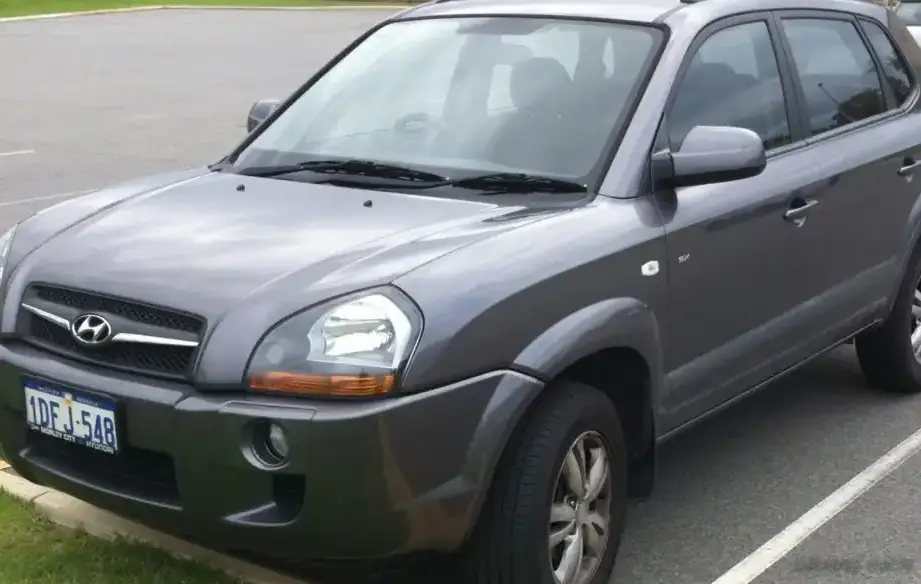
The Hyundai Tucson III (facelift, introduced in 2018) 1.6 CRDi 136 horsepower variant with a dual-clutch transmission (DCT) represented a significant offering in the increasingly competitive European and global compact SUV market. Produced from 2018 through April 2019, this model aimed to balance fuel efficiency, reasonable performance, and modern convenience features. It sat within the Tucson III range, which itself was based on the Hyundai-Kia K platform (HX10), offering a more refined and technologically advanced package compared to its predecessors. This specific configuration was positioned as a mid-range option, appealing to buyers seeking a diesel-powered SUV with automatic convenience without the higher price tag of the more powerful engine options.
Technical Specifications
| Brand | Hyundai |
| Model | Tucson |
| Generation | Tucson III (facelift 2018) |
| Type (Engine) | 1.6 CRDi (136 Hp) DCT |
| Start of production | 2018 |
| End of production | April, 2019 |
| Powertrain Architecture | Internal Combustion engine |
| Body type | SUV |
| Seats | 5 |
| Doors | 5 |
| Fuel consumption (urban) | 5 l/100 km (47 US mpg, 56.5 UK mpg, 20 km/l) |
| Fuel consumption (extra urban) | 5 l/100 km (47 US mpg, 56.5 UK mpg, 20 km/l) |
| Fuel consumption (combined) | 4.9 l/100 km (48 US mpg, 57.6 UK mpg, 20.4 km/l) |
| CO2 emissions | 129 g/km |
| Fuel Type | Diesel |
| Acceleration 0 – 100 km/h | 11.8 sec |
| Acceleration 0 – 62 mph | 11.8 sec |
| Acceleration 0 – 60 mph | 11.2 sec |
| Maximum speed | 180 km/h (111.85 mph) |
| Emission standard | Euro 6d – TEMP |
| Weight-to-power ratio | 11.2 kg/Hp, 89.2 Hp/tonne |
| Weight-to-torque ratio | 4.8 kg/Nm, 209.8 Nm/tonne |
| Power | 136 Hp @ 4000 rpm |
| Power per litre | 85.1 Hp/l |
| Torque | 320 Nm @ 2000-2250 rpm (236.02 lb.-ft. @ 2000-2250 rpm) |
| Engine layout | Front, Transverse |
| Engine Model/Code | D4FE |
| Engine displacement | 1598 cm3 (97.52 cu. in.) |
| Number of cylinders | 4 |
| Engine configuration | Inline |
| Cylinder Bore | 77 mm (3.03 in.) |
| Piston Stroke | 85.8 mm (3.38 in.) |
| Number of valves per cylinder | 4 |
| Fuel injection system | Diesel Commonrail |
| Engine aspiration | Turbocharger, Intercooler |
| Engine oil capacity | 4.4 l (4.65 US qt | 3.87 UK qt) |
| Coolant | 7.5 l (7.93 US qt | 6.6 UK qt) |
| Kerb Weight | 1525-1682 kg (3362.05 – 3708.18 lbs.) |
| Max. weight | 2145 kg (4728.92 lbs.) |
| Max load | 463-620 kg (1020.74 – 1366.87 lbs.) |
| Trunk (boot) space – minimum | 513 l (18.12 cu. ft.) |
| Trunk (boot) space – maximum | 1503 l (53.08 cu. ft.) |
| Fuel tank capacity | 62 l (16.38 US gal | 13.64 UK gal) |
| Max. roof load | 100 kg (220.46 lbs.) |
| Permitted trailer load with brakes (12%) | 1600 kg (3527.4 lbs.) |
| Permitted trailer load without brakes | 750 kg (1653.47 lbs.) |
| Permitted towbar download | 100 kg (220.46 lbs.) |
| Length | 4480 mm (176.38 in.) |
| Width | 1850 mm (72.83 in.) |
| Height | 1655 mm (65.16 in.) |
| Wheelbase | 2670 mm (105.12 in.) |
| Front track | 1604-1620 mm (63.15 – 63.78 in.) |
| Rear (Back) track | 1615-1631 mm (63.58 – 64.21 in.) |
| Ride height (ground clearance) | 172 mm (6.77 in.) |
| Drivetrain Architecture | The Internal combustion engine (ICE) drives the front wheels of the vehicle. |
| Drive wheel | Front wheel drive |
| Number of gears and type of gearbox | 7 gears, automatic transmission DCT |
| Front brakes | Ventilated discs |
| Rear brakes | Disc |
| Assisting systems | ABS (Anti-lock braking system) |
| Steering type | Steering rack and pinion |
| Power steering | Electric Steering |
INTRODUCTION
The 2018 facelift of the Hyundai Tucson III brought updated styling, enhanced safety features, and refined powertrain options. The 1.6 CRDi 136 hp DCT variant was a key component of this refresh, designed to appeal to European buyers prioritizing fuel economy and ease of driving. This engine, part of Hyundai’s ‘U2’ diesel family, was paired with a 7-speed dual-clutch transmission, offering quicker shifts and improved efficiency compared to traditional automatic gearboxes. The Tucson III, in general, aimed to elevate Hyundai’s presence in the compact SUV segment, competing with established rivals like the Nissan Qashqai, Kia Sportage, and Volkswagen Tiguan.
Powertrain & Engine Architecture
The heart of this Tucson variant is the D4FE 1.6-liter four-cylinder diesel engine. This engine utilizes a common-rail direct injection system, delivering fuel at extremely high pressure for optimized combustion. A turbocharger with an intercooler is employed to boost power and torque, mitigating the typical power deficit associated with smaller displacement diesel engines. The engine features four valves per cylinder and a variable geometry turbocharger (VGT) to enhance responsiveness across the rev range. The 7-speed dual-clutch transmission (DCT) is a crucial element, providing smooth and rapid gear changes. Unlike a conventional torque converter automatic, the DCT uses two separate clutches for odd and even gears, pre-selecting the next gear for near-instantaneous shifts. This contributes to both improved acceleration and fuel efficiency.
Driving Characteristics
The 136 hp 1.6 CRDi with the DCT delivers adequate, though not exhilarating, performance. Acceleration from 0-60 mph takes around 11.2 seconds, making it suitable for everyday driving but less ideal for frequent overtaking maneuvers. The DCT transmission contributes to a more engaging driving experience than a traditional automatic, with quick and precise shifts. However, some drivers noted a slight hesitation at low speeds or during initial acceleration. The engine’s peak torque of 320 Nm (236 lb-ft) is available from 2000-2250 rpm, providing sufficient pulling power for cruising and moderate loads. Compared to the higher-output 177 hp diesel variant, this 136 hp version feels noticeably less powerful, but it offers a smoother and more refined driving experience, particularly in urban environments. The manual transmission versions of the 1.6 CRDi offered slightly better fuel economy, but the DCT provided a significant convenience advantage.
Equipment & Trim Levels
The 1.6 CRDi 136 hp DCT Tucson typically came equipped with a respectable level of standard features. These included air conditioning, a touchscreen infotainment system with Bluetooth connectivity, alloy wheels, and a suite of safety features such as ABS, ESC (Electronic Stability Control), and multiple airbags. Higher trim levels added features like leather upholstery, a panoramic sunroof, heated seats, a rear-view camera, and advanced driver-assistance systems (ADAS) such as lane departure warning and automatic emergency braking. Interior upholstery was generally cloth on the base trims, upgrading to leather on higher specifications. Dashboard configuration was consistent across the range, featuring a modern and user-friendly layout.
Chassis & Braking
The Tucson III utilized a front-wheel-drive platform with independent suspension at the front (MacPherson strut) and a multi-link suspension at the rear. This setup provided a comfortable ride quality and decent handling characteristics. Braking systems consisted of ventilated discs at the front and solid discs at the rear. ABS (Anti-lock Braking System) was standard, ensuring safe and controlled braking in various conditions. Stabilizer bars were fitted both front and rear to reduce body roll during cornering. The suspension tuning was geared towards comfort rather than outright sportiness, prioritizing a smooth ride over sharp handling.
Market Reception & Comparison
The 1.6 CRDi 136 hp DCT Tucson received generally positive reviews, particularly for its fuel efficiency and comfortable ride. Critics praised the refined engine and the smooth operation of the DCT transmission. However, some reviewers noted that the engine could feel underpowered when fully loaded or when tackling steep inclines. Compared to the 177 hp diesel variant, the 136 hp version offered a more affordable entry point into the Tucson range, but at the expense of performance. Fuel economy was a key selling point, with combined figures averaging around 48 US mpg, making it a competitive option in its class. Reliability reports have been generally favorable, with few major issues reported with the engine or transmission.
Legacy
The Hyundai Tucson III 1.6 CRDi 136 hp DCT has proven to be a relatively reliable and durable vehicle in the used car market. The ‘U2’ diesel engine, while not without its share of particulate filter concerns (common to modern diesels), has generally demonstrated good longevity when properly maintained. The DCT transmission, if serviced according to Hyundai’s recommendations, has also proven to be robust. Today, these Tucsons represent a good value proposition for buyers seeking a practical, fuel-efficient, and well-equipped compact SUV. Their continued presence on the used car market is a testament to their overall build quality and enduring appeal.