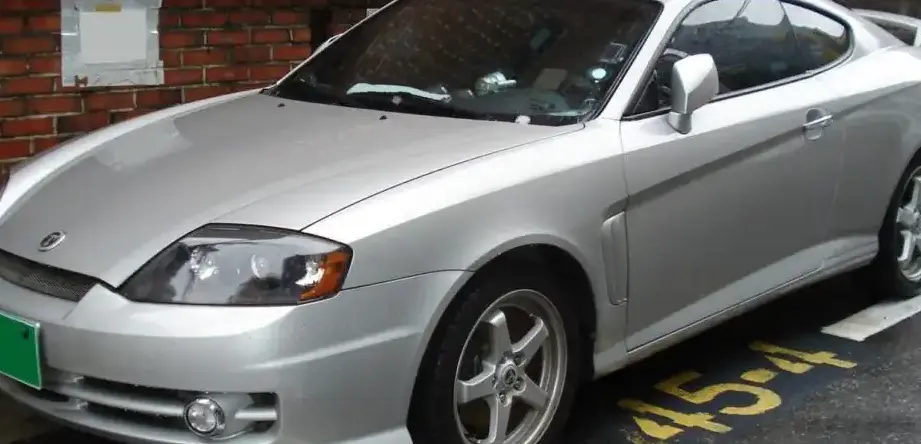
The Hyundai Tuscani I, produced from 1997 to 2001, represented a significant step for Hyundai into the realm of sporty coupes. Specifically, the 1.8L 16V (132 hp) automatic variant aimed to provide a more accessible entry point into the Tuscani lineup, balancing performance with ease of use and affordability. Positioned as a mid-range offering, it sat below the higher-performance trims while offering a more refined experience than the base models. The Tuscani I was built on Hyundai’s then-new platform, intended to appeal to a younger demographic seeking a stylish and relatively affordable coupe. It was primarily marketed in South Korea and select export markets, and wasn’t officially sold in the United States.
Technical Specifications
| Brand | Hyundai |
| Model | Tuscani |
| Generation | Tuscani I |
| Type (Engine) | 1.8 16V (132 Hp) Automatic |
| Start of production | 1997 |
| End of production | 2001 |
| Powertrain Architecture | Internal Combustion engine |
| Body type | Coupe |
| Seats | 5 |
| Doors | 3 |
| Fuel consumption (urban) | 10.7 l/100 km (22 US mpg) |
| Fuel consumption (extra urban) | 7.8 l/100 km (30.2 US mpg) |
| Fuel Type | Petrol (Gasoline) |
| Maximum speed | 190 km/h (118.06 mph) |
| Weight-to-power ratio | 9.4 kg/Hp |
| Weight-to-torque ratio | 7.5 kg/Nm |
| Power | 132 Hp @ 6000 rpm |
| Power per litre | 73.5 Hp/l |
| Torque | 166 Nm @ 5000 rpm (122.44 lb.-ft. @ 5000 rpm) |
| Engine layout | Front, Longitudinal |
| Engine Model/Code | Beta / G4GM |
| Engine displacement | 1796 cm3 (109.6 cu. in.) |
| Number of cylinders | 4 |
| Engine configuration | Inline |
| Cylinder Bore | 82 mm (3.23 in.) |
| Piston Stroke | 85 mm (3.35 in.) |
| Compression ratio | 10:1 |
| Number of valves per cylinder | 4 |
| Fuel injection system | Multi-port manifold injection |
| Engine aspiration | Naturally aspirated engine |
| Valvetrain | DOHC |
| Engine oil capacity | 4 l (4.23 US qt | 3.52 UK qt) |
| Coolant capacity | 6 l (6.34 US qt | 5.28 UK qt) |
| Kerb Weight | 1240 kg (2733.73 lbs.) |
| Max. weight | 1600 kg (3527.4 lbs.) |
| Max load | 360 kg (793.66 lbs.) |
| Trunk (boot) space – maximum | 360 l (12.71 cu. ft.) |
| Fuel tank capacity | 55 l (14.53 US gal | 12.1 UK gal) |
| Length | 4340 mm (170.87 in.) |
| Width | 1730 mm (68.11 in.) |
| Height | 1310 mm (51.57 in.) |
| Wheelbase | 2480 mm (97.64 in.) |
| Front track | 1470 mm (57.87 in.) |
| Rear (Back) track | 1450 mm (57.09 in.) |
| Drivetrain Architecture | Front wheel drive |
| Number of gears and type of gearbox | 4 gears, automatic transmission |
| Front suspension | Spring Strut |
| Rear suspension | Coil spring |
| Front brakes | Ventilated discs |
| Rear brakes | Disc |
| Steering type | Steering rack and pinion |
| Power steering | Hydraulic Steering |
| Tires size | 195/60 R14 |
| Wheel rims size | 14 |
Powertrain & Engine Architecture
The heart of the Tuscani I 1.8 Automatic is Hyundai’s Beta engine, specifically the G4GM code. This 1.8-liter inline-four engine utilizes a double overhead camshaft (DOHC) valvetrain with four valves per cylinder, contributing to its relatively high output for its displacement. The engine employs multi-point fuel injection, a common setup for the era, delivering fuel directly to each intake port. The 10:1 compression ratio was a standard figure for naturally aspirated engines of the time, balancing performance and fuel efficiency. Paired with this engine is a four-speed automatic transmission. While not offering the responsiveness of a manual gearbox, the automatic provided a smoother, more convenient driving experience, appealing to a broader range of drivers. The transmission was designed for durability and ease of maintenance, prioritizing reliability over outright performance.
Driving Characteristics
The 132 hp and 122 lb-ft of torque produced by the 1.8L engine, when channeled through the four-speed automatic, resulted in a comfortable, but not particularly exhilarating, driving experience. Acceleration was adequate for everyday driving, with a 0-60 mph time estimated around 10-11 seconds. The automatic transmission’s gear ratios were tuned for fuel economy and smooth cruising, rather than aggressive acceleration. Compared to the manual transmission versions of the Tuscani I, the automatic felt noticeably slower. The higher-output engine options, such as those found in the later Tuscani II, offered a significantly more engaging driving experience. However, the automatic’s ease of use made it a popular choice for drivers prioritizing convenience.
Equipment & Trim Levels
The 1.8L Automatic Tuscani I typically came equipped with a reasonable level of standard features. Interior appointments included cloth upholstery, power windows, and power steering. Air conditioning was often standard, though sometimes offered as an option depending on the specific market. The dashboard layout was functional and straightforward, prioritizing usability over elaborate design. Optional extras included a sunroof, upgraded audio system, and alloy wheels. The trim level generally fell in the middle of the Tuscani I range, offering a step up from the base models in terms of comfort and convenience without the added cost of the higher-performance trims.
Chassis & Braking
The Tuscani I utilized a front-engine, front-wheel-drive layout. The front suspension employed a MacPherson strut setup, while the rear featured a coil spring arrangement. This suspension configuration provided a reasonable balance between ride comfort and handling. Braking duties were handled by ventilated discs at the front and solid discs at the rear. Hydraulic power steering was standard, making maneuvering at low speeds easier. The chassis was designed to be relatively lightweight, contributing to the car’s overall agility. Stabilizer bars were included to reduce body roll during cornering, enhancing handling stability.
Market Reception & Comparison
The Tuscani I 1.8 Automatic was generally well-received as an affordable and stylish coupe. Critics praised its attractive design and comfortable interior. However, the automatic transmission was sometimes criticized for its lack of responsiveness compared to the manual gearbox. Fuel economy was considered average for the class. Compared to other coupes available at the time, such as the Honda Civic Coupe or Toyota Celica, the Tuscani I offered a unique blend of Korean engineering and styling. The 1.8L automatic variant provided a more accessible price point than the higher-performance trims, making it a popular choice for budget-conscious buyers.
Legacy
The Hyundai Tuscani I, particularly the 1.8L automatic version, has developed a modest following among enthusiasts. The Beta engine, while not known for being particularly groundbreaking, proved to be relatively reliable and durable. The four-speed automatic transmission, while not the most advanced, is known for its simplicity and ease of maintenance. Today, finding a well-maintained Tuscani I can be a challenge, but they represent an interesting piece of Hyundai’s history and a relatively affordable entry point into the world of classic coupes. Parts availability can be limited, but many components are still obtainable through online retailers and specialist Hyundai parts suppliers. The Tuscani I paved the way for Hyundai’s future success in the coupe market, ultimately leading to the development of more sophisticated and performance-oriented models.