
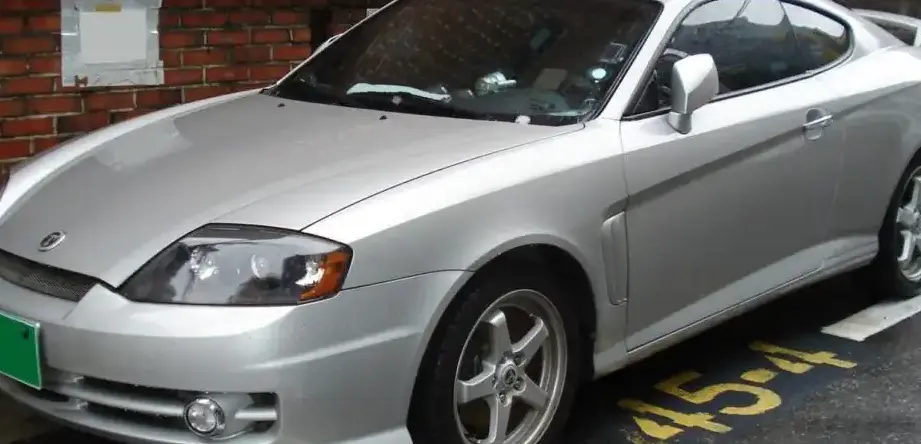
The Hyundai Tuscani II GT 2.7L V6, produced from 2002 to 2008, represents a significant step in Hyundai’s ambition to establish itself as a maker of sporty, stylish coupes. Positioned as the performance-oriented variant of the Tuscani II (also known as the Tiburon in North America), the GT model aimed to attract buyers seeking a more engaging driving experience than the base models offered. This generation, internally designated as the JB, built upon the foundation of the first-generation Tuscani, offering improved refinement, handling, and a more powerful engine option. The Tuscani II was primarily marketed towards younger drivers and those looking for an affordable, visually appealing sports coupe.
Technical Specifications
| Brand | Hyundai |
| Model | Tuscani |
| Generation | Tuscani II |
| Type (Engine) | GT 2.7L V6 (172 Hp) |
| Start of Production | 2002 |
| End of Production | 2008 |
| Powertrain Architecture | Internal Combustion Engine |
| Body Type | Coupe |
| Fuel Type | Petrol (Gasoline) |
| Power | 172 Hp |
| Engine Aspiration | Naturally Aspirated |
| Engine Oil Capacity | 4.5 l (4.76 US qt | 3.96 UK qt) |
| Coolant Capacity | 8 l (8.45 US qt | 7.04 UK qt) |
Powertrain & Engine Architecture
The heart of the Tuscani II GT is the Hyundai-developed 2.7-liter DOHC V6 engine. This engine, internally known as the Sigma, is a 60-degree V6 configuration, offering a relatively smooth power delivery. It features multi-point fuel injection and a double overhead camshaft design with four valves per cylinder. The engine produces 172 horsepower at 6,000 rpm and 184 lb-ft of torque at 4,000 rpm. While not a cutting-edge engine in terms of technology compared to some European or Japanese competitors, it provided a substantial power increase over the base 2.0-liter four-cylinder engine offered in other Tuscani II trims. The engine’s construction utilizes an aluminum cylinder head and iron block, balancing weight and durability. The GT model was exclusively offered with a four-speed automatic transmission. This transmission, while providing convenience, was a point of criticism for some reviewers who preferred a manual gearbox for a more connected driving experience. The automatic transmission was geared towards comfortable cruising rather than aggressive performance.
Driving Characteristics
The Tuscani II GT 2.7L Automatic delivers a comfortable yet reasonably sporty driving experience. The 2.7-liter V6 provides adequate acceleration, with a 0-60 mph time estimated around 8.5 seconds. The four-speed automatic transmission, while smooth, does exhibit some noticeable shifts and doesn’t offer the responsiveness of a modern multi-gear automatic. The gear ratios are tuned for everyday usability, prioritizing fuel economy and ease of driving over outright performance. Compared to a hypothetical manual transmission version, the automatic reduces driver involvement and slightly diminishes the car’s overall agility. The suspension is tuned to provide a balance between comfort and handling, leaning more towards the comfort side. Body roll is present during cornering, but it’s well-controlled. The steering is reasonably precise, but lacks significant feedback. Overall, the driving experience is best described as grand touring rather than track-focused.
Equipment & Trim Levels
The Tuscani II GT, as the top-of-the-line trim, came standard with a number of features designed to enhance both comfort and style. Standard equipment included air conditioning, power windows and locks, a CD player with multiple speakers, and alloy wheels. The interior featured sport seats upholstered in cloth or available leather, depending on optional packages. A unique GT-specific body kit, including a rear spoiler and side skirts, visually distinguished it from the lower trims. Optional extras included a sunroof, upgraded audio system, and leather upholstery. The dashboard layout was relatively straightforward, with easy-to-read gauges and logically placed controls. The interior materials, while decent for the price point, weren’t as refined as those found in some competing coupes from Honda or Nissan.
Chassis & Braking
The Tuscani II utilizes a front-engine, front-wheel-drive layout. The suspension consists of MacPherson struts in the front and a multi-link setup in the rear. Stabilizer bars are fitted to both the front and rear axles to reduce body roll. The GT model typically featured slightly stiffer springs and dampers compared to the base models, enhancing handling. Braking duties are handled by ventilated disc brakes in the front and solid disc brakes in the rear. Anti-lock Braking System (ABS) was standard equipment. The braking performance is adequate for everyday driving, but the system isn’t particularly powerful or fade-resistant under sustained hard use. The tires were typically all-season radials, prioritizing versatility over ultimate grip.
Market Reception & Comparison
The Tuscani II GT was generally well-received as an affordable and stylish coupe. Critics praised its attractive design and the significant power upgrade offered by the 2.7-liter V6. However, the four-speed automatic transmission was a common point of criticism, with many reviewers suggesting that a manual transmission would significantly improve the driving experience. Compared to other coupes in its price range, such as the Honda Civic Coupe or Nissan Sentra SE-R Spec V, the Tuscani II GT offered more power but lacked the same level of refinement and handling precision. Fuel economy was rated at around 19 mpg city and 26 mpg highway, which was comparable to other V6-powered coupes of the era. Reliability was generally good, although some owners reported minor issues with the automatic transmission and electrical components.
Legacy
The Hyundai Tuscani II GT 2.7L V6, while not a groundbreaking vehicle, played an important role in Hyundai’s evolution as a manufacturer. It demonstrated the company’s ability to produce a visually appealing and reasonably capable sports coupe. Today, the Tuscani II GT is becoming increasingly sought after by enthusiasts and collectors, particularly those interested in affordable Korean cars. The 2.7-liter V6 engine is generally considered reliable, although preventative maintenance is crucial, especially for older examples. Parts availability can be a challenge, but many components are still available through Hyundai dealerships or aftermarket suppliers. The Tuscani II GT represents a unique and often overlooked chapter in the history of Hyundai, and its continued presence on the used car market is a testament to its enduring appeal.

