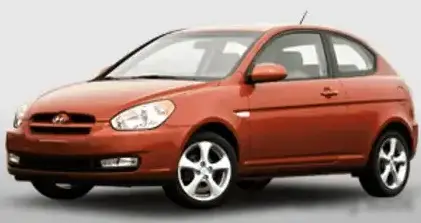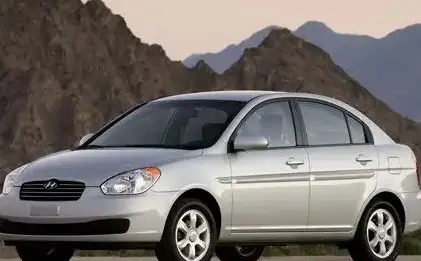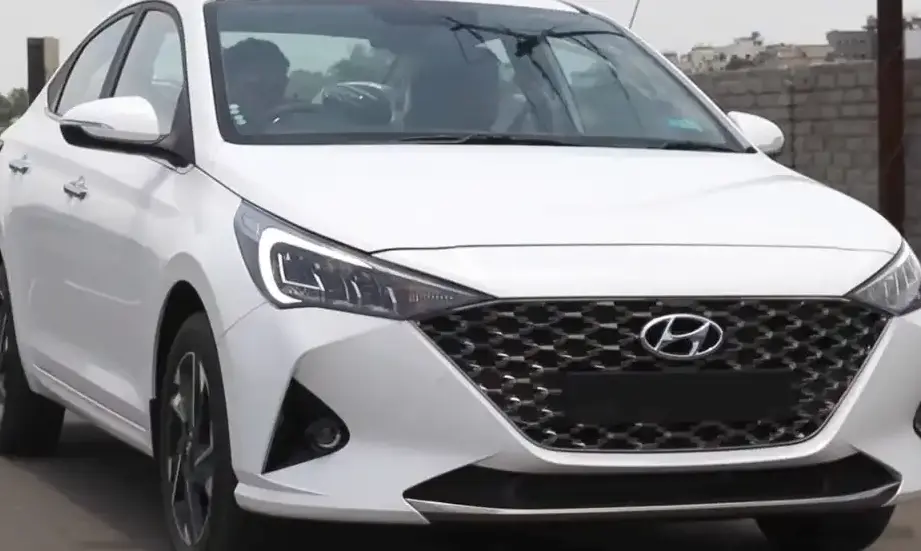
The Hyundai Verna V (facelift, introduced in March 2020 and continuing through February 2023) represents a mid-cycle refresh of the fifth-generation Verna, a compact sedan primarily aimed at the Asian and select emerging markets. The 1.0 T-GDi variant, equipped with a 120 horsepower turbocharged engine and a 7-speed Dual Clutch Transmission (DCT), occupied a key position in the lineup, offering a balance between fuel efficiency, modern technology, and a more engaging driving experience than the base engine options. This model aimed to appeal to younger buyers and those seeking a more sophisticated compact sedan.
Technical Specifications
| Brand | Hyundai |
| Model | Verna |
| Generation | Verna V (facelift 2020) |
| Type (Engine) | 1.0 T-GDi (120 Hp) DCT |
| Start of production | March, 2020 |
| End of production | February, 2023 |
| Powertrain Architecture | Internal Combustion engine |
| Body type | Sedan |
| Seats | 5 |
| Doors | 4 |
| Fuel Type | Petrol (Gasoline) |
| Power | 120 Hp @ 6000 rpm |
| Power per litre | 120.2 Hp/l |
| Torque | 172 Nm @ 1500-4000 rpm / 126.86 lb.-ft. @ 1500-4000 rpm |
| Engine layout | Front, Transverse |
| Engine Model/Code | Kappa II / G3LC |
| Engine displacement | 998 cm3 / 60.9 cu. in. |
| Number of cylinders | 3 |
| Engine configuration | Inline |
| Number of valves per cylinder | 4 |
| Fuel injection system | Direct injection |
| Engine aspiration | Turbocharger, Intercooler |
| Valvetrain | DOHC, TIS |
| Engine oil capacity | 3.6 l / 3.8 US qt | 3.17 UK qt |
| Fuel tank capacity | 45 l / 11.89 US gal | 9.9 UK gal |
| Length | 4440 mm / 174.8 in. |
| Width | 1729 mm / 68.07 in. |
| Height | 1475 mm / 58.07 in. |
| Wheelbase | 2600 mm / 102.36 in. |
| Drivetrain Architecture | The Internal combustion engine (ICE) drives the front wheels of the vehicle. |
| Drive wheel | Front wheel drive |
| Number of gears and type of gearbox | 7 gears, automatic transmission DCT |
| Front suspension | Coil spring, Independent type McPherson |
| Rear suspension | Torsion |
| Front brakes | Disc |
| Rear brakes | Disc |
| Assisting systems | ABS (Anti-lock braking system) |
| Steering type | Steering rack and pinion |
| Power steering | Electric Steering |
| Tires size | 195/55 R16 |
| Wheel rims size | 16 |
Powertrain & Engine Architecture
The heart of the Verna 1.0 T-GDi is Hyundai’s Kappa II engine, specifically the G3LC code. This is a three-cylinder, 1.0-liter turbocharged gasoline engine featuring direct fuel injection. The direct injection system, coupled with a twin-scroll turbocharger and intercooler, allows for a relatively high compression ratio and efficient combustion, contributing to both power output and fuel economy. The engine utilizes a Double Overhead Camshaft (DOHC) valvetrain with Timing Indexing System (TIS) for optimized valve timing. The 7-speed Dual Clutch Transmission (DCT) was a key component, offering quicker and smoother gear changes compared to a traditional automatic transmission. The DCT’s programming prioritized fuel efficiency in normal driving modes, but also provided responsive shifts when in Sport mode.
Driving Characteristics
The 120 hp and 172 Nm (126.86 lb-ft) of torque delivered by the 1.0 T-GDi engine provided a noticeable step up in performance compared to the naturally aspirated engines available in the Verna lineup. While not a sports sedan, the turbocharger provided a useful boost of power during acceleration, making overtaking maneuvers easier. The DCT contributed to a more engaging driving experience, with quick and precise shifts. However, some drivers noted a slight hesitation from the DCT at low speeds. The gear ratios were tuned for a balance between fuel efficiency and responsiveness, with the seventh gear providing a comfortable cruising speed on highways. Compared to the higher-output 1.6L engine options, the 1.0 T-GDi offered a more refined and fuel-efficient driving experience, albeit with slightly less overall power.
Equipment & Trim Levels
The 1.0 T-GDi variant typically sat in the mid-range of the Verna V facelift trim levels. Standard equipment generally included features such as automatic climate control, a touchscreen infotainment system with Apple CarPlay and Android Auto compatibility, rear parking sensors, and keyless entry. Higher trim levels added features like leather upholstery, a sunroof, and advanced driver-assistance systems (ADAS) such as lane keeping assist and automatic emergency braking. Interior upholstery was typically a combination of cloth and leatherette, with a dashboard layout focused on functionality and ease of use. Optional extras often included a premium sound system and upgraded alloy wheels.
Chassis & Braking
The Verna V facelift utilized a front-wheel-drive configuration with a McPherson strut independent suspension in the front and a torsion beam suspension in the rear. This setup provided a comfortable ride quality, suitable for everyday driving conditions. The front and rear brakes were both disc brakes, offering adequate stopping power for the vehicle’s weight class. An Anti-lock Braking System (ABS) was standard equipment. Steering was provided by an electric power steering system, offering light and precise control. The 16-inch alloy wheels, typically fitted with 195/55 R16 tires, contributed to a balanced ride and handling experience.
Market Reception & Comparison
The 1.0 T-GDi variant of the Verna V facelift was generally well-received by automotive critics. Reviewers praised its fuel efficiency, responsive engine, and smooth-shifting DCT. However, some noted that the three-cylinder engine could be slightly noisy under hard acceleration. Compared to the naturally aspirated engines, the 1.0 T-GDi offered significantly improved performance and fuel economy. Compared to the larger 1.6L engine options, it provided a more affordable and fuel-efficient alternative, albeit with slightly less power. The DCT was also seen as a significant upgrade over traditional automatic transmissions in this segment.
Legacy
The Kappa II 1.0 T-GDi engine and 7-speed DCT combination proved to be a reliable powertrain in the Verna V facelift. While long-term reliability data is still accumulating, early reports suggest that the engine is generally durable and the DCT holds up well with proper maintenance. On the used car market, the 1.0 T-GDi variant is often sought after for its balance of performance, fuel efficiency, and modern features. Its relatively small engine displacement and efficient design make it an attractive option for buyers looking for a fuel-conscious compact sedan. The Verna V facelift, and specifically this powertrain combination, helped Hyundai solidify its position as a major player in the compact sedan segment in key markets.