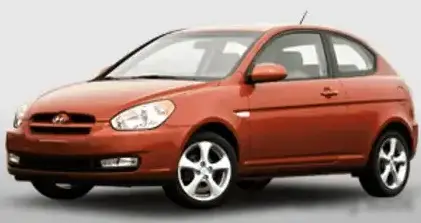
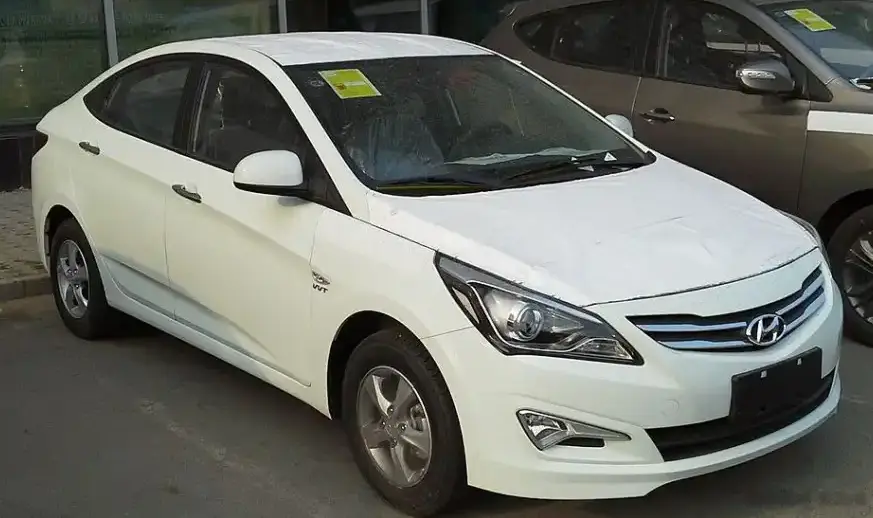
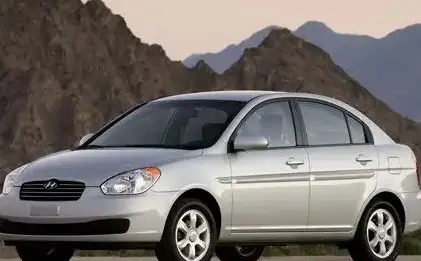
The Hyundai Verna VI 1.5 T-GDi, introduced in February 2023, represents a significant step forward in the Verna (also known as Accent in some markets) lineage. This variant, positioned as a mid-range offering within the sixth-generation Verna lineup, aims to deliver a balance of performance, fuel efficiency, and modern features. The Verna VI, designed primarily for markets outside of North America, serves as a key competitor in the compact sedan segment, particularly in Asia and emerging economies. This specific 1.5 T-GDi model is notable for its turbocharged engine and available six-speed manual transmission, offering a more engaging driving experience than base-model options.
Technical Specifications
| Brand | Hyundai |
| Model | Verna |
| Generation | Verna VI |
| Type (Engine) | 1.5 T-GDi (160 Hp) |
| Start of production | February, 2023 |
| Powertrain Architecture | Internal Combustion engine |
| Body type | Sedan |
| Seats | 5 |
| Doors | 4 |
| Fuel consumption (combined) | 5 l/100 km (47 US mpg, 56.5 UK mpg, 20 km/l) |
| Fuel Type | Petrol (Gasoline) |
| Power | 160 Hp @ 5500 rpm |
| Power per litre | 108 Hp/l |
| Torque | 253 Nm @ 1500-3500 rpm (186.6 lb.-ft. @ 1500-3500 rpm) |
| Engine layout | Front, Transverse |
| Engine Model/Code | Smartstream / G4LH |
| Engine displacement | 1482 cm3 (90.44 cu. in.) |
| Number of cylinders | 4 |
| Engine configuration | Inline |
| Number of valves per cylinder | 4 |
| Fuel injection system | Direct injection |
| Engine aspiration | Turbocharger, Intercooler |
| Engine oil capacity | 4.2 l (4.44 US qt | 3.7 UK qt) |
| Coolant capacity | 6.6 l (6.97 US qt | 5.81 UK qt) |
| Fuel tank capacity | 45 l (11.89 US gal | 9.9 UK gal) |
| Length | 4535 mm (178.54 in.) |
| Width | 1765 mm (69.49 in.) |
| Height | 1475 mm (58.07 in.) |
| Wheelbase | 2670 mm (105.12 in.) |
| Drivetrain | Front wheel drive |
| Number of gears and type of gearbox | 6 gears, manual transmission |
| Front suspension | Coil spring, Independent type McPherson |
| Rear suspension | Torsion |
| Front brakes | Disc |
| Rear brakes | Drum |
| Steering type | Steering rack and pinion |
| Power steering | Electric Steering |
| Tires size | 205/55 R16 |
| Wheel rims size | 16 |
Powertrain & Engine Architecture
The heart of the Verna VI 1.5 T-GDi is Hyundai’s Smartstream G4LH engine. This 1.5-liter, inline-four cylinder engine utilizes direct fuel injection and a single-scroll turbocharger with an intercooler to deliver a respectable 160 horsepower at 5500 rpm and 253 Nm (186.6 lb.-ft.) of torque between 1500 and 3500 rpm. The Smartstream designation indicates Hyundai’s focus on improved thermal efficiency and reduced friction. The engine incorporates features like an integrated exhaust manifold and cylinder head for quicker warm-up times and reduced emissions. The six-speed manual transmission is a conventional setup, offering precise shifts and a direct connection to the engine. The engine oil capacity is 4.2 liters, and Hyundai recommends specific oil specifications for optimal performance and longevity.
Driving Characteristics
The 1.5 T-GDi with the six-speed manual provides a noticeably more spirited driving experience compared to the naturally aspirated engine options available in the Verna VI range. The turbocharger provides a readily available boost of torque, making overtaking and highway merging easier. While not a sports sedan, the combination of 160 hp and the manual transmission allows for a more engaging and controlled driving experience. The gear ratios are well-matched to the engine’s powerband, providing adequate acceleration in each gear. Compared to an automatic transmission equipped model, the manual offers greater control and potentially slightly improved fuel economy, though real-world results will vary based on driving style.
Equipment & Trim Levels
The 1.5 T-GDi trim typically includes a comprehensive suite of standard features. These generally include air conditioning, power windows and locks, a touchscreen infotainment system with smartphone integration (Apple CarPlay and Android Auto), and basic safety features like ABS and airbags. Higher sub-trims within the 1.5 T-GDi range may add features such as a larger touchscreen display, automatic climate control, a rearview camera, and advanced driver-assistance systems (ADAS) like lane keeping assist and automatic emergency braking. Interior upholstery is typically cloth, with options for leatherette or full leather available on higher-spec models. Dashboard configurations are modern and functional, with a focus on ease of use.
Chassis & Braking
The Verna VI utilizes a front-wheel-drive layout with a McPherson strut independent suspension in the front and a torsion beam setup in the rear. This configuration provides a good balance of ride comfort and handling. The front brakes are disc brakes, providing adequate stopping power, while the rear brakes are drum brakes, a cost-saving measure common in this segment. Electric power steering provides light and responsive steering feel. The standard tire size is 205/55 R16, mounted on 16-inch alloy wheels. ABS (Anti-lock Braking System) is standard, enhancing safety during emergency braking situations.
Market Reception & Comparison
The Verna VI 1.5 T-GDi has been generally well-received in its target markets. Critics have praised the engine’s performance and fuel efficiency, as well as the car’s overall value proposition. Compared to other compact sedans in its class, such as the Toyota Corolla or Honda Civic (where available), the Verna VI often offers a more generous level of standard equipment for the price. However, some reviewers have noted that the interior materials and overall refinement are not quite on par with those of its Japanese competitors. Fuel economy figures of around 5 l/100 km (47 US mpg) are competitive within the segment, and the 1.5 T-GDi generally offers better fuel economy than larger-engined variants.
Legacy
The Hyundai Verna VI 1.5 T-GDi represents a significant evolution for the Verna model line. The Smartstream engine technology and available manual transmission contribute to a more engaging and efficient driving experience. While long-term reliability data is still emerging, Hyundai has a generally good reputation for building durable and reliable vehicles. On the used car market, the 1.5 T-GDi variant is likely to hold its value well due to its desirable combination of performance and fuel economy. The G4LH engine, if properly maintained, is expected to provide years of reliable service, making this Verna VI a potentially attractive option for budget-conscious buyers seeking a modern and well-equipped compact sedan.