
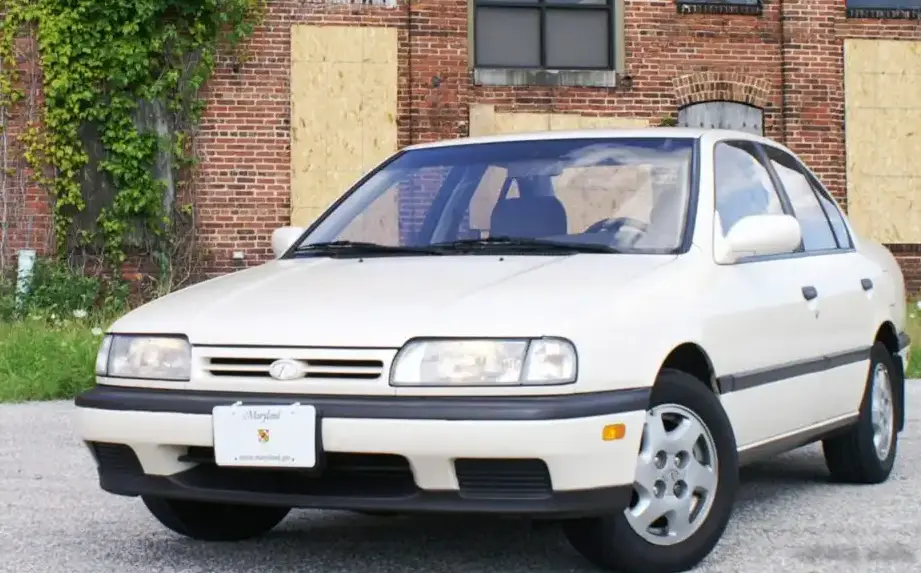
The Infiniti G20 2.0i Automatic, produced between 1991 and 1996, represented the entry point into the burgeoning luxury car market for Nissan’s Infiniti brand in North America. Positioned as a competitor to European sedans like the BMW 3-Series and Mercedes-Benz C-Class, the G20 offered a blend of Japanese reliability, comfortable features, and relatively affordable pricing. This particular variant, equipped with the 2.0-liter inline-four engine and a four-speed automatic transmission, was aimed at buyers prioritizing ease of use and comfort over outright performance. It was the most accessible version of the G20, serving as the foundation for the model range.
Technical Specifications
| Brand | Infiniti |
| Model | G |
| Generation | G20 |
| Type (Engine) | 2.0 i (140 Hp) Automatic |
| Start of production | 1991 |
| End of production | 1996 |
| Powertrain Architecture | Internal Combustion engine |
| Body type | Sedan |
| Seats | 5 |
| Doors | 4 |
| Fuel consumption (combined) | 8.7 l/100 km (27 US mpg, 32.5 UK mpg, 11.5 km/l) |
| Fuel Type | Petrol (Gasoline) |
| Maximum speed | 209 km/h (129.87 mph) |
| Weight-to-power ratio | 9.3 kg/Hp, 107.2 Hp/tonne |
| Weight-to-torque ratio | 7.3 kg/Nm, 137.8 Nm/tonne |
| Power | 140 Hp @ 6400 rpm |
| Power per litre | 70.1 Hp/l |
| Torque | 180 Nm @ 6400 rpm (132.76 lb.-ft. @ 6400 rpm) |
| Engine layout | Front, Transverse |
| Engine displacement | 1998 cm3 (121.93 cu. in.) |
| Number of cylinders | 4 |
| Engine configuration | Inline |
| Cylinder Bore | 86 mm (3.39 in.) |
| Piston Stroke | 86 mm (3.39 in.) |
| Compression ratio | 10:1 |
| Number of valves per cylinder | 4 |
| Fuel injection system | Multi-port manifold injection |
| Engine aspiration | Naturally aspirated engine |
| Valvetrain | DOHC |
| Kerb Weight | 1306 kg (2879.24 lbs.) |
| Trunk (boot) space – minimum | 470 l (16.6 cu. ft.) |
| Fuel tank capacity | 60 l (15.85 US gal | 13.2 UK gal) |
| Length | 4450 mm (175.2 in.) |
| Width | 1700 mm (66.93 in.) |
| Height | 1395 mm (54.92 in.) |
| Wheelbase | 2550 mm (100.39 in.) |
| Front track | 1470 mm (57.87 in.) |
| Rear (Back) track | 1460 mm (57.48 in.) |
| Drivetrain Architecture | The Internal combustion engine (ICE) drives the front wheels of the vehicle. |
| Drive wheel | Front wheel drive |
| Number of gears and type of gearbox | 4 gears, automatic transmission |
| Front suspension | Coil spring |
| Rear suspension | Coil spring |
| Front brakes | Ventilated discs |
| Rear brakes | Disc |
| Assisting systems | ABS (Anti-lock braking system) |
| Steering type | Steering rack and pinion |
| Power steering | Hydraulic Steering |
| Tires size | 195/65 R14 H |
| Wheel rims size | 14 |
Powertrain & Engine Architecture
The heart of the G20 2.0i Automatic was Nissan’s GA20DE engine, a 1998cc inline-four cylinder powerplant. This engine featured a cast iron block and an aluminum cylinder head, incorporating dual overhead camshafts (DOHC) and four valves per cylinder. The multi-port fuel injection system delivered fuel directly into each intake port, optimizing combustion efficiency. The engine produced 140 horsepower at 6400 rpm and 180 Nm (132.76 lb-ft) of torque at 6400 rpm. The four-speed automatic transmission, designated as the RE4R01A, was a conventional hydraulic automatic, chosen for its smoothness and ease of operation. While not particularly advanced, it was a reliable unit. The engine code, GA20DE, is crucial for identifying specific parts and maintenance requirements.
Driving Characteristics
The G20 2.0i Automatic offered a comfortable, but not particularly sporty, driving experience. The automatic transmission, while smooth, did detract from the engine’s available power. Acceleration was adequate for everyday driving, but passing maneuvers required careful planning. Compared to the five-speed manual transmission available on other G20 models, the automatic resulted in a noticeable performance decrease. The gear ratios were tuned for fuel efficiency and smooth cruising rather than aggressive acceleration. The front-wheel-drive configuration provided predictable handling, but lacked the dynamic capabilities of rear-wheel-drive competitors. The steering was light and precise, making it easy to maneuver in urban environments.
Equipment & Trim Levels
The G20 2.0i Automatic typically came standard with features such as air conditioning, power windows and locks, a cassette stereo, and cloth upholstery. Optional extras included a sunroof, upgraded sound system, and leather upholstery. The interior design was functional and well-built, reflecting Infiniti’s commitment to quality. The dashboard layout was straightforward and easy to use, with clearly labeled controls. The base trim level focused on providing essential comfort and convenience features, while optional packages allowed buyers to customize their vehicle to their preferences.
Chassis & Braking
The G20’s chassis utilized a MacPherson strut front suspension and a multi-link rear suspension, providing a comfortable ride and decent handling. The front brakes were ventilated discs, offering good stopping power, while the rear brakes were solid discs. Anti-lock braking system (ABS) was standard, enhancing safety. The suspension was tuned for comfort, prioritizing ride quality over sporty handling. Stabilizer bars were fitted to both the front and rear axles to reduce body roll during cornering. The relatively lightweight construction of the G20 helped to offset the performance limitations of the 140-horsepower engine.
Market Reception & Comparison
Critics generally praised the G20 for its value, reliability, and comfortable ride. However, the 2.0i Automatic variant was often criticized for its lack of performance compared to its manual transmission counterpart and higher-powered competitors. Fuel economy was considered respectable for its time, averaging around 27 mpg in combined driving. Compared to the more powerful G20 SR models, the base automatic version offered a more affordable entry point into the Infiniti lineup, but at the expense of driving excitement. The G20’s reliability proved to be a significant selling point, attracting buyers seeking a dependable and low-maintenance luxury car.
Legacy
The Infiniti G20 2.0i Automatic, while not the most exciting version of the G20, remains a popular choice among enthusiasts and used car buyers. The GA20DE engine is known for its durability and relatively simple maintenance requirements. Parts availability is generally good, and the car’s straightforward design makes it relatively easy to repair. Today, well-maintained examples of the G20 2.0i Automatic can be found for reasonable prices, offering a comfortable and reliable classic car experience. Its role in establishing Infiniti as a viable luxury brand in the US market should not be underestimated, paving the way for the more performance-oriented models that followed.
