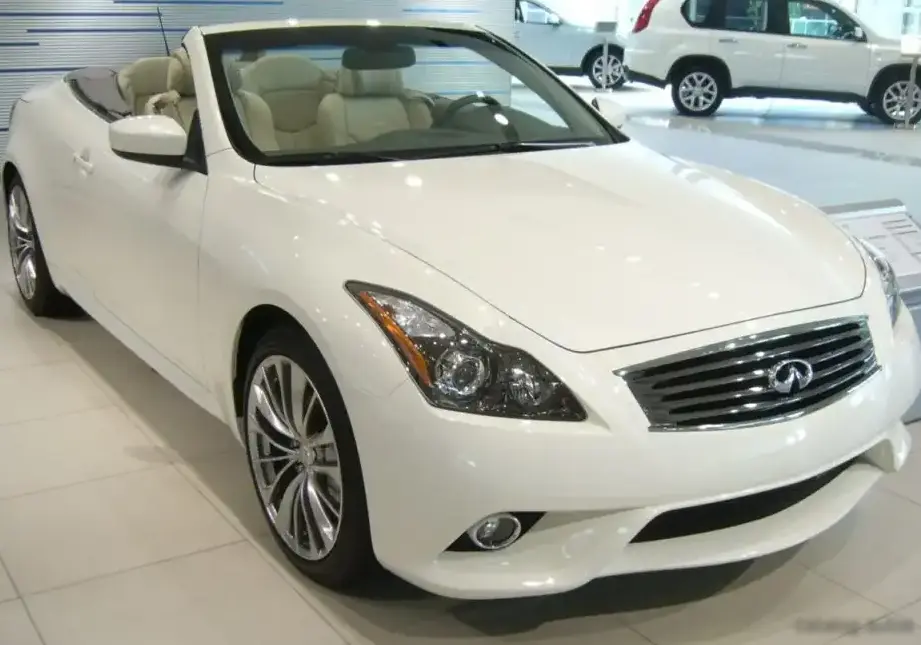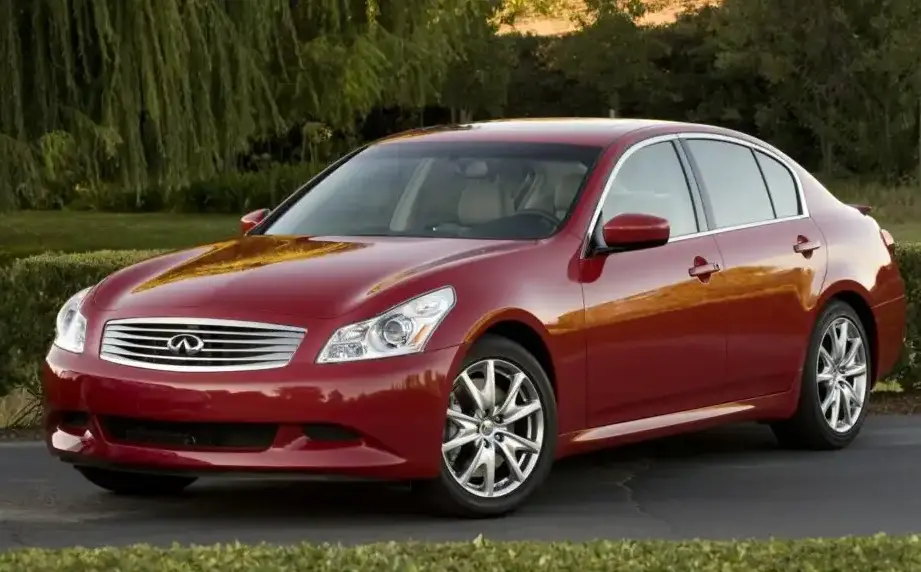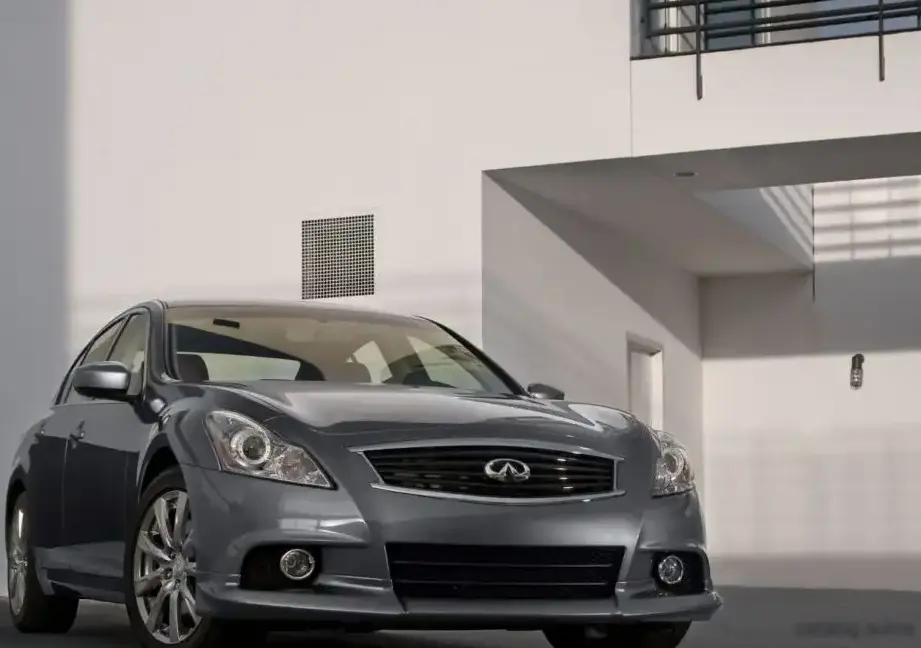
The Infiniti G37 Coupe, produced from 2007 to 2015, marked a significant step forward in Infiniti’s performance coupe lineage. As part of the V36 chassis generation, the G37 was engineered to deliver a compelling blend of luxury, performance, and contemporary technology. This particular variant, featuring the 3.7-liter V6 engine generating 320 horsepower coupled with a five-speed automatic transmission, occupied a central position within the G37 lineup. It aimed to strike a balance between accessibility and spirited driving, directly competing with established rivals such as the BMW 3 Series Coupe and the Audi A5.
Technical Specifications
| Brand | Infiniti |
| Model | G |
| Generation | G37 Coupe (V36) |
| Type (Engine) | 3.7I V6 (320 Hp) Automatic |
| Start of production | 2007 |
| End of production | 2015 |
| Powertrain Architecture | Internal Combustion engine |
| Body type | Coupe |
| Seats | 4 |
| Doors | 2 |
| Fuel consumption (urban) | 16.4 l/100 km (14.3 US mpg, 17.2 UK mpg, 6.1 km/l) |
| Fuel consumption (extra urban) | 9.5 l/100 km (24.8 US mpg, 29.7 UK mpg, 10.5 km/l) |
| Fuel consumption (combined) | 12 l/100 km (19.6 US mpg, 23.5 UK mpg, 8.3 km/l) |
| Fuel Type | Petrol (Gasoline) |
| Acceleration 0 – 100 km/h | 6 sec |
| Acceleration 0 – 62 mph | 6 sec |
| Acceleration 0 – 60 mph | 5.7 sec |
| Maximum speed | 250 km/h (155.34 mph) |
| Emission standard | Euro 4 |
| Weight-to-power ratio | 5.5 kg/Hp, 180.4 Hp/tonne |
| Weight-to-torque ratio | 4.8 kg/Nm, 206.3 Nm/tonne |
| Power | 320 Hp @ 7000 rpm |
| Power per litre | 86.6 Hp/l |
| Torque | 366 Nm @ 5200 rpm (269.95 lb.-ft. @ 5200 rpm) |
| Engine layout | Front, Longitudinal |
| Engine Model/Code | VQ37VHR |
| Engine displacement | 3696 cm3 (225.54 cu. in.) |
| Number of cylinders | 6 |
| Engine configuration | V-engine |
| Cylinder Bore | 95.5 mm (3.76 in.) |
| Piston Stroke | 86 mm (3.39 in.) |
| Compression ratio | 11:1 |
| Number of valves per cylinder | 4 |
| Fuel injection system | Multi-port manifold injection |
| Engine aspiration | Naturally aspirated engine |
| Engine oil capacity | 4.9 l (5.18 US qt | 4.31 UK qt) |
| Coolant | 8.5 l (8.98 US qt | 7.48 UK qt) |
| Kerb Weight | 1774 kg (3911 lbs.) |
| Max. weight | 2112 kg (4656.16 lbs.) |
| Max load | 338 kg (745.16 lbs.) |
| Trunk (boot) space – minimum | 242 l (8.55 cu. ft.) |
| Fuel tank capacity | 76 l (20.08 US gal | 16.72 UK gal) |
| Length | 4651 mm (183.11 in.) |
| Width | 1824 mm (71.81 in.) |
| Height | 1392 mm (54.8 in.) |
| Wheelbase | 2850 mm (112.2 in.) |
| Front track | 1547 mm (60.91 in.) |
| Rear (Back) track | 1562 mm (61.5 in.) |
| Drivetrain Architecture | Rear wheel drive |
| Number of gears and type of gearbox | 5 gears, automatic transmission |
| Front suspension | Independent coil spring |
| Rear suspension | Independent multi-link spring suspension with stabilizer |
| Front brakes | Ventilated discs |
| Rear brakes | Ventilated discs |
| Assisting systems | ABS (Anti-lock braking system), Hydraulic Steering |
| Tires size | 225/50 R18; 225/45 R19; 245/40 R19 |
Powertrain & Engine Architecture
The G37 Coupe’s powertrain revolved around the VQ37VHR 3.7-liter V6 engine. This engine, a cornerstone of Nissan’s acclaimed VQ engine family, featured a 60-degree V-angle and employed a dual overhead camshaft (DOHC) design with four valves per cylinder. The “VHR” designation signified “Variable Valve Timing and lift with high response,” a system that enabled precise control over valve timing and lift, optimizing performance throughout the engine’s operating range. Fuel delivery was managed by a multi-port fuel injection system. The engine generated 320 horsepower at 7,000 rpm and 269 lb-ft of torque at 5,200 rpm. The five-speed automatic transmission was engineered for smooth and responsive shifts, though it didn’t quite match the speed or efficiency of more modern transmissions with a greater number of gears.
Driving Characteristics
The G37 Coupe, equipped with the 3.7-liter V6 and automatic transmission, delivered a satisfying driving experience. Acceleration from 0-60 mph occurred in roughly 5.7 seconds, establishing it as a genuinely quick coupe. While the automatic transmission didn’t offer the same level of driver engagement as the available six-speed manual, it provided convenient and comfortable shifting for everyday use. The gear ratios were calibrated to balance acceleration and fuel economy, prioritizing ample mid-range torque for confident passing. Compared to the manual transmission variant, the automatic resulted in slightly slower acceleration, but it broadened the car’s appeal to a wider range of drivers. The automatic also differed from the higher-performance IPL G37, which featured a more aggressive engine tune and quicker shift points.
Equipment & Trim Levels
The G37 Coupe 3.7I V6 Automatic typically included standard features such as leather upholstery, power-adjustable front seats, a premium audio system, automatic climate control, and a sunroof. Optional extras encompassed navigation, a rear-view camera, and upgraded interior trim materials. The Journey trim level added features like Bluetooth connectivity and a power-adjustable steering column. Sport packages were also offered, incorporating sport seats, a sport-tuned suspension, and 19-inch wheels. The interior design prioritized the driver, with a well-organized dashboard and intuitive controls.
Chassis & Braking
The G37 Coupe boasted a robust chassis featuring an independent coil spring front suspension and an independent multi-link spring suspension with a stabilizer bar at the rear. This suspension configuration achieved a balance between ride comfort and handling precision. Braking was provided by ventilated discs on all four wheels, delivering ample stopping power. An ABS (Anti-lock Braking System) was standard, enhancing safety and control during hard braking. The hydraulic power steering offered a responsive and connected feel.
Market Reception & Comparison
The Infiniti G37 Coupe generally received positive reviews from automotive critics. It was lauded for its powerful engine, engaging handling, and luxurious interior. However, some reviewers pointed out that the automatic transmission felt somewhat dated in comparison to newer offerings. Fuel economy was considered average for its class, with combined figures around 19.6 US mpg. The automatic transmission yielded slightly lower fuel economy compared to the manual version. The G37 Coupe proved to be a strong contender in the luxury coupe segment, presenting a compelling alternative to established European brands.
Legacy
The VQ37VHR engine demonstrated its durability and reliability, and the G37 Coupe has maintained a relatively good reputation for long-term dependability. While not entirely immune to age-related issues, the engine is generally considered robust with consistent maintenance. In the used car market, the G37 Coupe remains a popular choice for enthusiasts seeking a stylish and capable performance coupe. Its combination of performance, luxury, and relative affordability has sustained its appeal. The five-speed automatic, while not the most cutting-edge, has proven to be a reliable unit, and parts availability remains readily accessible.