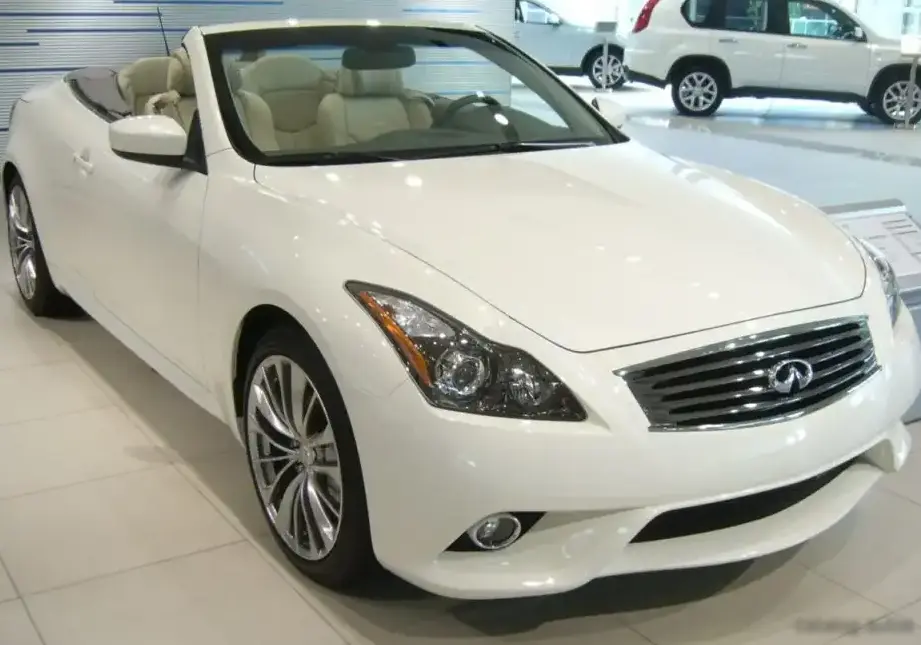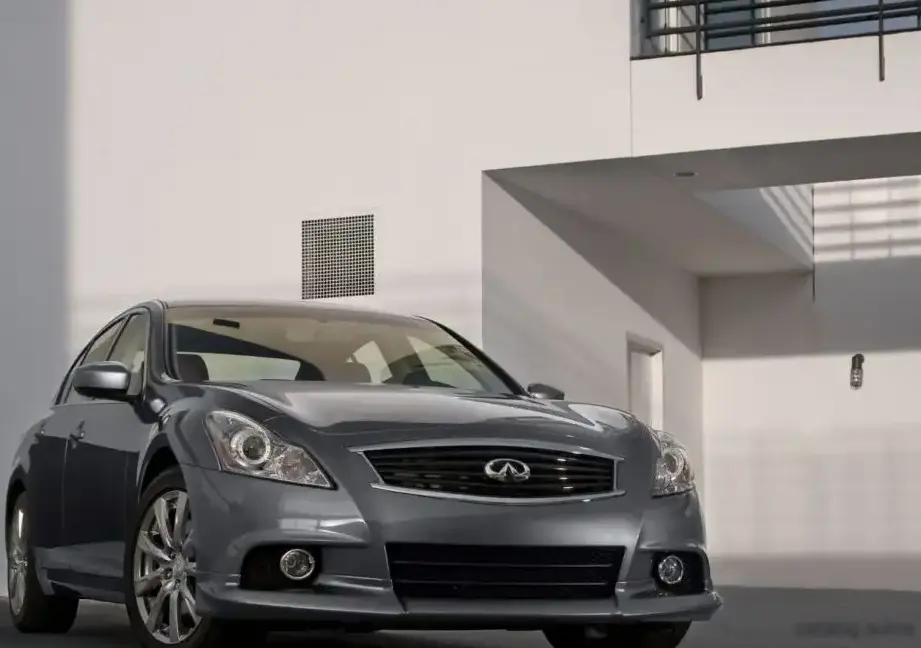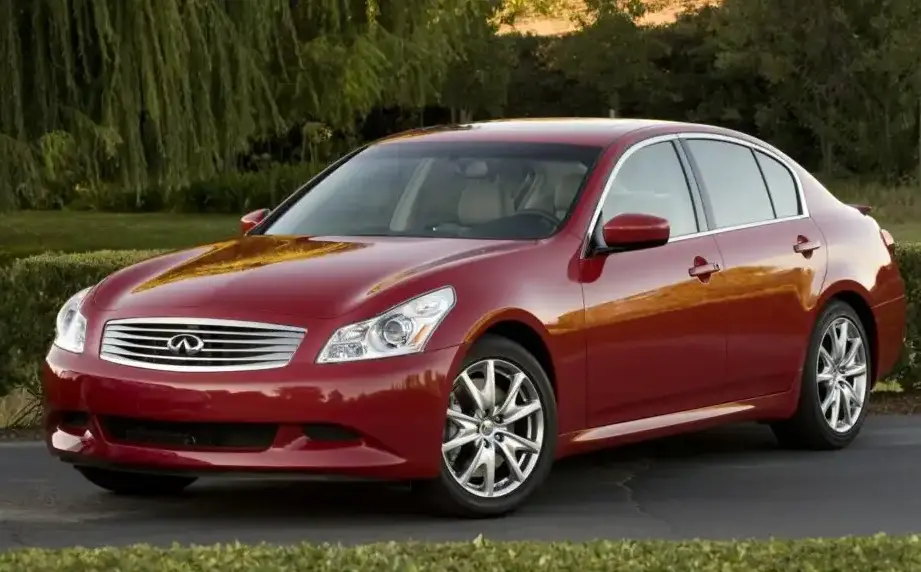
The Infiniti G37 Sedan, produced from September 2008 through November 2009, represented the high-performance variant of the V36 generation Infiniti G-series. Positioned as a direct competitor to BMW’s 3-series and Mercedes-Benz’s C-Class, the G37 aimed to deliver a blend of luxury, sporty handling, and robust power. This specific iteration, equipped with the 3.7-liter V6 engine producing 328 horsepower, was a key model in establishing Infiniti’s performance credentials in the North American market. It built upon the foundation laid by the G35, offering a significant increase in both power and refinement.
Technical Specifications
| Brand | Infiniti |
| Model | G |
| Generation | G37 Sedan (V36) |
| Type (Engine) | 3.7 V6 (328 Hp) |
| Start of production | September, 2008 |
| End of production | November, 2009 |
| Powertrain Architecture | Internal Combustion engine |
| Body type | Sedan |
| Seats | 5 |
| Doors | 4 |
| Fuel consumption (economy) – urban (EPA) | 13.8 l/100 km (17 US mpg, 20.5 UK mpg) |
| Fuel consumption (economy) – extra urban (EPA) | 9.4 l/100 km (25 US mpg, 30.1 UK mpg) |
| Fuel Type | Petrol (Gasoline) |
| Emission standard | LEV2 |
| Weight-to-power ratio | 5 kg/Hp, 200 Hp/tonne |
| Weight-to-torque ratio | 4.5 kg/Nm, 222.6 Nm/tonne |
| Power | 328 Hp @ 7000 rpm |
| Power per litre | 88.7 Hp/l |
| Torque | 365 Nm @ 5200 rpm (269.21 lb.-ft. @ 5200 rpm) |
| Maximum engine speed | 7600 rpm |
| Engine layout | Front, Longitudinal |
| Engine Model/Code | VQ37VHR |
| Engine displacement | 3696 cm3 (225.54 cu. in.) |
| Number of cylinders | 6 |
| Engine configuration | V-engine |
| Cylinder Bore | 95.5 mm (3.76 in.) |
| Piston Stroke | 86 mm (3.39 in.) |
| Compression ratio | 11:1 |
| Number of valves per cylinder | 4 |
| Fuel injection system | Multi-port manifold injection |
| Engine aspiration | Naturally aspirated engine |
| Valvetrain | DOHC, CVTCS, VVEL |
| Engine oil capacity | 4.9 l (5.18 US qt | 4.31 UK qt) |
| Coolant | 9.1 l (9.62 US qt | 8.01 UK qt) |
| Kerb Weight | 1640 kg (3615.58 lbs.) |
| Max. weight | 2142 kg (4722.3 lbs.) |
| Max load | 502 kg (1106.72 lbs.) |
| Trunk (boot) space – minimum | 382 l (13.49 cu. ft.) |
| Fuel tank capacity | 76 l (20.08 US gal | 16.72 UK gal) |
| Length | 4755 mm (187.2 in.) |
| Width | 1773 mm (69.8 in.) |
| Height | 1452 mm (57.17 in.) |
| Wheelbase | 2850 mm (112.2 in.) |
| Front track | 1520 mm (59.84 in.) |
| Rear (Back) track | 1520 mm (59.84 in.) |
| Ride height (ground clearance) | 130 mm (5.12 in.) |
| Drag coefficient (Cd) | 0.29 |
| Minimum turning circle (turning diameter) | 10.8 m (35.43 ft.) |
| Drivetrain Architecture | The Internal combustion engine (ICE) drives the rear wheels of the vehicle. |
| Drive wheel | Rear wheel drive |
| Number of gears and type of gearbox | 6 gears, manual transmission |
| Front suspension | Coil spring, Double wishbone, Transverse stabilizer |
| Rear suspension | Independent multi-link spring suspension with stabilizer |
| Front brakes | Ventilated discs, 355×32 mm |
| Rear brakes | Ventilated discs, 350×20 mm |
| Assisting systems | ABS (Anti-lock braking system) |
| Steering type | Steering rack and pinion |
| Power steering | Hydraulic Steering |
| Tires size | Front wheel tires: 225/50 R18Rear wheel tires: 245/45 R18 |
| Wheel rims size | Front wheel rims: 7.5J x 18Rear wheel rims: 8.5J x 18 |
Powertrain & Engine Architecture
The heart of the G37 Sedan is the VQ37VHR 3.7-liter V6 engine. This engine is a naturally aspirated powerplant, representing a significant evolution of Nissan/Infiniti’s long-running VQ series. The “VHR” designation stands for “Variable Valve Timing and Lift,” highlighting the engine’s advanced valvetrain. It utilizes continuously variable valve timing (CVTCS) on both intake and exhaust camshafts, coupled with variable valve lift (VVEL) on the intake side. This combination optimizes engine performance across the rev range, improving both power and fuel efficiency. The engine employs multi-port fuel injection and boasts a compression ratio of 11:1. The 6-speed manual transmission was standard, offering precise shifts and a direct connection to the engine.
Driving Characteristics
The G37 Sedan with the 6-speed manual transmission delivered a noticeably more engaging driving experience than its automatic counterparts. The manual gearbox allowed drivers to fully exploit the engine’s powerband, providing crisp acceleration and precise control. The rear-wheel-drive layout contributed to a balanced chassis, offering predictable handling and a sporty feel. While the automatic transmission offered convenience, it did slightly diminish the sense of connection and responsiveness. The gear ratios were tuned for a balance between acceleration and highway cruising, with a relatively short final drive contributing to brisk off-the-line performance.
Equipment & Trim Levels
The G37 Sedan came reasonably well-equipped as standard. Base models included features such as leather upholstery, a power-adjustable driver’s seat, automatic climate control, and a premium audio system. Optional extras included a navigation system, a sunroof, heated front seats, and a Bose premium sound system. The interior design was generally considered upscale and modern for its time, with a focus on driver ergonomics. The dashboard layout was clean and intuitive, with well-placed controls.
Chassis & Braking
The G37 Sedan utilized a robust chassis with a double-wishbone front suspension and an independent multi-link rear suspension. Both ends featured stabilizer bars to minimize body roll during cornering. The braking system consisted of ventilated discs at all four corners, providing ample stopping power. Front brakes measured 355x32mm, while the rear brakes were 350x20mm. Anti-lock brakes (ABS) were standard. The suspension tuning was geared towards a sporty ride, offering a good balance between comfort and handling.
Market Reception & Comparison
The Infiniti G37 Sedan was generally well-received by automotive critics. It was praised for its powerful engine, sporty handling, and luxurious interior. Compared to the G35, the G37 offered a noticeable improvement in performance and refinement. Fuel economy was considered average for its class. Reliability was generally good, although some owners reported minor issues with the infotainment system. Compared to its European rivals, the G37 offered a compelling value proposition, providing similar levels of performance and luxury at a lower price point.
Legacy
The VQ37VHR engine proved to be a durable and reliable powerplant. The G37 Sedan has maintained a relatively strong following in the used car market, appreciated for its performance, style, and value. While not without its quirks, the G37 remains a popular choice for enthusiasts seeking a sporty and luxurious sedan. The engine’s robust construction and relatively simple design contribute to its long-term reliability, making it a viable option for those seeking a performance car that won’t break the bank. The G37’s impact can be seen in subsequent Infiniti models, which continued to build upon its performance-oriented formula.