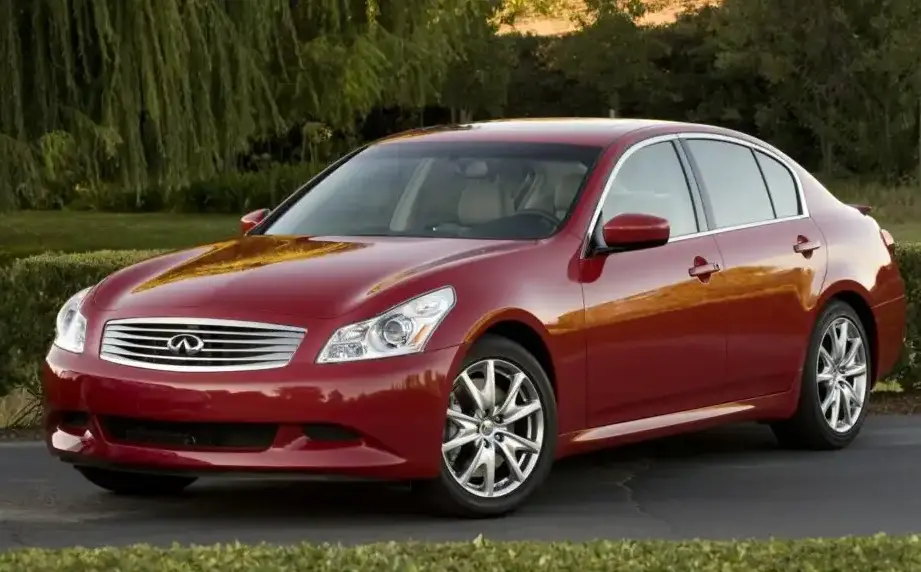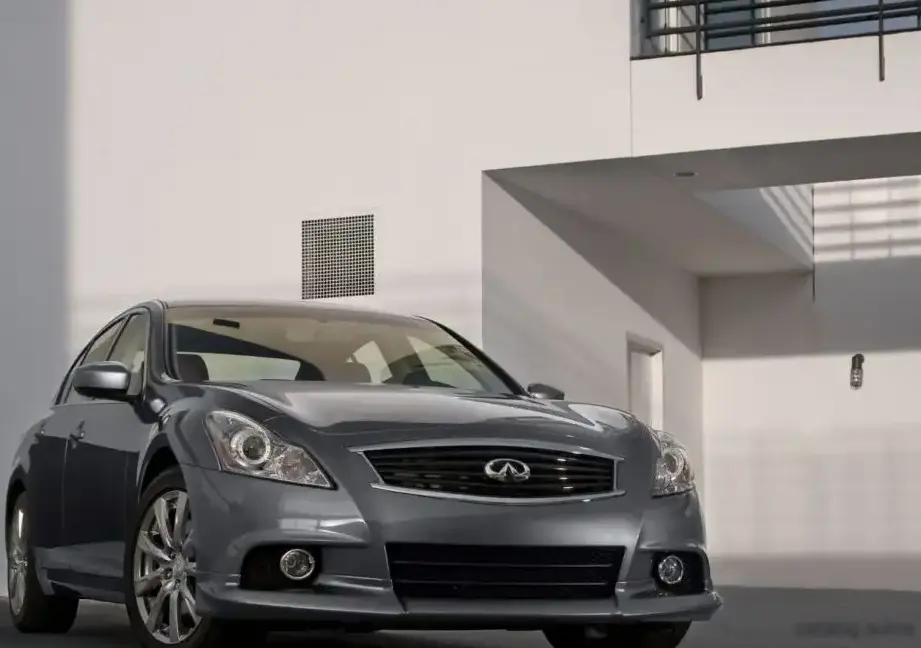
The Infiniti G37 Sedan, specifically the facelifted version produced from December 2009 through 2013, represented a significant evolution of Infiniti’s performance sedan offerings. Falling within the V36 chassis generation, the G37 aimed to deliver a compelling blend of luxury, performance, and technology. This variant, equipped with the 3.7-liter V6 engine producing 328 horsepower, positioned itself as the core model within the G37 lineup, offering a balance between the more accessible G25 and the higher-performance IPL G37. It was a key competitor in the entry-level luxury sport sedan segment, going head-to-head with vehicles like the BMW 3 Series, Audi A4, and Lexus IS.
Technical Specifications
| Brand | Infiniti |
| Model | G |
| Generation | G37 Sedan (V36, facelift 2009) |
| Type (Engine) | 3.7 V6 (328 Hp) |
| Start of production | December, 2009 |
| End of production | 2013 |
| Powertrain Architecture | Internal Combustion engine |
| Body type | Sedan |
| Seats | 5 |
| Doors | 4 |
| Fuel consumption (economy) – urban (EPA) | 13.8 l/100 km (17 US mpg, 20.5 UK mpg) |
| Fuel consumption (economy) – extra urban (EPA) | 9.4 l/100 km (25 US mpg, 30.1 UK mpg) |
| Fuel Type | Petrol (Gasoline) |
| Emission standard | LEV2 |
| Weight-to-power ratio | 5 kg/Hp, 198.7 Hp/tonne |
| Weight-to-torque ratio | 4.5 kg/Nm, 221.1 Nm/tonne |
| Power | 328 Hp @ 7000 rpm |
| Power per litre | 88.7 Hp/l |
| Torque | 365 Nm @ 5200 rpm (269.21 lb.-ft. @ 5200 rpm) |
| Maximum engine speed | 7500 rpm |
| Engine layout | Front, Longitudinal |
| Engine Model/Code | VQ37VHR |
| Engine displacement | 3696 cm3 (225.54 cu. in.) |
| Number of cylinders | 6 |
| Engine configuration | V-engine |
| Cylinder Bore | 95.5 mm (3.76 in.) |
| Piston Stroke | 86 mm (3.39 in.) |
| Compression ratio | 11:1 |
| Number of valves per cylinder | 4 |
| Fuel injection system | Multi-port manifold injection |
| Engine aspiration | Naturally aspirated engine |
| Valvetrain | DOHC, CVTCS, VVEL |
| Engine oil capacity | 4.9 l (5.18 US qt | 4.31 UK qt) |
| Coolant | 8.6 l (9.09 US qt | 7.57 UK qt) |
| Kerb Weight | 1651-1682 kg (3639.83 – 3708.18 lbs.) |
| Max. weight | 2142 kg (4722.3 lbs.) |
| Max load | 460-491 kg (1014.13 – 1082.47 lbs.) |
| Trunk (boot) space – minimum | 382 l (13.49 cu. ft.) |
| Fuel tank capacity | 76 l (20.08 US gal | 16.72 UK gal) |
| Length | 4779 mm (188.15 in.) |
| Width | 1773 mm (69.8 in.) |
| Height | 1453 mm (57.2 in.) |
| Wheelbase | 2850 mm (112.2 in.) |
| Front track | 1520 mm (59.84 in.) |
| Rear (Back) track | 1520 mm (59.84 in.) |
| Ride height (ground clearance) | 132 mm (5.2 in.) |
| Drag coefficient (Cd) | 0.29 |
| Minimum turning circle (turning diameter) | 10.8 m (35.43 ft.) |
| Drivetrain Architecture | The Internal combustion engine (ICE) drives the rear wheels of the vehicle. |
| Drive wheel | Rear wheel drive |
| Number of gears and type of gearbox | 6 gears, manual transmission |
| Front suspension | Coil spring, Double wishbone, Transverse stabilizer |
| Rear suspension | Independent multi-link spring suspension with stabilizer |
| Front brakes | Ventilated discs, 355×32 mm |
| Rear brakes | Ventilated discs, 350×20 mm |
| Assisting systems | ABS (Anti-lock braking system) |
| Steering type | Steering rack and pinion |
| Power steering | Hydraulic Steering |
| Tires size | Front wheel tires: 225/50 R18Rear wheel tires: 245/45 R18 |
| Wheel rims size | Front wheel rims: 7.5J x 18Rear wheel rims: 8.5J x 18 |
INTRODUCTION
The Infiniti G37 Sedan, launched in late 2009 as a replacement for the G35, represented a significant step forward for the brand. Built on the Nissan FM platform (front-mid engine, rear-wheel drive), the G37 aimed to provide a more engaging driving experience and a more refined interior than its predecessor. The facelifted model, introduced in December 2009, featured subtle styling updates to the front and rear fascias, along with interior enhancements. The 3.7-liter V6 engine was the centerpiece of the G37, delivering a substantial increase in power over the outgoing 3.5-liter engine. This variant, with its 328 horsepower output, was the most common configuration and served as the foundation for the G37’s success in the luxury sport sedan market.
Powertrain & Engine Architecture
The heart of the G37 Sedan is the VQ37VHR 3.7-liter V6 engine. This engine is a naturally aspirated, 24-valve DOHC powerplant featuring Nissan’s Variable Valve Event and Lift (VVEL) technology and Continuously Variable Valve Timing Control System (CVTCS). VVEL allows for precise control of valve timing and lift, optimizing engine performance and efficiency across a wide range of engine speeds. The engine utilizes multi-port fuel injection and boasts a compression ratio of 11:1. The engine code, VQ37VHR, signifies its position as a high-revving, high-performance variant within the VQ engine family. While a seven-speed automatic transmission was available, this discussion focuses on the six-speed manual transmission, which provided a more direct connection to the engine. The manual transmission featured a robust design and offered smooth, precise shifts.
Driving Characteristics
The G37 Sedan with the 3.7-liter V6 and six-speed manual transmission delivered a genuinely sporty driving experience. The engine’s 328 horsepower and 269 lb-ft of torque provided ample power for both everyday driving and spirited performance. Acceleration was brisk, with 0-60 mph times typically falling in the low-to-mid 5-second range. The rear-wheel-drive layout contributed to a balanced chassis and predictable handling. The manual transmission allowed drivers to fully exploit the engine’s powerband, while the well-tuned suspension provided a comfortable ride without sacrificing handling precision. Compared to the automatic transmission variant, the manual offered a more engaging and connected driving experience, though it required more driver involvement. The gear ratios were well-matched to the engine’s characteristics, providing strong acceleration in all gears.
Equipment & Trim Levels
The G37 Sedan was well-equipped even in its base form. Standard features included leather upholstery, power-adjustable front seats, a premium audio system, automatic climate control, and a suite of safety features such as ABS, traction control, and stability control. Optional extras included a navigation system, a sunroof, heated front seats, and a rear-view camera. The G37 Journey trim added features like Bluetooth connectivity and a power-adjustable steering column. The Sport package included sport seats, a sport-tuned suspension, and 19-inch wheels. Interior materials were generally of high quality, with a focus on creating a luxurious and comfortable cabin environment.
Chassis & Braking
The G37 Sedan utilized a robust chassis with a double-wishbone front suspension and an independent multi-link rear suspension. This suspension setup provided a good balance between ride comfort and handling performance. Stabilizer bars were fitted to both the front and rear axles to reduce body roll during cornering. The braking system consisted of ventilated discs on all four wheels, providing ample stopping power. The front brakes measured 355x32mm, while the rear brakes were 350x20mm. ABS was standard, ensuring optimal braking performance in a variety of conditions.
Market Reception & Comparison
The Infiniti G37 Sedan was generally well-received by automotive critics. It was praised for its powerful engine, engaging handling, and luxurious interior. Some critics noted that the ride could be a bit firm, but overall, the G37 was considered a compelling alternative to its European and Japanese rivals. Compared to the G25, the G37 offered significantly more performance. Compared to the IPL G37, the standard G37 provided a more balanced combination of performance and affordability. Fuel economy was respectable for a performance sedan, averaging around 19 mpg in combined driving. Reliability was generally good, although some owners reported minor issues with the infotainment system.
Legacy
The Infiniti G37 Sedan remains a popular choice in the used car market today. Its combination of performance, luxury, and reliability has made it a desirable vehicle for enthusiasts and everyday drivers alike. The VQ37VHR engine is known for its durability and longevity, and with proper maintenance, it can provide many years of reliable service. While newer Infiniti models have emerged, the G37 continues to hold its own as a capable and enjoyable sport sedan. Its strong aftermarket support and relatively affordable price point make it an attractive option for those seeking a performance-oriented vehicle without breaking the bank.