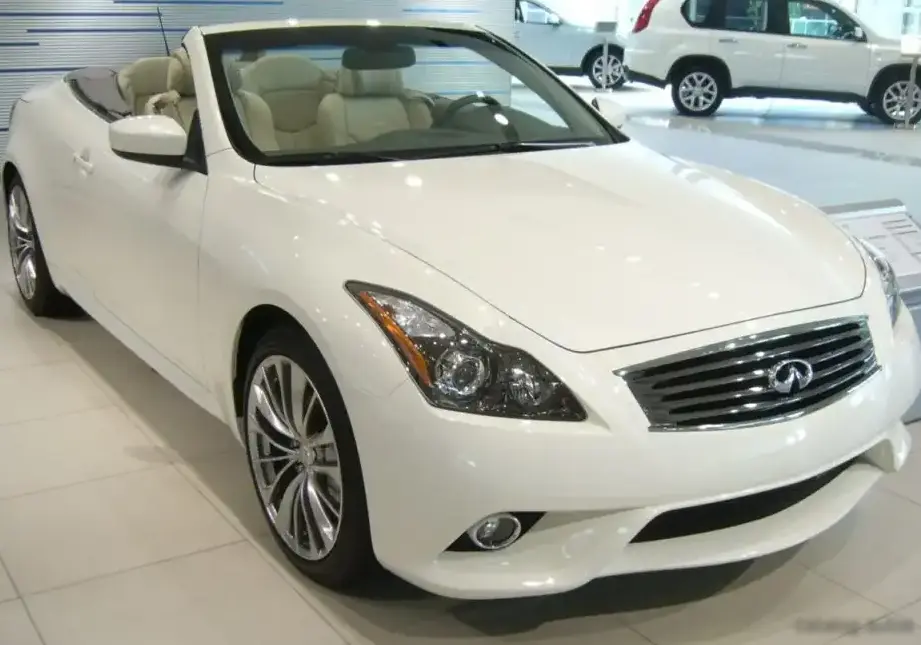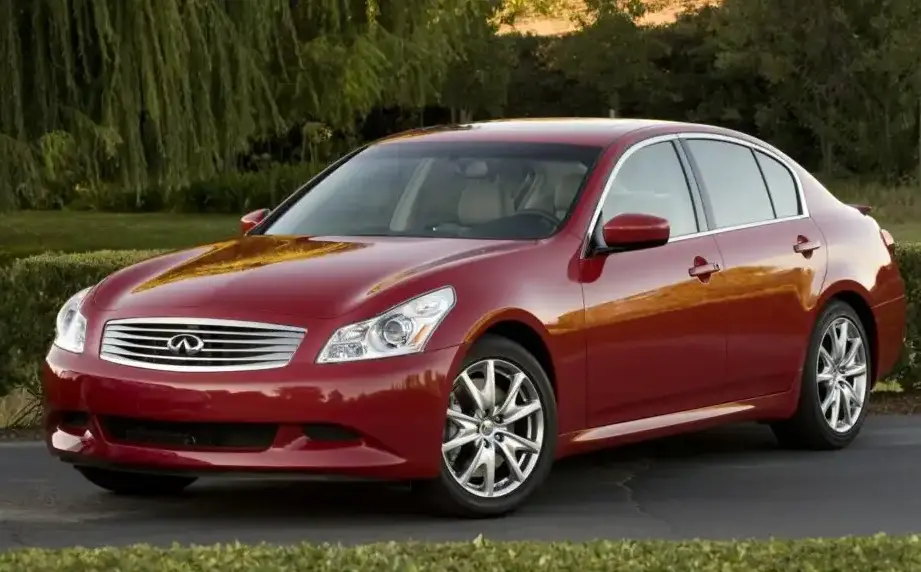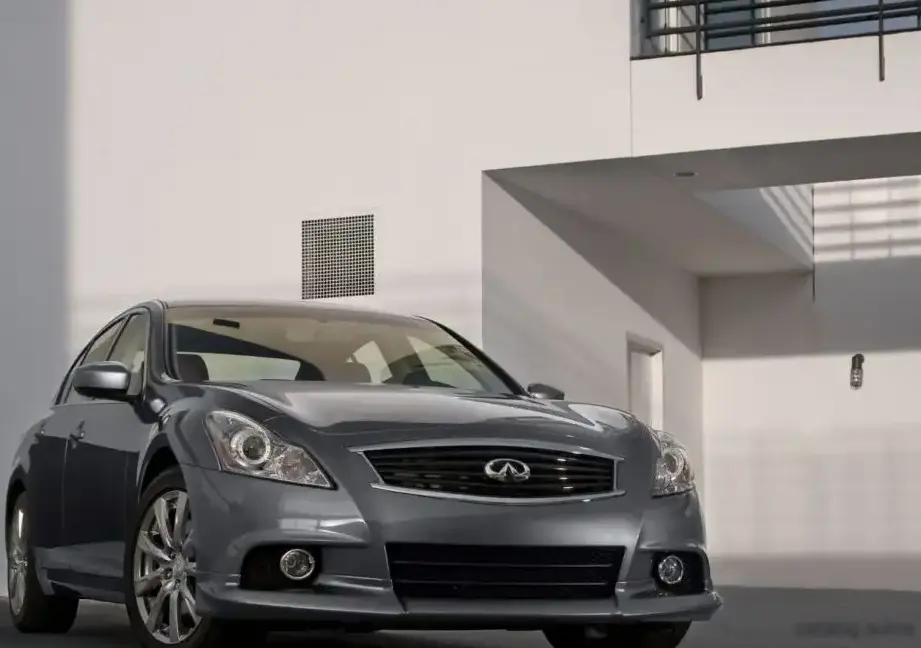
The Infiniti G37 Sedan, specifically the facelifted version introduced in December 2009 and continuing through the 2015 model year, represented a significant evolution of Infiniti’s performance sedan offerings. Built on the V36 platform (shared with the Nissan 370Z and earlier Infiniti G35), the G37 aimed to deliver a more refined and powerful driving experience than its predecessor. This variant, equipped with the 3.7-liter V6 engine and a seven-speed automatic transmission, occupied a central position in the G37 lineup, offering a balance between performance and convenience. It was positioned above the base models and below the more performance-focused Sport packages.
Technical Specifications
| Brand | Infiniti |
| Model | G |
| Generation | G37 Sedan (V36, facelift 2009) |
| Type (Engine) | 3.7 V6 (328 Hp) Automatic |
| Start of production | December, 2009 |
| End of production | 2015 |
| Powertrain Architecture | Internal Combustion engine |
| Body type | Sedan |
| Seats | 5 |
| Doors | 4 |
| Fuel consumption (economy) – urban (EPA) | 12.4 l/100 km (19 US mpg, 22.8 UK mpg, 8.1 km/l) |
| Fuel consumption (economy) – extra urban (EPA) | 8.7 l/100 km (27 US mpg, 32.5 UK mpg, 11.5 km/l) |
| Fuel Type | Petrol (Gasoline) |
| Emission standard | LEV2 |
| Weight-to-power ratio | 5 kg/Hp, 200.6 Hp/tonne |
| Weight-to-torque ratio | 4.5 kg/Nm, 223.2 Nm/tonne |
| Power | 328 Hp @ 7000 rpm |
| Power per litre | 88.7 Hp/l |
| Torque | 365 Nm @ 5200 rpm (269.21 lb.-ft. @ 5200 rpm) |
| Maximum engine speed | 7500 rpm |
| Engine layout | Front, Longitudinal |
| Engine Model/Code | VQ37VHR |
| Engine displacement | 3696 cm3 (225.54 cu. in.) |
| Number of cylinders | 6 |
| Engine configuration | V-engine |
| Cylinder Bore | 95.5 mm (3.76 in.) |
| Piston Stroke | 86 mm (3.39 in.) |
| Compression ratio | 11:1 |
| Number of valves per cylinder | 4 |
| Fuel injection system | Multi-port manifold injection |
| Engine aspiration | Naturally aspirated engine |
| Valvetrain | DOHC, CVTCS, VVEL |
| Engine oil capacity | 4.9 l (5.18 US qt | 4.31 UK qt) |
| Coolant | 8.5 l (8.98 US qt | 7.48 UK qt) |
| Kerb Weight | 1635-1646 kg (3604.56 – 3628.81 lbs.) |
| Max. weight | 2142 kg (4722.3 lbs.) |
| Max load | 496-507 kg (1093.49 – 1117.74 lbs.) |
| Trunk (boot) space – minimum | 382 l (13.49 cu. ft.) |
| Fuel tank capacity | 76 l (20.08 US gal | 16.72 UK gal) |
| Length | 4779 mm (188.15 in.) |
| Width | 1773 mm (69.8 in.) |
| Height | 1453 mm (57.2 in.) |
| Wheelbase | 2850 mm (112.2 in.) |
| Front track | 1520 mm (59.84 in.) |
| Rear (Back) track | 1520-1530 mm (59.84 – 60.24 in.) |
| Ride height (ground clearance) | 130-132 mm (5.12 – 5.2 in.) |
| Drag coefficient (Cd) | 0.29 |
| Minimum turning circle (turning diameter) | 10.8 m (35.43 ft.) |
| Drivetrain Architecture | The Internal combustion engine (ICE) drives the rear wheels of the vehicle. |
| Drive wheel | Rear wheel drive |
| Number of gears and type of gearbox | 7 gears, automatic transmission |
| Front suspension | Coil spring, Double wishbone, Transverse stabilizer |
| Rear suspension | Independent multi-link spring suspension with stabilizer |
| Front brakes | Ventilated discs, 320×28 mm |
| Rear brakes | Ventilated discs, 308×16 mm |
| Assisting systems | ABS (Anti-lock braking system) |
| Steering type | Steering rack and pinion |
| Power steering | Hydraulic Steering |
| Tires size | Front wheel tires: 225/55 R17; 225/50 R18Rear wheel tires: 225/55 R17; 225/50 R18; 245/45 R18 |
| Wheel rims size | Front wheel rims: 7.5J x 17; 7.5J x 18Rear wheel rims: 7.5J x 17; 7.5J x 18; 8.5J x 18 |
INTRODUCTION
The Infiniti G37 Sedan, launched in 2007 (and facelifted in late 2009), was a direct successor to the G35. The “37” designation signified the increase in engine displacement from 3.5 liters to 3.7 liters. The 2009 facelift brought revised styling, including a new front fascia, headlights, and taillights, along with interior refinements. The G37 aimed to compete with established luxury sport sedans like the BMW 3 Series, Audi A4, and Lexus IS. The combination of a potent V6 engine and a smooth-shifting automatic transmission made it a popular choice for buyers seeking a blend of performance and comfort.
Powertrain & Engine Architecture
At the heart of the G37 Sedan was the VQ37VHR 3.7-liter V6 engine. This engine, a member of Nissan’s highly regarded VQ family, featured a 60-degree V-angle and utilized a lightweight aluminum block and cylinder heads. The “VHR” designation stood for “Variable Valve Timing and lift with Continuously variable valve timing control system”. This advanced valvetrain, combined with multi-port fuel injection, allowed for optimized performance across the rev range. The engine produced 328 horsepower at 7000 rpm and 269 lb-ft of torque at 5200 rpm. The seven-speed automatic transmission, sourced from Jatco, featured Adaptive Shift Control (ASC) which learned the driver’s habits and adjusted shift points accordingly. Manual shift mode was also available, offering some degree of driver control.
Driving Characteristics
The G37 Sedan with the 3.7L V6 and automatic transmission delivered brisk acceleration. While not as aggressively geared as some sport sedans, the automatic transmission provided smooth and responsive shifts. The 0-60 mph time was typically around 5.5-5.7 seconds, making it competitive within its class. Compared to the six-speed manual transmission version, the automatic offered slightly slower acceleration due to inherent transmission losses. However, the automatic provided a more relaxed driving experience, particularly in city traffic. The rear-wheel-drive configuration contributed to a balanced feel, although traction could be a concern in inclement weather. The steering was well-weighted and provided good feedback, enhancing the overall driving experience.
Equipment & Trim Levels
The G37 Sedan came in several trim levels, with the base model offering a comprehensive list of standard features. These included leather upholstery, power-adjustable front seats, a Bose audio system, and automatic climate control. Higher trim levels, such as the Journey and Premium packages, added features like navigation, a sunroof, and upgraded interior trim. Optional extras included a limited-slip differential, adaptive cruise control, and rain-sensing wipers. The automatic transmission was often paired with paddle shifters, allowing for manual gear selection without removing hands from the steering wheel.
Chassis & Braking
The G37 Sedan utilized a front double-wishbone and rear multi-link suspension system, providing a comfortable ride while maintaining good handling characteristics. Stabilizer bars were fitted to both the front and rear axles to reduce body roll during cornering. Braking duties were handled by ventilated disc brakes on all four wheels, with ABS and electronic brake-force distribution as standard features. The base models typically featured 17-inch wheels, while higher trims offered 18-inch wheels with wider tires for improved grip.
Market Reception & Comparison
The Infiniti G37 Sedan was generally well-received by automotive critics. It was praised for its powerful engine, comfortable ride, and stylish interior. However, some reviewers noted that the interior materials weren’t quite as luxurious as those found in some of its European competitors. Compared to the G35, the G37 offered a significant improvement in performance and refinement. The automatic transmission was considered a good all-around choice, offering a balance between convenience and responsiveness. Fuel economy was respectable for a V6-powered luxury sedan, averaging around 19 mpg in the city and 27 mpg on the highway.
Legacy
The Infiniti G37 Sedan remains a popular choice in the used car market. The VQ37VHR engine is known for its reliability, although regular maintenance is crucial. Common issues include oil consumption and potential for timing chain wear at very high mileage. The seven-speed automatic transmission is generally reliable, but fluid changes should be performed according to the manufacturer’s recommendations. The G37’s combination of performance, luxury, and relative affordability has made it a desirable option for enthusiasts seeking a sporty and well-equipped sedan.