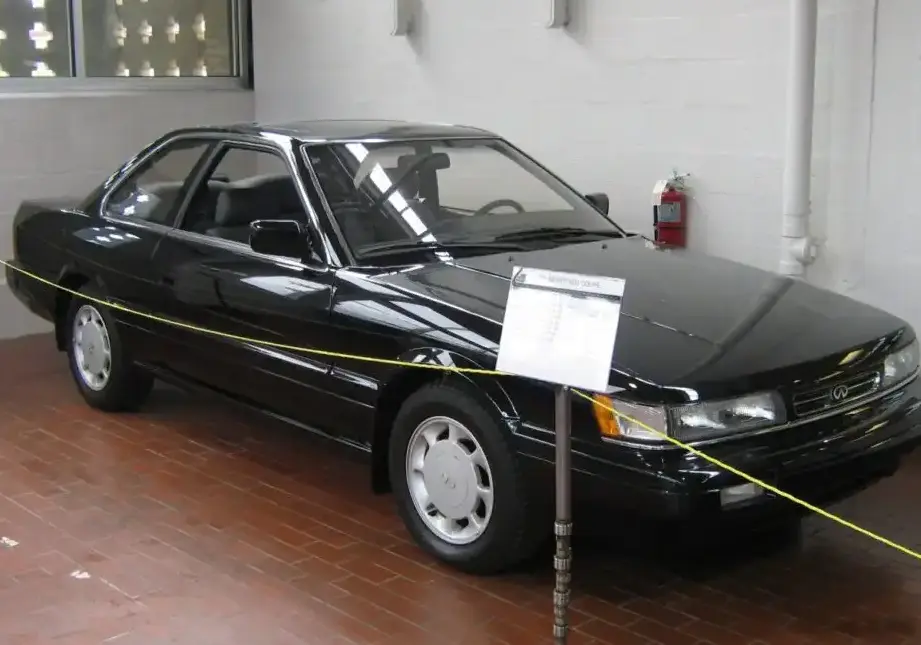
The Infiniti M I Convertible (F31) 30, produced between 1990 and 1992, marked Infiniti’s initial venture into the luxury convertible segment. Positioned as an accessible and stylish open-top grand tourer, the F31 aimed to attract buyers desiring a blend of Japanese dependability and European-influenced aesthetics. This specific variant, the “30” producing 164 horsepower, served as the entry point to the M I Convertible range, balancing performance and comfort. It was based on the Nissan Leopard, a model primarily for the Japanese Domestic Market (JDM), which was then re-engineered and refined for the North American market as part of Infiniti’s launch strategy.
Technical Specifications
| Brand | Infiniti |
| Model | M |
| Generation | M I Convertible (F31) |
| Type (Engine) | 30 (164 Hp) |
| Start of production | 1990 |
| End of production | 1992 |
| Powertrain Architecture | Internal Combustion engine |
| Body type | Cabriolet |
| Seats | 2 |
| Doors | 2 |
| Fuel Type | Petrol (Gasoline) |
| Acceleration 0 – 100 km/h | 10.2 sec |
| Acceleration 0 – 62 mph | 10.2 sec |
| Acceleration 0 – 60 mph | 9.7 sec |
| Maximum speed | 205 km/h (127.38 mph) |
| Weight-to-power ratio | 9.7 kg/Hp, 102.6 Hp/tonne |
| Weight-to-torque ratio | 6.5 kg/Nm, 152.7 Nm/tonne |
| Power | 164 Hp @ 6000 rpm |
| Power per litre | 55.4 Hp/l |
| Torque | 244 Nm @ 3500 rpm (179.97 lb.-ft. @ 3500 rpm) |
| Engine displacement | 2960 cm3 (180.63 cu. in.) |
| Number of cylinders | 6 |
| Engine configuration | V-engine |
| Cylinder Bore | 87 mm (3.43 in.) |
| Piston Stroke | 83 mm (3.27 in.) |
| Compression ratio | 9:1 |
| Number of valves per cylinder | 2 |
| Fuel injection system | Multi-port manifold injection |
| Engine aspiration | Naturally aspirated engine |
| Valvetrain | SOHC |
| Engine oil capacity | 4.7 l (4.97 US qt | 4.14 UK qt) |
| Coolant | 9 l (9.51 US qt | 7.92 UK qt) |
| Kerb Weight | 1598 kg (3522.99 lbs.) |
| Fuel tank capacity | 65 l (17.17 US gal | 14.3 UK gal) |
| Length | 4795 mm (188.78 in.) |
| Width | 1690 mm (66.54 in.) |
| Height | 1380 mm (54.33 in.) |
| Wheelbase | 2615 mm (102.95 in.) |
| Front track | 1435 mm (56.5 in.) |
| Rear (Back) track | 1435 mm (56.5 in.) |
| Drag coefficient (Cd) | 0.40 |
| Minimum turning circle | 10.4 m (34.12 ft.) |
| Drivetrain Architecture | Rear wheel drive |
| Drive wheel | Rear wheel drive |
| Number of gears | 4 |
| Type of gearbox | automatic transmission |
| Front brakes | Ventilated discs |
| Rear brakes | Disc |
| Tires size | 215/60 HR15 |
| Wheel rims size | 15 |
Powertrain & Engine Architecture
The M I Convertible 30’s engine was Nissan’s VG30E, a 3.0-liter naturally aspirated V6. This engine was a common sight in Nissan and Infiniti vehicles of the period, featuring a single overhead camshaft (SOHC) valvetrain with two valves per cylinder. The VG30E employed multi-port fuel injection, contributing to relatively smooth power delivery. It produced 164 horsepower at 6000 rpm and 244 Nm (179.97 lb-ft) of torque at 3500 rpm. It was exclusively paired with a four-speed automatic transmission, prioritizing comfortable cruising over outright performance. The automatic transmission, while user-friendly, wasn’t known for particularly quick shifts or a sporty feel.
Driving Characteristics
The combination of 164 hp and the automatic transmission resulted in a driving experience focused on relaxed touring. Acceleration from 0-60 mph took around 9.7 seconds, which was acceptable for the time but not particularly quick. The automatic transmission’s gear ratios were tuned for fuel efficiency and smooth operation, rather than rapid acceleration. Compared to the later M30 models with a five-speed manual transmission, the automatic version felt noticeably less responsive. The rear-wheel-drive layout provided a balanced feel, but the relatively soft suspension tuning emphasized ride comfort over sharp handling.
Equipment & Trim Levels
The M I Convertible 30 was reasonably well-equipped for its price. Standard features included leather upholstery, power windows and locks, air conditioning, and a premium sound system. The interior design drew inspiration from European styling, aiming for a sophisticated and luxurious atmosphere. Optional extras included a power-adjustable driver’s seat, upgraded audio systems, and a limited-slip differential. The dashboard layout was straightforward, with clear gauges and controls. The convertible top was power-operated, providing a relatively quiet and well-sealed cabin when raised.
Chassis & Braking
The F31 chassis featured a front independent suspension with MacPherson struts and a rear independent suspension with trailing arms. The suspension was tuned for comfort, delivering a smooth ride on most road surfaces. Braking was provided by ventilated discs at the front and solid discs at the rear. While adequate for typical driving, the braking system lacked the stopping power of more modern vehicles. The car rode on 15-inch wheels with 215/60 HR15 tires, offering a reasonable balance between ride comfort and handling.
Market Reception & Comparison
The Infiniti M I Convertible 30 received mixed reviews. It was praised for its stylish design and comfortable ride, but often criticized for its lack of performance, especially with the automatic transmission. Compared to the manual transmission M30, the automatic version felt sluggish and less engaging. Fuel economy was average for the era, and reliability was generally good, consistent with Nissan’s reputation. The M I Convertible competed with other luxury convertibles like the Mazda MX-5 Miata (though smaller and sportier) and the Mercedes-Benz SL, but at a more affordable price point.
Legacy
While not a huge sales success, the Infiniti M I Convertible played a key role in establishing the Infiniti brand in North America. The VG30E engine proved to be a durable and reliable powerplant, and many examples remain on the road today. The automatic transmission, while not sporty, has also proven relatively reliable with proper maintenance. In the used car market, the M I Convertible 30 is appreciated by enthusiasts for its unique styling, comfortable ride, and affordability. Parts availability can be challenging, but a dedicated owner community and online resources help keep these classic convertibles running. The F31 remains a distinctive example of early Japanese luxury car design, representing a bold attempt to compete with established European brands.