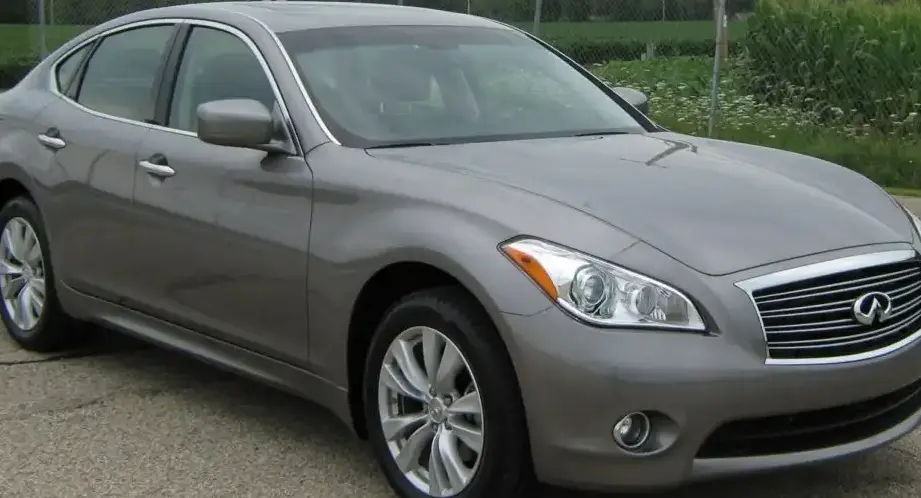
The Infiniti M37, produced from 2010 to 2019 as part of the fourth generation (Y51) of the Infiniti M line, represented a significant step forward in the brand’s pursuit of a luxury sport sedan. Positioned as a performance-oriented variant within the M lineup, the M37 offered a compelling alternative to established European rivals. It served as a bridge between the more accessible M25 models and the higher-performance M56, appealing to buyers seeking a balance of power, refinement, and technology. The M37 was primarily marketed in North America and select international markets, solidifying Infiniti’s presence in the mid-size luxury segment.
Technical Specifications
| Brand | Infiniti |
| Model | M |
| Generation | M IV (Y51) |
| Type (Engine) | M37 V6 (330 Hp) Automatic |
| Start of production | 2010 |
| End of production | 2019 |
| Powertrain Architecture | Internal Combustion engine |
| Body type | Sedan |
| Seats | 5 |
| Doors | 4 |
| Fuel consumption (urban) | 13.1 l/100 km (18 US mpg, 21.6 UK mpg, 7.6 km/l) |
| Fuel consumption (extra urban) | 9 l/100 km (26.1 US mpg, 31.4 UK mpg, 11.1 km/l) |
| Fuel Type | Petrol (Gasoline) |
| Weight-to-power ratio | 5.3 kg/Hp, 188.6 Hp/tonne |
| Weight-to-torque ratio | 4.8 kg/Nm, 209.1 Nm/tonne |
| Power | 330 Hp @ 7000 rpm |
| Power per litre | 89.3 Hp/l |
| Torque | 366 Nm @ 5200 rpm (269.95 lb.-ft. @ 5200 rpm) |
| Maximum engine speed | 7500 rpm |
| Engine layout | Front, Longitudinal |
| Engine Model/Code | VQ37VHR |
| Engine displacement | 3696 cm3 (225.54 cu. in.) |
| Number of cylinders | 6 |
| Engine configuration | V-engine |
| Cylinder Bore | 95.5 mm (3.76 in.) |
| Piston Stroke | 86 mm (3.39 in.) |
| Compression ratio | 11:1 |
| Number of valves per cylinder | 4 |
| Fuel injection system | Multi-port manifold injection |
| Valvetrain | DOHC |
| Engine oil capacity | 4.9 l (5.18 US qt | 4.31 UK qt) |
| Coolant capacity | 8.4 l (8.88 US qt | 7.39 UK qt) |
| Kerb Weight | 1750 kg (3858.09 lbs.) |
| Max. weight | 2271 kg (5006.7 lbs.) |
| Max load | 521 kg (1148.61 lbs.) |
| Trunk (boot) space – minimum | 422 l (14.9 cu. ft.) |
| Fuel tank capacity | 76 l (20.08 US gal | 16.72 UK gal) |
| Length | 4945 mm (194.69 in.) |
| Width | 1844 mm (72.6 in.) |
| Height | 1501 mm (59.09 in.) |
| Wheelbase | 2901 mm (114.21 in.) |
| Front track | 1575 mm (62.01 in.) |
| Rear (Back) track | 1570 mm (61.81 in.) |
| Ride height (ground clearance) | 150-152 mm (5.91 – 5.98 in.) |
| Drag coefficient (Cd) | 0.27 |
| Minimum turning circle (turning diameter) | 11.2 m (36.75 ft.) |
| Drivetrain Architecture | Rear wheel drive |
| Number of gears and type of gearbox | 7 gears, automatic transmission |
| Front suspension | Double wishbone |
| Rear suspension | Independent multi-link spring suspension with stabilizer |
| Front brakes | Ventilated discs, 320.04×27.94 mm |
| Rear brakes | Ventilated discs, 307.34×15.24 mm |
| Assisting systems | ABS (Anti-lock braking system) |
| Steering type | Steering rack and pinion |
| Power steering | Electric Steering |
| Tires size | 245/50 R18 V; 245/40 R20 W |
| Wheel rims size | 8.0J x 18; 9.0J x 20 |
Powertrain & Engine Architecture
The heart of the M37 is the VQ37VHR 3.7-liter V6 engine. This engine, a member of Nissan’s highly regarded VQ family, is known for its smooth power delivery and reliability. The “VHR” designation stands for “Variable Valve Timing and lift with high response.” This advanced valvetrain system continuously adjusts valve timing and lift on both the intake and exhaust sides, optimizing engine performance across the rev range. The engine utilizes multi-port fuel injection and a compression ratio of 11:1. Paired with the VQ37VHR is a seven-speed automatic transmission, designed to provide smooth and responsive shifts. This transmission features adaptive shift control, learning the driver’s habits to optimize gear selection. The transmission was a key component in balancing performance and fuel efficiency.
Driving Characteristics
The M37 Automatic delivers a refined and engaging driving experience. While not as overtly sporty as some of its European competitors, the 330 horsepower and 269 lb-ft of torque provide ample power for both city driving and highway passing. The seven-speed automatic transmission contributes to a smooth and seamless power delivery, although some reviewers noted a slight hesitation during quick downshifts. Compared to the M25, the M37 offered a noticeable performance upgrade, while remaining more accessible and less demanding to drive than the M56. The rear-wheel-drive configuration contributes to a balanced feel, and the optional sport package included features like a sport-tuned suspension and paddle shifters for more driver involvement.
Equipment & Trim Levels
The M37 was generally well-equipped, even in its base form. Standard features typically included leather upholstery, a power-adjustable driver’s seat, dual-zone automatic climate control, a Bose audio system, and a navigation system. Higher trim levels, such as the “Journey” and “Destination” packages, added features like heated and ventilated front seats, a power-adjustable passenger seat, a rear-seat entertainment system, and advanced safety technologies like lane departure warning and blind-spot monitoring. Interior color options typically included black, wheat, and graphite. Exterior options included a variety of paint colors and wheel designs, ranging from 18-inch to 20-inch alloys.
Chassis & Braking
The M37 utilizes a double wishbone front suspension and an independent multi-link rear suspension, providing a comfortable ride and responsive handling. Stabilizer bars are included at both ends to reduce body roll during cornering. Braking duties are handled by ventilated discs on all four wheels, with ABS standard. The M37’s chassis was tuned to balance comfort and handling, offering a more forgiving ride than some of its sportier rivals. The steering is electrically assisted, providing a light and precise feel.
Market Reception & Comparison
The Infiniti M37 was generally well-received by automotive critics. It was praised for its powerful engine, comfortable ride, and luxurious interior. However, some reviewers noted that its styling was somewhat conservative compared to its European competitors. Fuel economy was considered average for its class, with EPA estimates around 17 mpg city and 26 mpg highway. Compared to the M25, the M37 offered a significant performance boost, justifying its higher price tag for buyers prioritizing power. Against rivals like the BMW 5 Series and the Mercedes-Benz E-Class, the M37 offered a compelling value proposition, often undercutting its competitors in price while offering comparable levels of luxury and performance.
Legacy
The Infiniti M37 has proven to be a relatively reliable vehicle in the used car market. The VQ37VHR engine is known for its durability, and the seven-speed automatic transmission has generally held up well over time. Common issues reported by owners include minor electrical glitches and wear items like brakes and tires. The M37 remains a popular choice for buyers seeking a comfortable, well-equipped, and relatively affordable luxury sport sedan. Its blend of performance, refinement, and value has ensured its continued appeal in the used car market, making it a solid choice for those looking for a dependable and enjoyable driving experience.