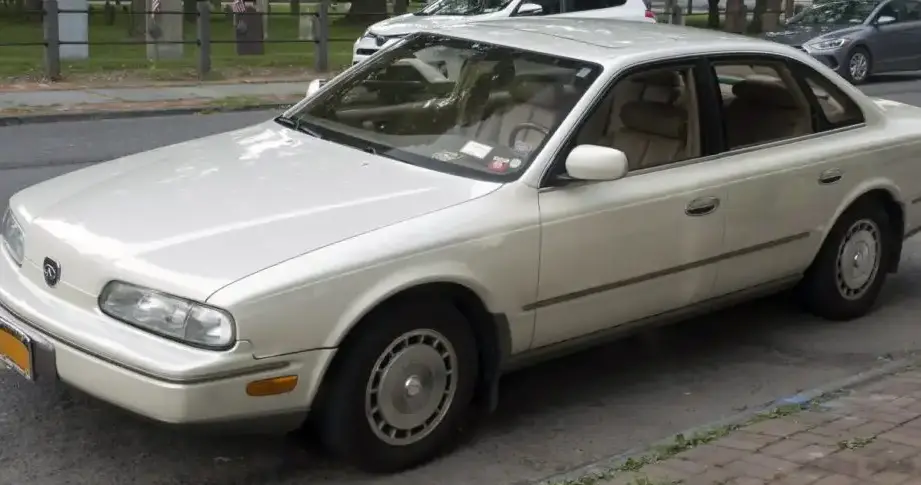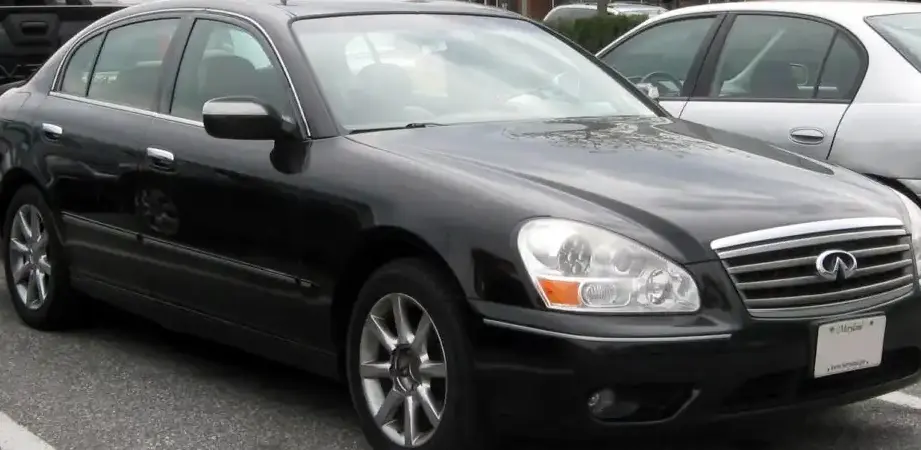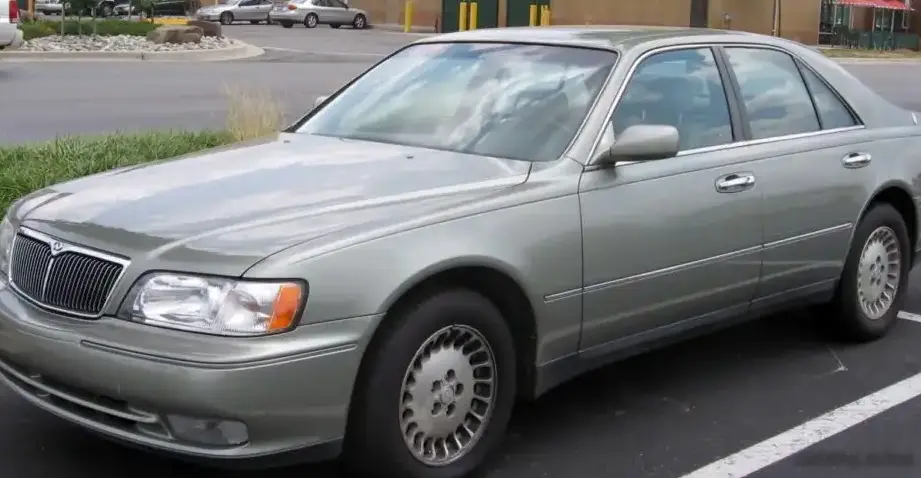
The Infiniti Q45 II, produced between 1996 and 2001, represented the second generation of Infiniti’s flagship luxury sedan. Built upon the Nissan F50 platform (internally designated VH50DE), the Q45 II aimed to elevate the brand’s presence in the North American luxury market, directly competing with established German and American rivals. This generation marked a significant departure from the first Q45, adopting a more contemporary and rounded exterior design. The 4.1i V8 32, producing 269 horsepower, was the sole engine offering throughout its production run, paired exclusively with a four-speed automatic transmission. This configuration positioned the Q45 II as a comfortable, grand touring sedan, prioritizing refinement over outright sportiness.
Technical Specifications
| Brand | Infiniti |
| Model | Q45 |
| Generation | Q45 II |
| Type (Engine) | 4.1 i V8 32 (269 Hp) |
| Start of production | 1996 |
| End of production | 2001 |
| Powertrain Architecture | Internal Combustion engine |
| Body type | Sedan |
| Seats | 5 |
| Doors | 4 |
| Fuel consumption (urban) | 13.8 l/100 km (17 US mpg, 20.5 UK mpg) |
| Fuel consumption (extra urban) | 9.8 l/100 km (24 US mpg, 28.8 UK mpg) |
| Fuel Type | Petrol (Gasoline) |
| Acceleration 0 – 100 km/h | 7.9 sec |
| Acceleration 0 – 62 mph | 7.9 sec |
| Acceleration 0 – 60 mph | 7.5 sec |
| Maximum speed | 232 km/h (144.16 mph) |
| Weight-to-power ratio | 6.5 kg/Hp, 152.8 Hp/tonne |
| Weight-to-torque ratio | 4.7 kg/Nm, 214.8 Nm/tonne |
| Power | 269 Hp @ 5600 rpm |
| Power per litre | 65.1 Hp/l |
| Torque | 378 Nm @ 4000 rpm (278.8 lb.-ft. @ 4000 rpm) |
| Engine layout | Front, Longitudinal |
| Engine displacement | 4130 cm3 (252.03 cu. in.) |
| Number of cylinders | 8 |
| Engine configuration | V-engine |
| Cylinder Bore | 93 mm (3.66 in.) |
| Piston Stroke | 76 mm (2.99 in.) |
| Compression ratio | 10.5:1 |
| Number of valves per cylinder | 4 |
| Fuel injection system | Multi-port manifold injection |
| Engine aspiration | Naturally aspirated engine |
| Valvetrain | DOHC |
| Kerb Weight | 1760 kg (3880.14 lbs.) |
| Max. weight | 2355 kg (5191.89 lbs.) |
| Max load | 595 kg (1311.75 lbs.) |
| Trunk (boot) space – minimum | 420 l (14.83 cu. ft.) |
| Fuel tank capacity | 85 l (22.45 US gal | 18.7 UK gal) |
| Length | 5070 mm (199.61 in.) |
| Width | 1820 mm (71.65 in.) |
| Height | 1440 mm (56.69 in.) |
| Wheelbase | 2830 mm (111.42 in.) |
| Front track | 1540 mm (60.63 in.) |
| Rear (Back) track | 1540 mm (60.63 in.) |
| Drivetrain Architecture | The Internal combustion engine (ICE) drives the rear wheels of the vehicle. |
| Drive wheel | Rear wheel drive |
| Number of gears and type of gearbox | 4 gears, automatic transmission |
| Front suspension | Coil spring |
| Rear suspension | Coil spring |
| Front brakes | Ventilated discs |
| Rear brakes | Disc |
| Assisting systems | ABS (Anti-lock braking system) |
| Steering type | Steering rack and pinion |
| Power steering | Hydraulic Steering |
| Tires size | 215/65 R16 |
Powertrain & Engine Architecture
The heart of the Q45 II is the VH50DE 4.1-liter V8 engine. This engine, a descendant of Nissan’s long-running V8 family, featured a 90-degree V-angle, dual overhead camshafts (DOHC), and four valves per cylinder. The multi-port fuel injection system delivered fuel directly to each cylinder, optimizing combustion efficiency. The engine’s robust construction and relatively conservative tuning prioritized smoothness and reliability over peak performance. The sole transmission option was a four-speed automatic, known for its smooth shifts but lacking the responsiveness of more modern transmissions. This transmission was designed for comfortable cruising rather than aggressive driving. The engine code remained consistent throughout the Q45 II’s production, simplifying maintenance and parts sourcing.
Driving Characteristics
The Q45 II 4.1i Automatic offered a refined and comfortable driving experience. Acceleration from 0-60 mph took approximately 7.5 seconds, respectable for the era but not particularly quick compared to some European competitors. The four-speed automatic transmission, while smooth, resulted in noticeable gear changes and a lack of the close ratios found in more performance-oriented vehicles. The emphasis was on effortless cruising, with ample torque available for highway passing maneuvers. The rear-wheel-drive configuration provided a balanced feel, but the Q45 II wasn’t designed for spirited cornering. Compared to a hypothetical manual transmission version (never offered), the automatic would have sacrificed some responsiveness and fuel efficiency.
Equipment & Trim Levels
The Q45 II came well-equipped as standard, reflecting its position as Infiniti’s flagship model. Standard features included leather upholstery, power-adjustable front seats with memory function, a Bose audio system, automatic climate control, and power windows and locks. Optional extras included a navigation system (a relatively new feature at the time), a sunroof, and upgraded wood trim. The interior design was characterized by a blend of luxury and technology, with a focus on creating a comfortable and inviting cabin. Trim levels were relatively limited, with most variations stemming from optional packages rather than distinct model grades.
Chassis & Braking
The Q45 II utilized a traditional body-on-frame construction, providing a solid and stable platform. The suspension consisted of coil springs all around, with a focus on ride comfort. Front brakes were ventilated discs, while rear brakes were solid discs. Anti-lock braking system (ABS) was standard, enhancing safety and control during emergency braking. The steering was a rack-and-pinion system with hydraulic power assistance, providing a smooth and responsive feel. The relatively heavy curb weight of the Q45 II (approximately 3880 lbs) necessitated a robust braking system and suspension setup.
Market Reception & Comparison
The Infiniti Q45 II received generally positive reviews from automotive critics. It was praised for its comfortable ride, spacious interior, and well-equipped features. However, some critics noted its somewhat bland styling and lack of sporty handling compared to European rivals like the BMW 7 Series and Mercedes-Benz S-Class. Fuel economy was also a point of concern, with the 4.1-liter V8 consuming a significant amount of gasoline. Compared to other trims within the Infiniti lineup (which didn’t exist for this engine/transmission combo), the Q45 II represented the pinnacle of luxury and refinement. It was positioned above the I30 and J30 models in terms of price, features, and overall size.
Legacy
The Infiniti Q45 II, while not a sales blockbuster, established Infiniti as a credible player in the luxury sedan segment. The VH50DE engine proved to be remarkably reliable, and well-maintained examples continue to be found on the used car market today. The four-speed automatic transmission, while dated by modern standards, is generally considered durable. The Q45 II is now appreciated by enthusiasts for its classic styling, comfortable ride, and relatively affordable price point. Its legacy lies in its contribution to Infiniti’s brand building and its demonstration of Japanese engineering’s ability to compete with established European luxury brands.