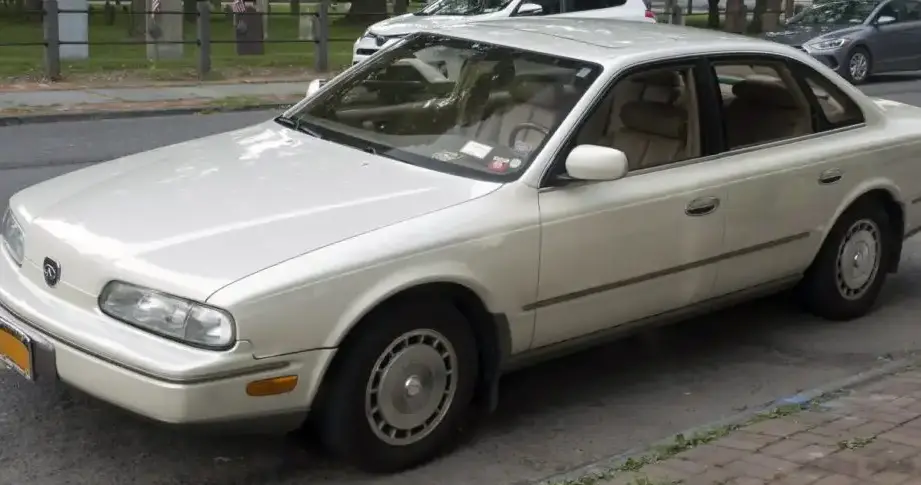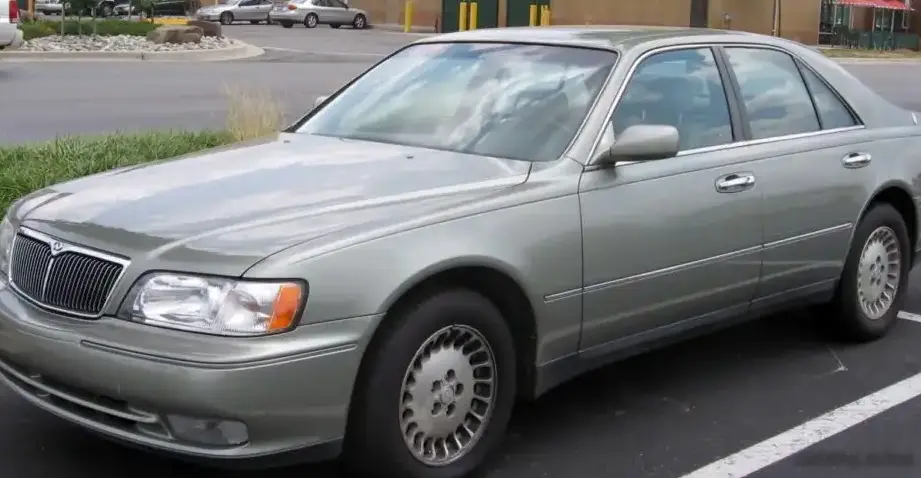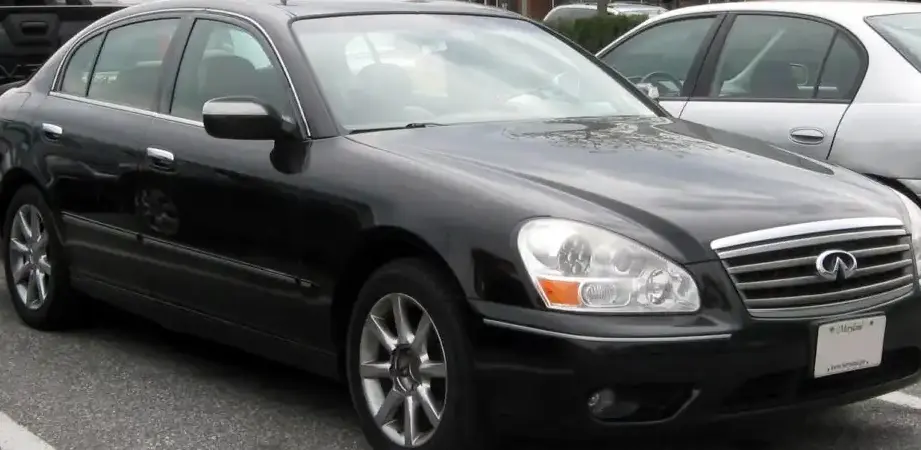
The Infiniti Q45 III, produced between 2001 and 2006, represented the third generation of Infiniti’s flagship luxury sedan. Positioned as a competitor to established American and European luxury cars, the Q45 aimed to deliver a blend of performance, comfort, and technology. This generation, internally designated as the VH platform, marked a significant departure from its predecessor, adopting a more contemporary design and a refined powertrain. The 4.5i V8 32V (340 Hp) variant was the sole engine and transmission configuration offered throughout its production run, representing the top-tier offering within the Q45 lineup.
Technical Specifications
| Brand | Infiniti |
| Model | Q45 |
| Generation | Q45 III |
| Type (Engine) | 4.5 i V8 32V (340 Hp) |
| Start of production | 2001 |
| End of production | 2006 |
| Powertrain Architecture | Internal Combustion engine |
| Body type | Sedan |
| Seats | 5 |
| Doors | 4 |
| Fuel consumption (urban) | 13.8 l/100 km (17 US mpg, 20.5 UK mpg) |
| Fuel consumption (extra urban) | 9.4 l/100 km (25 US mpg, 30.1 UK mpg) |
| Fuel Type | Petrol (Gasoline) |
| Acceleration 0 – 100 km/h | 5.9 sec |
| Acceleration 0 – 62 mph | 5.9 sec |
| Acceleration 0 – 60 mph | 5.6 sec |
| Maximum speed | 230 km/h (142.92 mph) |
| Weight-to-power ratio | 5.4 kg/Hp, 186.8 Hp/tonne |
| Weight-to-torque ratio | 4 kg/Nm, 247.8 Nm/tonne |
| Power | 340 Hp @ 6400 rpm |
| Power per litre | 75.7 Hp/l |
| Torque | 451 Nm @ 4000 rpm (332.64 lb.-ft. @ 4000 rpm) |
| Engine layout | Front, Longitudinal |
| Engine Model/Code | VK45DE |
| Engine displacement | 4494 cm3 (274.24 cu. in.) |
| Number of cylinders | 8 |
| Engine configuration | V-engine |
| Cylinder Bore | 93 mm (3.66 in.) |
| Piston Stroke | 82.7 mm (3.26 in.) |
| Compression ratio | 10.5:1 |
| Number of valves per cylinder | 4 |
| Fuel injection system | Multi-port manifold injection |
| Engine aspiration | Naturally aspirated engine |
| Valvetrain | DOHC |
| Engine oil capacity | 5.6 l (5.92 US qt | 4.93 UK qt) |
| Coolant capacity | 9.8 l (10.36 US qt | 8.62 UK qt) |
| Kerb Weight | 1820 kg (4012.41 lbs.) |
| Trunk (boot) space | 355 l (12.54 cu. ft.) |
| Fuel tank capacity | 85 l (22.45 US gal | 18.7 UK gal) |
| Length | 5070 mm (199.61 in.) |
| Width | 1840 mm (72.44 in.) |
| Height | 1500 mm (59.06 in.) |
| Wheelbase | 2870 mm (112.99 in.) |
| Front track | 1580 mm (62.2 in.) |
| Rear track | 1560 mm (61.42 in.) |
| Drivetrain Architecture | Rear wheel drive |
| Number of gears | 5 |
| Gearbox type | Automatic transmission |
| Front suspension | Coil spring |
| Rear suspension | Coil spring |
| Front brakes | Ventilated discs |
| Rear brakes | Disc |
| Assisting systems | ABS (Anti-lock braking system) |
| Steering type | Steering rack and pinion |
| Power steering | Hydraulic Steering |
| Tires size | 225/55 R17 |
Powertrain & Engine Architecture
The heart of the Q45 III was the VK45DE, a 4.5-liter naturally aspirated V8 engine. This engine featured a 60-degree V-angle, a cast-iron block, and aluminum cylinder heads. The engine utilized a double overhead camshaft (DOHC) valvetrain with four valves per cylinder, contributing to its strong power output. Fuel delivery was managed by a multi-port fuel injection system, optimizing combustion efficiency. The VK45DE produced 340 horsepower at 6400 rpm and 451 Nm (332.64 lb-ft) of torque at 4000 rpm. The sole transmission option was a five-speed automatic gearbox, designed to provide smooth and refined shifts. This transmission was calibrated for comfortable cruising, prioritizing luxury over aggressive performance.
Driving Characteristics
The Q45 III 4.5i, with its 340 hp and automatic transmission, offered a comfortable and capable driving experience. Acceleration from 0 to 60 mph was achieved in approximately 5.6-5.9 seconds, respectable for a large luxury sedan of its era. The automatic transmission, while smooth, wasn’t particularly quick to downshift, resulting in a slightly less responsive feel compared to vehicles with manual transmissions or more advanced automatic gearboxes. The gear ratios were tuned for relaxed highway cruising, making long journeys effortless. The rear-wheel-drive configuration provided a balanced feel, although it lacked the all-weather capability of all-wheel-drive competitors. The emphasis was on a refined and isolated driving experience, rather than sporty handling.
Equipment & Trim Levels
The Q45 III came well-equipped as standard. Interior features included leather upholstery, power-adjustable heated front seats, a Bose audio system, and a navigation system. Wood trim accented the cabin, contributing to a luxurious ambiance. Standard safety features included ABS, traction control, and multiple airbags. Optional extras included a rear-seat entertainment system, power-adjustable rear seats, and a premium Bose audio upgrade. The Q45 aimed for a high level of standard equipment, minimizing the need for optional packages.
Chassis & Braking
The Q45 III utilized a coil spring independent suspension system at all four corners. The front suspension featured MacPherson struts, while the rear employed a multi-link setup. This configuration aimed to provide a comfortable ride while maintaining reasonable handling characteristics. Braking duties were handled by ventilated discs at the front and solid discs at the rear. The anti-lock braking system (ABS) was standard, enhancing safety during emergency braking situations. The steering system was a rack-and-pinion setup with hydraulic power assistance, providing a smooth and responsive steering feel.
Market Reception & Comparison
The Infiniti Q45 III received generally positive reviews from automotive critics. It was praised for its powerful engine, comfortable ride, and luxurious interior. However, some critics noted that its styling was somewhat conservative compared to its European rivals. Fuel economy was also a point of concern, with the Q45 achieving approximately 17 mpg in the city and 25 mpg on the highway. Compared to other trims within the Q45 lineup (there were no other trims), the 4.5i V8 represented the top-of-the-line offering, providing the most power and features. Against competitors like the Lexus LS430 and BMW 7 Series, the Q45 offered a compelling value proposition, often undercutting their prices while delivering comparable levels of luxury and performance.
Legacy
The VK45DE engine, while generally reliable, is known to require regular maintenance, particularly oil changes. The automatic transmission, if properly maintained, is also considered durable. However, like many luxury cars of its age, the Q45 III can be susceptible to age-related issues such as sensor failures and electrical problems. On the used car market, the Q45 III represents an affordable entry point into the luxury sedan segment. Its robust engine and comfortable ride continue to appeal to buyers seeking a spacious and well-equipped vehicle. While not as sought-after as some of its European competitors, the Q45 III remains a respected and capable luxury car, offering a unique blend of Japanese engineering and American luxury.