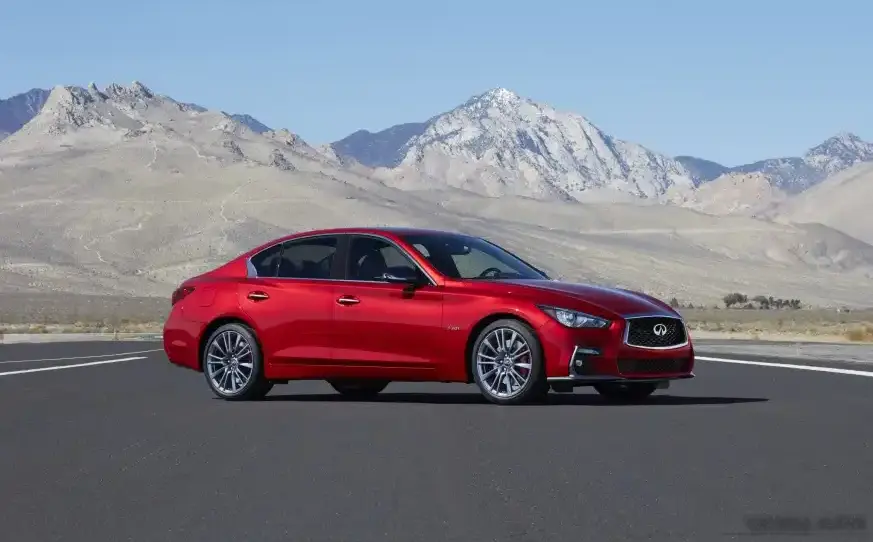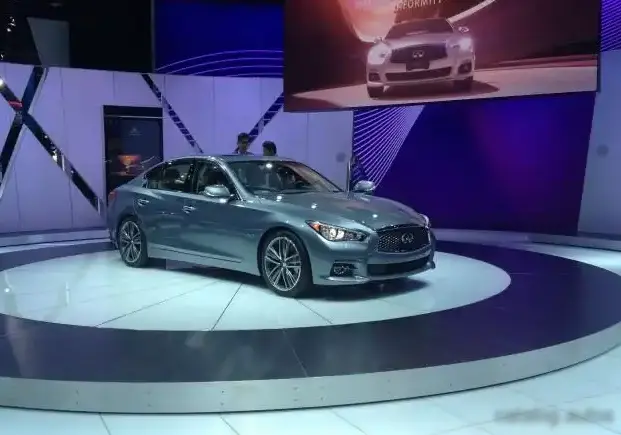
The Infiniti Q50 2.0, produced from 2014 to 2017, represented the entry point into the Q50 model range. Positioned as a more accessible luxury sedan, it offered a blend of performance and efficiency aimed at attracting a broader customer base. This variant utilized a turbocharged four-cylinder engine paired with a seven-speed automatic transmission, distinguishing itself from the higher-performance 3.7-liter V6 models and, later, the hybrid variants. The Q50, as a whole, was a significant model for Infiniti, replacing the G37 and marking a shift towards a more modern design language and advanced technology.
Technical Specifications
| Brand | Infiniti |
| Model | Q50 |
| Generation | Q50 |
| Type (Engine) | 2.0 (211 Hp) Automatic |
| Start of production | 2014 |
| End of production | 2017 |
| Powertrain Architecture | Internal Combustion engine |
| Body type | Sedan |
| Seats | 5 |
| Doors | 4 |
| Fuel consumption (urban) | 8.6-8.8 l/100 km (27.4 – 26.7 US mpg) |
| Fuel consumption (extra urban) | 5.0-5.2 l/100 km (47 – 45.2 US mpg) |
| Fuel consumption (combined) | 6.3-6.5 l/100 km (37.3 – 36.2 US mpg) |
| CO2 emissions | 146-151 g/km |
| Fuel Type | Petrol (Gasoline) |
| Acceleration 0 – 100 km/h | 7.2 sec |
| Acceleration 0 – 62 mph | 7.2 sec |
| Acceleration 0 – 60 mph | 6.8 sec |
| Maximum speed | 245 km/h (152.24 mph) |
| Emission standard | Euro 6 b |
| Weight-to-power ratio | 7.2 kg/Hp |
| Weight-to-torque ratio | 4.3 kg/Nm |
| Power | 211 Hp @ 5500 rpm |
| Torque | 350 Nm @ 1250-3500 rpm (258.15 lb.-ft. @ 1250-3500 rpm) |
| Engine layout | Front, Longitudinal |
| Engine Model/Code | M 274 |
| Engine displacement | 1991 cm3 (121.5 cu. in.) |
| Number of cylinders | 4 |
| Engine configuration | Inline |
| Fuel injection system | Direct injection |
| Engine aspiration | Turbocharger, Intercooler |
| Valvetrain | DOHC |
| Engine oil capacity | 6.3 l (6.66 US qt | 5.54 UK qt) |
| Coolant capacity | 9 l (9.51 US qt | 7.92 UK qt) |
| Kerb Weight | 1510-1617 kg (3328.98 – 3564.87 lbs.) |
| Trunk (boot) space | 500 l (17.66 cu. ft.) |
| Fuel tank capacity | 80 l (21.13 US gal | 17.6 UK gal) |
| Permitted trailer load (braked) | 1500 kg (3306.93 lbs.) |
| Permitted trailer load (unbraked) | 750 kg (1653.47 lbs.) |
| Length | 4790 mm (188.58 in.) |
| Width | 1820 mm (71.65 in.) |
| Width (with mirrors) | 2085 mm (82.09 in.) |
| Height | 1445 mm (56.89 in.) |
| Wheelbase | 2850 mm (112.2 in.) |
| Front track | 1545-1535 mm (60.83 – 60.43 in.) |
| Rear track | 1565-1555 mm (61.61 – 61.22 in.) |
| Drag coefficient (Cd) | 0.26-0.275 |
| Minimum turning circle | 11.4 m (37.4 ft.) |
| Drivetrain | Rear wheel drive |
| Number of gears | 7 |
| Gearbox type | Automatic transmission |
| Front suspension | Double wishbone |
| Rear suspension | Independent multi-link suspension |
| Front brakes | Ventilated discs |
| Rear brakes | Ventilated discs |
| Steering type | Steering rack and pinion |
| Power steering | Electric |
| Tire size | 225/55 RF17 97W; 225/50 RF18 95W; 245/40 RF19 94W |
| Wheel rim size | 17; 18; 19 |
Powertrain & Engine Architecture
The heart of the Q50 2.0 is the Mercedes-Benz M274 2.0-liter turbocharged inline-four engine. This engine was part of a collaboration between Daimler (Mercedes-Benz) and Renault-Nissan, and it represented a significant departure from Infiniti’s traditional V6 offerings. The M274 features direct fuel injection, a twin-scroll turbocharger, and a double overhead camshaft (DOHC) valvetrain. This combination allowed for a relatively high output of 211 horsepower and 350 Nm (258 lb-ft) of torque, with peak torque available from a low 1250 rpm. The seven-speed automatic transmission, also sourced from Mercedes-Benz, was designed to provide smooth and efficient gear changes. It featured adaptive shift logic, adjusting to the driver’s style and road conditions.
Driving Characteristics
The Q50 2.0 Automatic offered a comfortable and refined driving experience. While not as overtly sporty as the V6 models, the turbocharged four-cylinder provided adequate acceleration for everyday driving. The 0-60 mph time of around 6.8 seconds was respectable for its class. The automatic transmission contributed to a relaxed driving experience, particularly in city traffic. However, some reviewers noted that the transmission could occasionally feel hesitant during quick downshifts. The rear-wheel-drive configuration provided a balanced feel, although it lacked the dynamic agility of some competitors with all-wheel-drive systems. The steering, while precise, lacked some of the feedback desired by driving enthusiasts.
Equipment & Trim Levels
The Q50 2.0 typically came standard with features such as leatherette upholstery, a seven-inch touchscreen display, a rearview camera, and Bluetooth connectivity. Higher trim levels, such as the Premium package, added features like leather seats, a power-adjustable driver’s seat, a premium audio system, and advanced safety technologies like blind-spot monitoring and lane departure warning. Optional extras included a navigation system, a panoramic sunroof, and adaptive cruise control. The interior design was generally considered modern and well-appointed, although some materials felt less premium than those found in competing luxury sedans.
Chassis & Braking
The Q50 2.0 utilized a double wishbone front suspension and an independent multi-link rear suspension, providing a comfortable ride and decent handling characteristics. The suspension was tuned to prioritize comfort over outright sportiness. Braking duties were handled by ventilated discs on all four wheels, providing adequate stopping power. Anti-lock brakes (ABS) and electronic brake-force distribution were standard features. The Q50 2.0’s curb weight ranged from 1510 to 1617 kg (3329 to 3565 lbs), depending on the trim level and optional equipment.
Market Reception & Comparison
The Infiniti Q50 2.0 was generally well-received by critics as an entry-level luxury sedan offering good value for money. It was praised for its fuel efficiency, comfortable ride, and standard features. However, some reviewers criticized its lack of sporty handling and the occasionally hesitant transmission. Compared to its rivals, such as the Acura TLX, BMW 320i, and Audi A4, the Q50 2.0 offered a competitive combination of features and price. The fuel economy of 37.3-36.2 US mpg combined was a strong selling point, particularly for buyers prioritizing efficiency. Reliability reports have been mixed, with some owners reporting issues with the infotainment system and occasional engine-related problems.
Legacy
The Q50 2.0 played an important role in establishing the Q50 as a viable competitor in the luxury sedan segment. While the higher-performance variants often garnered more attention, the 2.0-liter model broadened the Q50’s appeal to a wider range of buyers. On the used car market, the Q50 2.0 remains a relatively affordable option, offering a good balance of luxury, performance, and fuel efficiency. However, potential buyers should be aware of the potential for infotainment system issues and should carefully inspect the vehicle’s maintenance history. The M274 engine, while generally reliable, requires regular maintenance to ensure optimal performance and longevity.