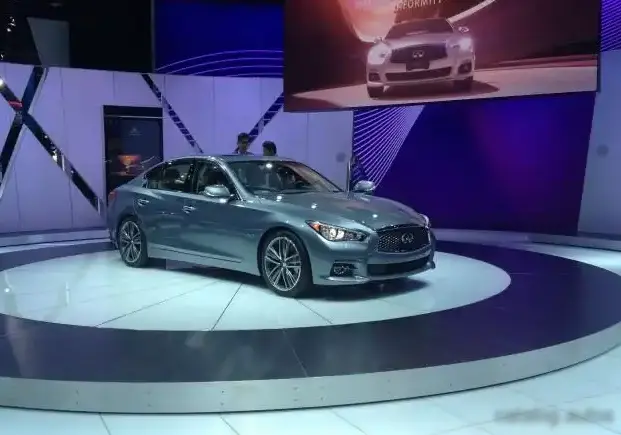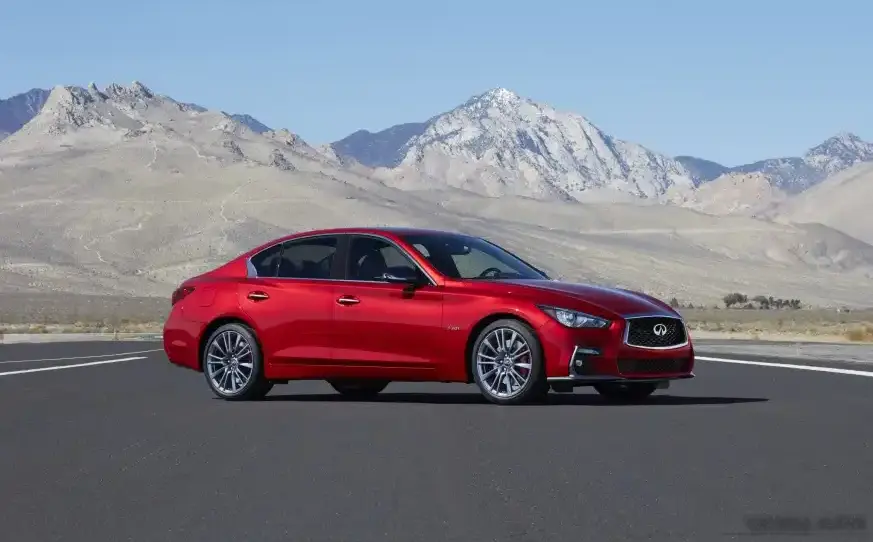
The Infiniti Q50 3.0t V6 AWD Automatic, representing a significant refresh of the Q50 lineage, debuted for the 2018 model year. This variant occupied a premium position within the Q50 range, offering a substantial performance upgrade over the 2.0t models while providing all-weather capability through its all-wheel-drive system. The 2017 facelift brought revised styling, enhanced technology, and the introduction of the VR30DDTT engine, solidifying the Q50’s presence in the competitive luxury sport sedan segment. It was positioned as a direct competitor to vehicles like the BMW 3 Series, Audi A4, and Lexus IS.
Technical Specifications
| Brand | Infiniti |
| Model | Q50 |
| Generation | Q50 (facelift 2017) |
| Type (Engine) | 3.0t V6 (300 Hp) AWD Automatic |
| Start of production | 2018 |
| Powertrain Architecture | Internal Combustion engine |
| Body type | Sedan |
| Seats | 5 |
| Doors | 4 |
| Fuel consumption (urban) | 12.4 l/100 km (19 US mpg, 22.8 UK mpg, 8.1 km/l) |
| Fuel consumption (extra urban) | 8.7 l/100 km (27 US mpg, 32.5 UK mpg, 11.5 km/l) |
| Fuel consumption (combined) | 10.8 l/100 km (21.8 US mpg, 26.2 UK mpg, 9.3 km/l) |
| Fuel Type | Petrol (Gasoline) |
| Acceleration 0 – 100 km/h | 6.1 sec |
| Acceleration 0 – 62 mph | 6.1 sec |
| Acceleration 0 – 60 mph | 5.8 sec |
| Power | 300 Hp @ 6400 rpm |
| Power per litre | 100.1 Hp/l |
| Torque | 400 Nm @ 1600-5200 rpm (295.02 lb.-ft. @ 1600-5200 rpm) |
| Engine layout | Front, Longitudinal |
| Engine Model/Code | VR30DDTT |
| Engine displacement | 2997 cm3 (182.89 cu. in.) |
| Number of cylinders | 6 |
| Engine configuration | V-engine |
| Number of valves per cylinder | 4 |
| Fuel injection system | Direct injection |
| Engine aspiration | Twin-Turbo, Intercooler |
| Engine oil capacity | 5.9 l (6.23 US qt | 5.19 UK qt) |
| Coolant capacity | 9.3 l (9.83 US qt | 8.18 UK qt) |
| Trunk (boot) space (minimum) | 382 l (13.49 cu. ft.) |
| Length | 4815 mm (189.57 in.) |
| Width | 1824 mm (71.81 in.) |
| Height | 1453 mm (57.2 in.) |
| Wheelbase | 2850 mm (112.2 in.) |
| Drive wheel | All wheel drive (4×4) |
| Number of gears and type of gearbox | 7 gears, automatic transmission |
| Front brakes | Ventilated discs |
| Rear brakes | Ventilated discs |
| Assisting systems | ABS (Anti-lock braking system) |
| Steering type | Steering rack and pinion |
| Power steering | Electric Steering |
| Tires size | 225/50 R18; 245/40 R19 |
| Wheel rims size | 7.5J x 18; 8.5J x 19 |
Powertrain & Engine Architecture
The heart of the Q50 3.0t is the VR30DDTT 3.0-liter twin-turbocharged V6 engine. This engine represents a departure from the earlier VQ-series engines traditionally used by Infiniti. The VR30DDTT utilizes direct injection and a sophisticated twin-turbocharger setup to deliver 300 horsepower and 400 Nm (295 lb-ft) of torque. The turbos are integrated into the exhaust manifold, promoting quicker spool-up and reducing turbo lag. The engine’s architecture is longitudinal, meaning it’s mounted lengthwise in the engine bay, contributing to a more balanced weight distribution. The Q50 3.0t exclusively paired with a seven-speed automatic transmission, designed to handle the engine’s increased output. This transmission features adaptive shift control, adjusting shift points based on driving conditions and driver input.
Driving Characteristics
The Q50 3.0t AWD Automatic delivers a noticeably more engaging driving experience compared to the lower-powered 2.0t models. The twin-turbo V6 provides strong acceleration, with the 0-60 mph sprint achievable in around 5.8 seconds. The all-wheel-drive system enhances traction, particularly in inclement weather, providing confident handling. The seven-speed automatic transmission offers smooth and responsive shifts, although some reviewers noted a slight hesitation during downshifts. Compared to a manual transmission (not offered with this engine), the automatic prioritizes comfort and ease of use over outright driver involvement. The gear ratios are tuned for a balance between acceleration and fuel efficiency, with a relatively tall final drive.
Equipment & Trim Levels
The Q50 3.0t AWD Automatic typically came well-equipped, serving as a mid-to-high trim level. Standard features included leather upholstery, heated front seats, a dual-screen infotainment system, a rearview camera, and a suite of driver-assistance technologies like automatic emergency braking and lane departure warning. Optional extras included a premium audio system, navigation, adaptive cruise control, and a surround-view monitor. Interior color options typically included black, graphite, and stone gray. The dashboard layout featured a combination of analog gauges and digital displays, providing a modern and sophisticated aesthetic.
Chassis & Braking
The Q50 utilizes a front-engine, rear-wheel-drive-based platform with all-wheel drive available. The suspension consists of independent double wishbones in the front and a multi-link setup in the rear. The AWD system employs a rear-biased torque distribution, enhancing handling dynamics. Braking duties are handled by ventilated discs on all four wheels, providing ample stopping power. The Q50 3.0t typically featured larger brake rotors compared to the 2.0t models to accommodate the increased performance. Electronic stability control (ESC) and anti-lock braking system (ABS) are standard features, contributing to enhanced safety.
Market Reception & Comparison
The Q50 3.0t was generally well-received by automotive critics, who praised its powerful engine, comfortable ride, and advanced technology. However, some reviewers criticized the infotainment system for its complexity and the steering feel for lacking feedback. Compared to the 2.0t models, the 3.0t offered a significant performance upgrade, justifying its higher price tag. Fuel economy was comparable to other luxury sport sedans in its class, averaging around 21.8 US mpg combined. Reliability reports have been mixed, with some owners reporting issues with the infotainment system and turbochargers. However, the VR30DDTT engine has proven to be generally durable when properly maintained.
Legacy
The Infiniti Q50 3.0t V6 AWD Automatic represents a pivotal moment in the Q50’s evolution, introducing a more potent and technologically advanced powertrain. While the Q50 has since been replaced by newer models, the 3.0t variant remains a desirable option in the used car market, particularly for those seeking a blend of performance, luxury, and all-weather capability. The VR30DDTT engine, despite some early concerns, has established itself as a capable and relatively reliable powerplant. The Q50 3.0t continues to offer a compelling alternative to its European and Japanese rivals, providing a unique driving experience and a distinctive design.