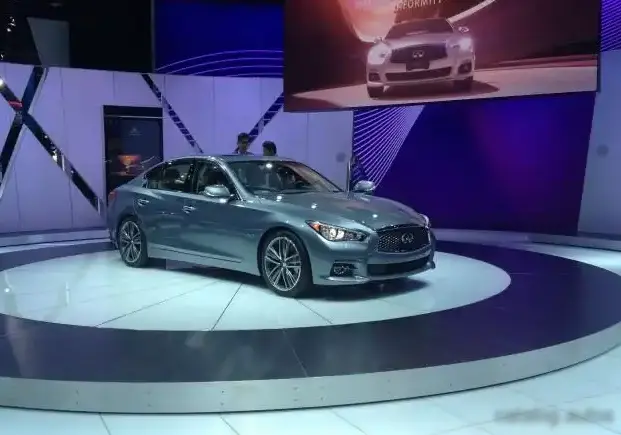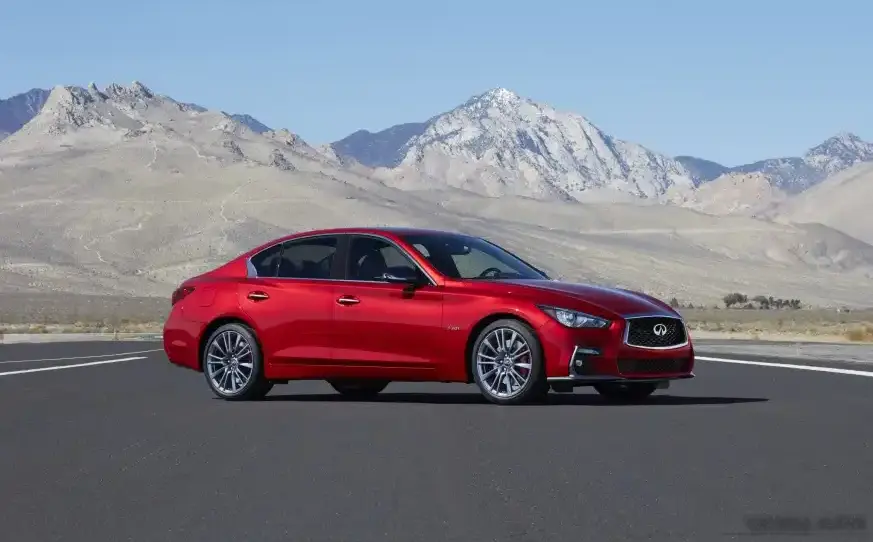
The Infiniti Q50 3.0t V6 AWD Automatic, representing a significant refresh of the Q50 lineage, debuted for the 2018 model year. This variant occupied the performance-oriented upper echelon of the Q50 range, positioned above the 2.0t models and serving as a direct competitor to established luxury sport sedans like the BMW 5 Series and Audi A6. The 2017 facelift brought revised styling, enhanced technology, and most notably, the introduction of the potent VR30DDTT 3.0-liter twin-turbocharged V6 engine. This particular configuration, paired with all-wheel drive and a seven-speed automatic transmission, aimed to deliver a compelling blend of luxury, performance, and all-weather capability to the North American market.
Technical Specifications
| Brand | Infiniti |
| Model | Q50 |
| Generation | Q50 (facelift 2017) |
| Type (Engine) | 3.0t V6 (400 Hp) AWD Automatic |
| Start of production | 2018 |
| Powertrain Architecture | Internal Combustion engine |
| Body type | Sedan |
| Seats | 5 |
| Doors | 4 |
| Fuel consumption (economy) – urban | 12.5 l/100 km (18.8 US mpg) |
| Fuel consumption (economy) – extra urban | 9.3 l/100 km (25.3 US mpg) |
| Fuel consumption (economy) – combined | 11.1 l/100 km (21.2 US mpg) |
| Fuel Type | Petrol (Gasoline) |
| Acceleration 0 – 100 km/h | 5.2 sec |
| Acceleration 0 – 62 mph | 5.2 sec |
| Acceleration 0 – 60 mph | 4.9 sec |
| Power | 400 Hp @ 6400 rpm |
| Torque | 475 Nm @ 1600-5200 rpm (350.34 lb.-ft. @ 1600-5200 rpm) |
| Engine layout | Front, Longitudinal |
| Engine Model/Code | VR30DDTT |
| Engine displacement | 2997 cm3 (182.89 cu. in.) |
| Number of cylinders | 6 |
| Engine configuration | V-engine |
| Number of valves per cylinder | 4 |
| Fuel injection system | Direct injection |
| Engine aspiration | Twin-Turbo, Intercooler |
| Engine oil capacity | 5.9 l (6.23 US qt | 5.19 UK qt) |
| Trunk (boot) space – minimum | 382 l (13.49 cu. ft.) |
| Length | 4815 mm (189.57 in.) |
| Width | 1824 mm (71.81 in.) |
| Height | 1453 mm (57.2 in.) |
| Wheelbase | 2850 mm (112.2 in.) |
| Drive wheel | All wheel drive (4×4) |
| Number of gears and type of gearbox | 7 gears, automatic transmission |
| Front brakes | Ventilated discs |
| Rear brakes | Ventilated discs |
| Assisting systems | ABS (Anti-lock braking system) |
| Steering type | Steering rack and pinion |
| Power steering | Electric Steering |
| Tires size | 245/40 R19 |
| Wheel rims size | 9.0J x 19 |
Powertrain & Engine Architecture
The heart of the Q50 3.0t is the VR30DDTT engine, a 3.0-liter twin-turbocharged V6. This engine represents a departure from the earlier VQ-series engines traditionally found in Infiniti vehicles. The VR30DDTT utilizes direct injection and employs a sophisticated twin-turbocharger setup to deliver both high peak power and a broad torque curve. The engine’s architecture features a 60-degree V-angle, contributing to a relatively compact engine bay footprint. The seven-speed automatic transmission, sourced from Mercedes-Benz (7G-TRONIC), is known for its smooth shifts and responsive operation. It features adaptive shift logic, adjusting shift points based on driving style and conditions. The all-wheel-drive system is a rear-biased setup, prioritizing rear-wheel drive for a more engaging driving experience while seamlessly engaging the front wheels when traction is needed.
Driving Characteristics
The Q50 3.0t AWD Automatic delivers a noticeably more spirited driving experience compared to the lower-powered 2.0t models. The 400 horsepower and 475 Nm (350 lb-ft) of torque provide strong acceleration, with 0-60 mph times consistently in the 4.9-second range. The twin-turbochargers minimize turbo lag, providing readily available power across a wide RPM band. The seven-speed automatic transmission contributes to the responsive feel, offering quick and precise shifts. While not as overtly sporty as some of its European rivals, the Q50 3.0t offers a comfortable yet engaging driving experience, suitable for both daily commuting and spirited weekend drives. The all-wheel-drive system enhances stability and traction, particularly in inclement weather.
Equipment & Trim Levels
The Q50 3.0t AWD Automatic typically came well-equipped, reflecting its position as a premium offering. Standard features included leather upholstery, heated front seats, a dual-screen infotainment system, a rearview camera, and a suite of advanced driver-assistance systems such as lane departure warning and forward collision warning. Optional extras included a premium audio system, navigation, adaptive cruise control, and a surround-view monitor. Trim levels, such as the “Signature Edition” and “Red Sport 400” (the latter offering even more power), further enhanced the feature set and aesthetic appeal.
Chassis & Braking
The Q50 utilizes a front independent multi-link suspension and a rear independent multi-link suspension. The suspension tuning is geared towards providing a balance between comfort and handling. The steering system is an electric power-assisted rack-and-pinion setup, offering precise and responsive steering feel. Braking duties are handled by ventilated discs at all four corners, providing ample stopping power. The ABS (Anti-lock Braking System) and electronic brake-force distribution further enhance braking performance and stability.
Market Reception & Comparison
Critics generally praised the Q50 3.0t for its powerful engine, comfortable ride, and well-appointed interior. However, some reviewers noted that the infotainment system could be complex to use and that the steering feel lacked the ultimate precision of some European competitors. Compared to the 2.0t models, the 3.0t offered a significant performance upgrade, justifying the higher price tag for enthusiasts. Fuel economy, while not exceptional, was reasonable for a vehicle of this class, averaging around 21 mpg in combined driving. The Red Sport 400, with its even more potent engine, was often seen as a more direct competitor to high-performance versions of the BMW 5 Series and Mercedes-Benz E-Class.
Legacy
The VR30DDTT engine, while relatively new, has proven to be generally reliable, although preventative maintenance, particularly regarding oil changes, is crucial. The seven-speed automatic transmission has also demonstrated good durability. As the Q50 3.0t enters the used car market, it represents a compelling value proposition for buyers seeking a luxury sport sedan with strong performance and a comfortable interior. However, potential buyers should be aware of the potential for higher maintenance costs compared to the 2.0t models, due to the more complex engine and drivetrain. Overall, the Q50 3.0t AWD Automatic remains a desirable and capable vehicle, offering a unique blend of Japanese engineering and luxury features.