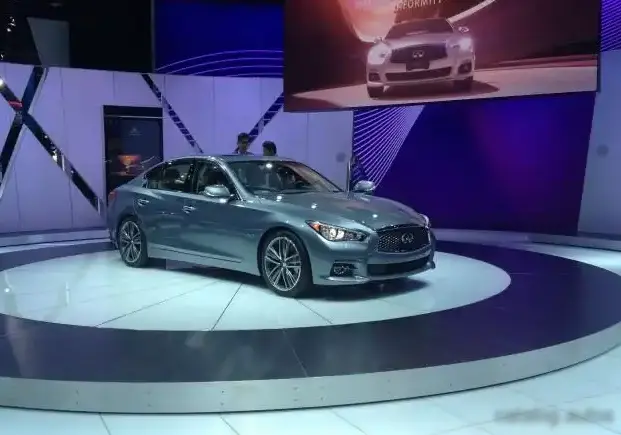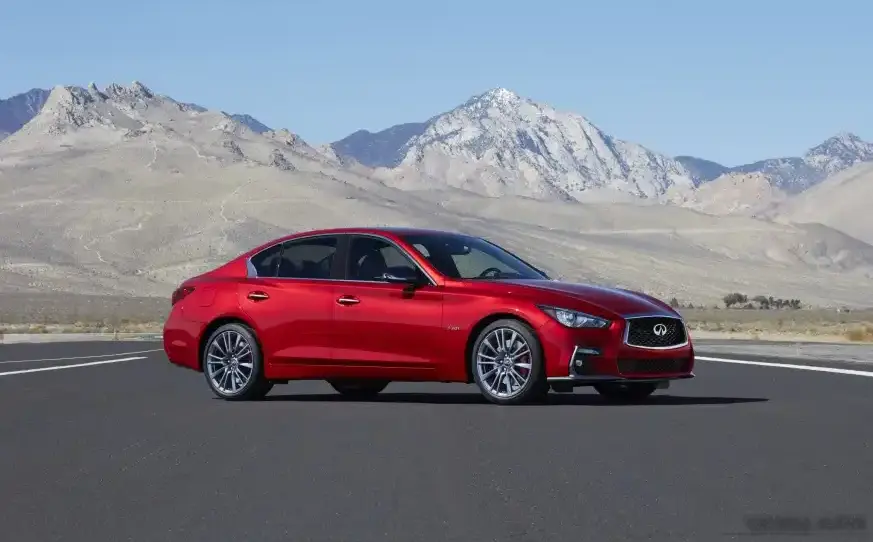
The Infiniti Q50 S 3.0t, introduced with the 2017 facelift, represented a significant step forward for the Q50 model line. Positioned as the performance-oriented variant, it offered a substantial power increase over the base 2.0t models and the earlier 3.7-liter V6. Production began in 2017 and continued through subsequent model years with minor revisions. The Q50, as a whole, was Infiniti’s entry into the compact executive sedan segment, competing with established players like the BMW 3 Series, Mercedes-Benz C-Class, and Audi A4. The S 3.0t specifically aimed to deliver a more engaging driving experience and a higher level of luxury within the Q50 range.
Technical Specifications
| Brand | Infiniti |
| Model | Q50 |
| Generation | Q50 (facelift 2017) |
| Type (Engine) | S 3.0t (405 Hp) Automatic |
| Start of production | 2017 |
| Powertrain Architecture | Internal Combustion engine |
| Body type | Sedan |
| Seats | 5 |
| Doors | 4 |
| Fuel consumption (urban) | 13.3 l/100 km (17.7 US mpg, 21.2 UK mpg, 7.5 km/l) |
| Fuel consumption (extra urban) | 6.7 l/100 km (35.1 US mpg, 42.2 UK mpg, 14.9 km/l) |
| Fuel consumption (combined) | 9.1 l/100 km (25.8 US mpg, 31 UK mpg, 11 km/l) |
| CO2 emissions | 206 g/km |
| Fuel Type | Petrol (Gasoline) |
| Acceleration 0 – 100 km/h | 5.1 sec |
| Acceleration 0 – 62 mph | 5.1 sec |
| Acceleration 0 – 60 mph | 4.8 sec |
| Maximum speed | 250 km/h (155.34 mph) |
| Emission standard | Euro 6 |
| Weight-to-power ratio | 4.3 kg/Hp, 234.9 Hp/tonne |
| Weight-to-torque ratio | 3.6 kg/Nm, 275.5 Nm/tonne |
| Power | 405 Hp @ 6400 rpm |
| Power per litre | 135.1 Hp/l |
| Torque | 475 Nm @ 1600-5200 rpm (350.34 lb.-ft. @ 1600-5200 rpm) |
| Engine layout | Front, Longitudinal |
| Engine Model/Code | VR30DDTT |
| Engine displacement | 2997 cm3 (182.89 cu. in.) |
| Number of cylinders | 6 |
| Engine configuration | V-engine |
| Cylinder Bore | 86 mm (3.39 in.) |
| Piston Stroke | 86 mm (3.39 in.) |
| Number of valves per cylinder | 4 |
| Fuel injection system | Direct injection |
| Engine aspiration | Turbocharger, Intercooler |
| Valvetrain | DOHC |
| Engine oil capacity | 5.9 l (6.23 US qt | 5.19 UK qt) |
| Coolant | 10.4 l (10.99 US qt | 9.15 UK qt) |
| Kerb Weight | 1724-1744 kg (3800.77 – 3844.86 lbs.) |
| Trunk (boot) space | 500 l (17.66 cu. ft.) |
| Fuel tank capacity | 80 l (21.13 US gal | 17.6 UK gal) |
| Permitted trailer load with brakes (12%) | 1500 kg (3306.93 lbs.) |
| Permitted trailer load without brakes | 750 kg (1653.47 lbs.) |
| Length | 4810 mm (189.37 in.) |
| Width | 1820 mm (71.65 in.) |
| Width including mirrors | 2084 mm (82.05 in.) |
| Height | 1430 mm (56.3 in.) |
| Wheelbase | 2850 mm (112.2 in.) |
| Drag coefficient (Cd) | 0.28 |
| Drivetrain Architecture | Rear wheel drive |
| Number of gears and type of gearbox | 7 gears, automatic transmission |
| Front brakes | Ventilated discs |
| Rear brakes | Ventilated discs |
Powertrain & Engine Architecture
The heart of the Q50 S 3.0t is the VR30DDTT 3.0-liter twin-turbocharged V6 engine. This engine, a departure from the previous 3.7-liter naturally aspirated V6, utilizes direct injection and a sophisticated variable valve timing system. The “VR” designation indicates a narrow-angle V6 configuration, allowing for a more compact engine bay layout. The twin-turbochargers, integrated into the exhaust manifold, provide significant boost across a wide RPM range, contributing to the engine’s 405 horsepower and 475 lb-ft of torque. The engine is longitudinally mounted, driving the rear wheels. The transmission is a seven-speed automatic with manual shift mode. This transmission was chosen for its responsiveness and ability to handle the engine’s substantial power output. While not a dual-clutch transmission, it offered smooth and relatively quick shifts.
Driving Characteristics
The Q50 S 3.0t delivers a noticeably more spirited driving experience than the lower-trim models. The twin-turbo V6 provides strong acceleration, with the 0-60 mph sprint achievable in around 4.8 seconds. The automatic transmission is well-tuned, offering quick downshifts when needed and generally smooth operation. However, some reviewers noted that the transmission could occasionally feel hesitant during low-speed maneuvers. The rear-wheel-drive configuration contributes to a balanced feel, although it lacks the all-weather capability of all-wheel-drive variants. The steering, while precise, is electronically assisted and can feel somewhat artificial to some drivers. Compared to the 2.0t models, the S 3.0t offers a significantly more engaging and powerful driving experience. It also feels more responsive than the older 3.7-liter Q50, thanks to the twin-turbochargers and improved transmission.
Equipment & Trim Levels
The Q50 S 3.0t came standard with a generous array of features, including leather upholstery, heated front seats, a dual-screen infotainment system, a rearview camera, and a suite of advanced safety technologies like forward collision warning and automatic emergency braking. Optional extras included a premium audio system, navigation, adaptive cruise control, lane departure warning, and blind-spot monitoring. The “S” designation indicated a sportier trim level, with unique exterior styling cues and interior accents. Interior trim options included aluminum or wood accents, and buyers could choose from a variety of exterior colors.
Chassis & Braking
The Q50 S 3.0t features a four-wheel independent suspension system, designed to provide a balance between comfort and handling. The front suspension utilizes a double-wishbone setup, while the rear employs a multi-link configuration. Stabilizer bars are fitted to both the front and rear axles to reduce body roll during cornering. Braking duties are handled by ventilated discs on all four wheels, providing ample stopping power. The S 3.0t typically featured larger brake rotors and calipers compared to the base models. The electronic power steering system offers variable assist, adjusting the steering effort based on vehicle speed.
Market Reception & Comparison
The Q50 S 3.0t was generally well-received by automotive critics, who praised its powerful engine, comfortable ride, and advanced technology. However, some reviewers criticized the infotainment system for its complexity and the steering for its lack of feel. Compared to its rivals, the Q50 S 3.0t offered a competitive level of performance and features at a relatively attractive price point. Fuel economy was respectable for a performance sedan, but not class-leading. Reliability reports have been mixed, with some owners reporting issues with the infotainment system and turbochargers. The 2.0t models offered better fuel economy, while the Red Sport 400 variant provided even more power, but at a higher price.
Legacy
The Q50 S 3.0t represents a pivotal moment in the Q50’s lifecycle, marking a shift towards more powerful and technologically advanced powertrains. While the Q50 has since been replaced by newer models, the S 3.0t remains a desirable option in the used car market, particularly for those seeking a performance-oriented luxury sedan. The VR30DDTT engine, while complex, has proven to be relatively durable when properly maintained. However, potential buyers should be aware of the potential for turbocharger issues and the complexity of the infotainment system. The Q50 S 3.0t’s blend of performance, luxury, and technology continues to appeal to enthusiasts today.