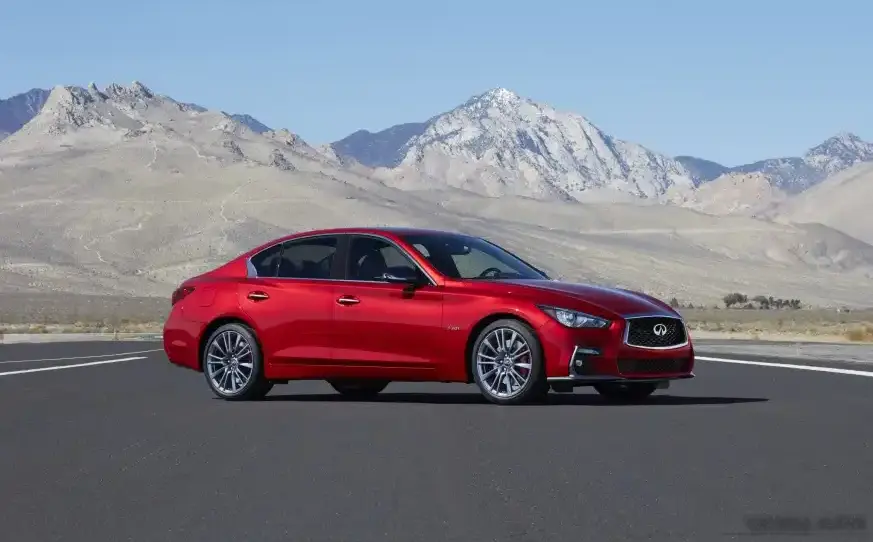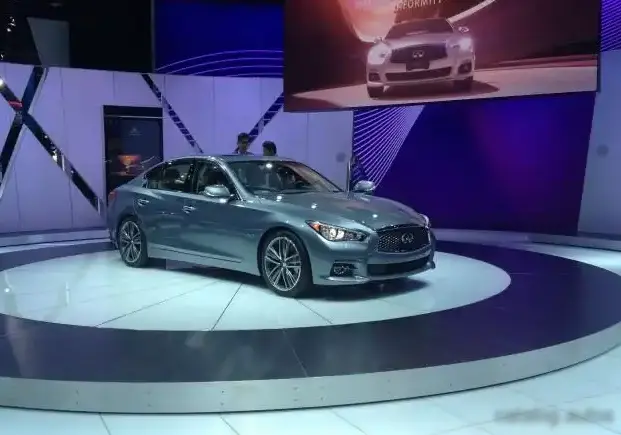
The Infiniti Q50 S 3.5 V6 Hybrid Automatic, produced from 2013 to 2017, represented a significant step forward for the Infiniti brand, blending luxury, performance, and fuel efficiency. Positioned as a premium offering within the Q50 lineup, this variant aimed to compete with established players like the BMW 5 Series and Audi A6, offering a unique hybrid powertrain. It was part of the first generation (V37) of the Q50, built on the Nissan FM platform, and served as a technological showcase for Infiniti’s engineering capabilities. The “S” designation denoted a sportier trim level, emphasizing handling and driver engagement.
Technical Specifications
| Brand | Infiniti |
| Model | Q50 |
| Generation | Q50 |
| Type (Engine) | S 3.5 V6 (364 Hp) Hybrid Automatic |
| Start of production | 2013 |
| End of production | 2017 |
| Powertrain Architecture | FHEV (Full Hybrid Electric Vehicle) |
| Body type | Sedan |
| Seats | 5 |
| Doors | 4 |
| Fuel consumption (urban) | 8.2 l/100 km (28.7 US mpg) |
| Fuel consumption (extra urban) | 5.1 l/100 km (46.1 US mpg) |
| Fuel consumption (combined) | 6.2 l/100 km (37.9 US mpg) |
| CO2 emissions | 144 g/km |
| Fuel Type | Petrol (Gasoline) |
| Acceleration 0 – 100 km/h | 5.1 sec |
| Acceleration 0 – 62 mph | 5.1 sec |
| Acceleration 0 – 60 mph | 4.8 sec |
| Maximum speed | 250 km/h (155.34 mph) |
| Weight-to-power ratio | 4.9 kg/Hp |
| Weight-to-torque ratio | 5.1 kg/Nm |
| Power | 364 Hp @ 6500 rpm |
| Torque | 350 Nm @ 5200 rpm (258.15 lb.-ft. @ 5200 rpm) |
| Engine layout | Front, Longitudinal |
| Engine Model/Code | VQ35HR |
| Engine displacement | 3498 cm3 (213.46 cu. in.) |
| Number of cylinders | 6 |
| Engine configuration | V-engine |
| Cylinder Bore | 95.5 mm (3.76 in.) |
| Piston Stroke | 81.4 mm (3.2 in.) |
| Compression ratio | 10:1 |
| Number of valves per cylinder | 4 |
| Fuel injection system | Direct injection |
| Engine oil capacity | 4.9 l (5.18 US qt | 4.31 UK qt) |
| Coolant | 9.8 l (10.36 US qt | 8.62 UK qt) |
| Kerb Weight | 1775 kg (3913.21 lbs.) |
| Trunk (boot) space (minimum) | 510 l (18.01 cu. ft.) |
| Length | 4783 mm (188.31 in.) |
| Width | 1824 mm (71.81 in.) |
| Height | 1443 mm (56.81 in.) |
| Wheelbase | 2850 mm (112.2 in.) |
| Front track | 1519 mm (59.8 in.) |
| Rear track | 1529 mm (60.2 in.) |
| Drivetrain Architecture | Rear wheel drive. FHEV. |
| Number of gears | 7 |
| Gearbox type | Automatic transmission |
| Front suspension | Double wishbone |
| Rear suspension | Independent multi-link with stabilizer |
| Front brakes | Ventilated discs |
| Rear brakes | Ventilated discs |
| Steering type | Steering rack and pinion |
| Power steering | Electric |
| Tires size | 225/55 R17 |
| Wheel rims size | 17 |
Powertrain & Engine Architecture
The heart of the Q50 S Hybrid is the 3.5-liter VQ35HR V6 engine, a well-respected powerplant known for its smooth operation and robust construction. This engine utilizes Nissan’s Variable Valve Event and Lift (VVEL) technology, providing precise control over valve timing and lift for optimized performance and efficiency. Direct fuel injection further enhances combustion efficiency. The VQ35HR produces 306 horsepower and 258 lb-ft of torque on its own. Supplementing this is a 68-horsepower electric motor integrated into the 7-speed automatic transmission. The combined system output reaches 364 horsepower. The transmission itself is a conventional automatic, but modified to accommodate the electric motor and hybrid components. The hybrid system employs a lithium-ion battery pack, providing electric-only driving capability at low speeds and assisting the gasoline engine during acceleration. The system prioritizes efficiency, seamlessly switching between electric, gasoline, and combined power modes.
Driving Characteristics
The Q50 S 3.5 V6 Hybrid delivers a refined and responsive driving experience. The electric motor provides instant torque, resulting in brisk acceleration, especially from a standstill. The 0-60 mph time of around 4.8 seconds is competitive for its class. The 7-speed automatic transmission offers smooth and quick shifts, contributing to the overall driving enjoyment. While not as overtly sporty as some of its European rivals, the Q50 S Hybrid strikes a good balance between comfort and performance. The steering is precise, and the suspension provides a comfortable ride without feeling overly soft. The hybrid system’s regenerative braking adds a unique feel to the brake pedal, requiring some acclimation for drivers unfamiliar with hybrid technology. Compared to the non-hybrid Q50 models, the hybrid variant offers noticeably improved fuel economy and a quieter driving experience, particularly in urban environments.
Equipment & Trim Levels
The Q50 S Hybrid came standard with a generous array of features, including leather upholstery, heated front seats, a dual-screen infotainment system, navigation, a rearview camera, and a premium sound system. The “S” trim added sport-tuned suspension, paddle shifters, and unique exterior styling cues. Optional extras included a forward collision warning system, lane departure warning, blind-spot monitoring, adaptive cruise control, and a premium package with upgraded leather and wood trim. The interior design was modern and well-appointed, with a focus on luxury and technology. The dual-screen infotainment system, while visually appealing, received mixed reviews for its usability.
Chassis & Braking
The Q50 S Hybrid utilizes a double wishbone front suspension and an independent multi-link rear suspension, providing a comfortable and controlled ride. Stabilizer bars are fitted to both axles to reduce body roll during cornering. The braking system consists of ventilated discs on all four wheels, providing ample stopping power. Anti-lock brakes (ABS) and electronic brake-force distribution (EBD) are standard features. The Q50 S Hybrid’s weight distribution is well-balanced, contributing to its stable handling characteristics. The rear-wheel-drive configuration enhances driving engagement and provides a more traditional sports sedan feel.
Market Reception & Comparison
The Infiniti Q50 S 3.5 V6 Hybrid was generally well-received by automotive critics. It was praised for its fuel efficiency, smooth ride, and powerful hybrid powertrain. However, some reviewers criticized the infotainment system and found the steering to be somewhat numb. Compared to the standard Q50 3.7L V6, the hybrid variant offered improved fuel economy and a quieter driving experience, but at a higher price point. Against its European competitors, the Q50 S Hybrid offered a compelling value proposition, providing a similar level of luxury and performance at a more competitive price. The 1.8L and 2.0t models were positioned as more affordable entry points into the Q50 range, targeting budget-conscious buyers, while the hybrid aimed for a more discerning customer seeking a blend of performance and efficiency.
Legacy
The Infiniti Q50 S 3.5 V6 Hybrid represented a pivotal moment for Infiniti, demonstrating the brand’s commitment to hybrid technology and performance. While the Q50 has undergone several updates since its introduction, the hybrid powertrain remains a significant part of its identity. The VQ35HR engine is known for its reliability, and the hybrid system has proven to be relatively durable. On the used car market, the Q50 S Hybrid holds its value reasonably well, attracting buyers who appreciate its fuel efficiency, performance, and luxury features. Regular maintenance, including fluid changes and battery pack inspections, is crucial for ensuring the long-term reliability of the hybrid system.