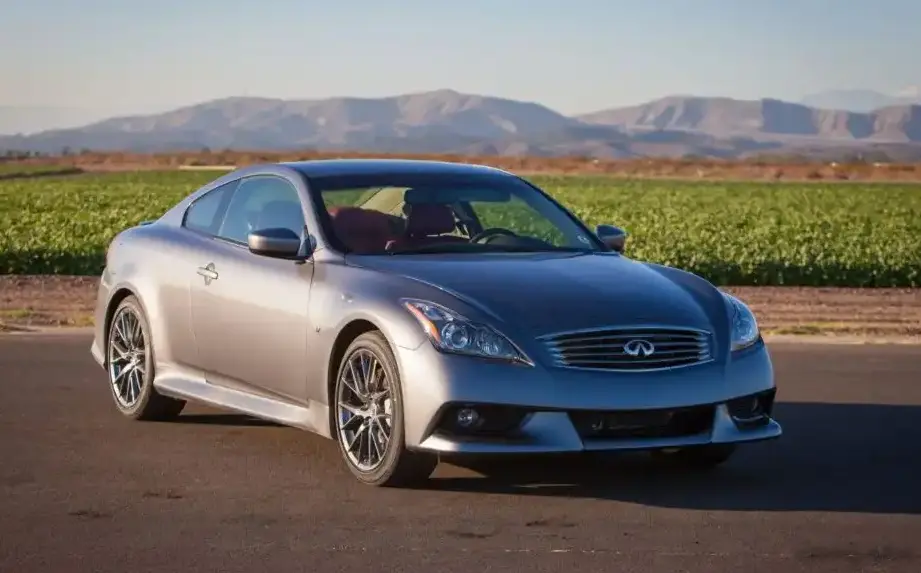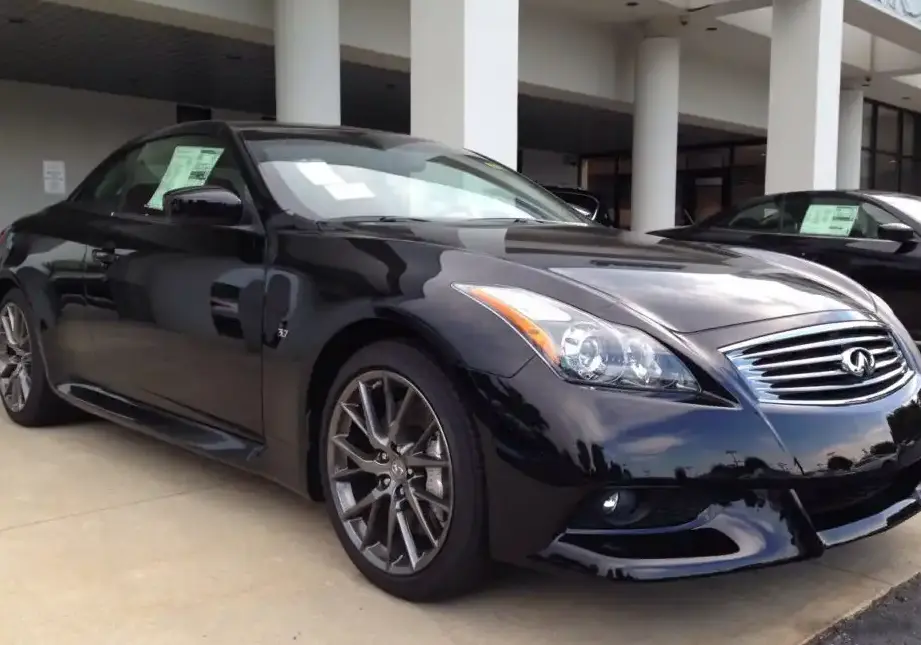
The Infiniti Q60 Convertible, specifically the 3.7-liter V6 variant producing 330 horsepower, represented a luxurious and performance-oriented offering in the premium sports convertible segment. Produced for a relatively short period between 2014 and 2016, this generation (Q60 I Convertible) served as a bridge between Infiniti’s earlier G37 convertible and the later, more technologically advanced Q60 coupe and convertible models. It was positioned as a direct competitor to vehicles like the BMW 4 Series Convertible, Mercedes-Benz C-Class Cabriolet, and Lexus IS Convertible, aiming to deliver a blend of style, power, and relative affordability within the luxury market.
Technical Specifications
| Brand | Infiniti |
| Model | Q60 |
| Generation | Q60 I Convertible |
| Type (Engine) | 3.7 V6 (330 Hp) |
| Start of production | 2014 |
| End of production | 2016 |
| Powertrain Architecture | Internal Combustion engine |
| Body type | Cabriolet |
| Seats | 4 |
| Doors | 2 |
| Fuel consumption (urban) | 14.7 l/100 km (16 US mpg, 19.2 UK mpg, 6.8 km/l) |
| Fuel consumption (extra urban) | 9.8 l/100 km (24 US mpg, 28.8 UK mpg, 10.2 km/l) |
| Fuel consumption (combined) | 12.4 l/100 km (19 US mpg, 22.8 UK mpg, 8.1 km/l) |
| Fuel Type | Petrol (Gasoline) |
| Weight-to-power ratio | 5.7 kg/Hp, 175.3 Hp/tonne |
| Weight-to-torque ratio | 5.2 kg/Nm, 192.3 Nm/tonne |
| Power | 330 Hp @ 7000 rpm |
| Power per litre | 89.3 Hp/l |
| Torque | 362 Nm @ 5200 rpm (267 lb.-ft. @ 5200 rpm) |
| Engine layout | Front, Longitudinal |
| Engine Model/Code | VQ37VHR |
| Engine displacement | 3696 cm3 (225.54 cu. in.) |
| Number of cylinders | 6 |
| Engine configuration | V-engine |
| Cylinder Bore | 95.5 mm (3.76 in.) |
| Piston Stroke | 86 mm (3.39 in.) |
| Compression ratio | 11:1 |
| Number of valves per cylinder | 4 |
| Fuel injection system | Multi-port manifold injection |
| Engine aspiration | Naturally aspirated engine |
| Valvetrain | DOHC |
| Engine oil capacity | 4.9 l (5.18 US qt | 4.31 UK qt) |
| Coolant | 8.6 l (9.09 US qt | 7.57 UK qt) |
| Kerb Weight | 1882 kg (4149.1 lbs.) |
| Max. weight | 2304 kg (5079.45 lbs.) |
| Max load | 422 kg (930.35 lbs.) |
| Fuel tank capacity | 75 l (19.81 US gal | 16.5 UK gal) |
| Length | 4674 mm (184.02 in.) |
| Width | 1852 mm (72.91 in.) |
| Height | 1400 mm (55.12 in.) |
| Wheelbase | 2850 mm (112.2 in.) |
| Front track | 1544 mm (60.79 in.) |
| Rear track | 1590 mm (62.6 in.) |
| Drag coefficient (Cd) | 0.31 |
| Minimum turning circle | 11.0 m (36.09 ft.) |
| Drivetrain Architecture | Rear wheel drive |
| Number of gears | 6 |
| Gearbox type | Manual transmission |
| Front brakes | Ventilated discs |
| Rear brakes | Ventilated discs |
| Assisting systems | ABS (Anti-lock braking system) |
| Steering type | Steering rack and pinion |
| Power steering | Electric Steering |
| Tires size | 225/45 R19 92W; 245/40 R19 94W |
| Wheel rims size | 19 |
Powertrain & Engine Architecture
The heart of the Q60 Convertible 3.7 was the VQ37VHR 3.7-liter V6 engine. This engine, a member of Nissan/Infiniti’s highly regarded VQ engine family, was known for its smooth power delivery and robust construction. The “VHR” designation indicated Variable Valve Timing and lift control, optimizing performance across the rev range. The engine utilized multi-port fuel injection and a double overhead camshaft (DOHC) valvetrain with four valves per cylinder. Producing 330 horsepower at 7000 rpm and 267 lb-ft of torque at 5200 rpm, the VQ37VHR provided ample power for spirited driving. The 6-speed manual transmission was the only transmission option available for this specific configuration, catering to drivers seeking a more engaging experience. This contrasted with other Q60 models that offered a 7-speed automatic transmission.
Driving Characteristics
The Q60 Convertible 3.7 with the manual transmission offered a distinctly driver-focused experience. The 6-speed gearbox, while not featuring the latest technology, provided precise shifts and allowed drivers to fully exploit the engine’s powerband. Acceleration was brisk, with the car capable of reaching 60 mph in around 5.5 seconds. The rear-wheel-drive configuration contributed to balanced handling, although the convertible body structure did introduce some degree of chassis flex compared to the coupe. Compared to the automatic transmission equipped Q60s, the manual version felt more responsive and engaging, appealing to enthusiasts who prioritized driving feel over convenience. The gear ratios were tuned to provide a good balance between acceleration and highway cruising, although the engine could feel slightly strained at very high speeds.
Equipment & Trim Levels
The Q60 Convertible 3.7 typically came well-equipped, reflecting its luxury positioning. Standard features included leather upholstery, power-adjustable seats, a premium audio system, automatic climate control, and a power-folding soft top. Optional extras included navigation, heated seats, and a rearview camera. The interior design was generally considered stylish and comfortable, although some materials felt less premium than those found in European competitors. The dashboard layout was straightforward and user-friendly, with logically placed controls. Trim levels were relatively simple, with most customization options available through individual packages rather than distinct model grades.
Chassis & Braking
The Q60 Convertible utilized a front-engine, rear-wheel-drive layout. The suspension consisted of independent double wishbones at the front and a multi-link setup at the rear, providing a comfortable ride and reasonably controlled handling. Ventilated disc brakes were fitted on all four wheels, providing ample stopping power. An Anti-lock Braking System (ABS) was standard. The chassis was reinforced to compensate for the lack of a fixed roof, but some body flex was still noticeable on uneven surfaces. The steering was electrically assisted, offering a good balance between feel and ease of use.
Market Reception & Comparison
The Infiniti Q60 Convertible 3.7 was generally well-received by automotive critics, who praised its powerful engine, engaging driving dynamics (particularly with the manual transmission), and attractive styling. However, it was also criticized for its relatively short production run, limited rear seat space, and some interior material quality issues. Compared to the automatic transmission versions, the manual variant was favored by driving enthusiasts but represented a smaller portion of overall sales. Fuel economy, at 19 mpg combined, was typical for a vehicle in this class but not particularly outstanding. Reliability was generally good, benefiting from the proven track record of the VQ37VHR engine.
Legacy
The Q60 Convertible 3.7, while a relatively short-lived model, remains a desirable option in the used car market, particularly for those seeking a performance-oriented luxury convertible. The VQ37VHR engine is known for its durability and relatively low maintenance costs. The manual transmission version is especially sought after by enthusiasts. While newer Q60 models offer more advanced technology and features, the first-generation Q60 Convertible 3.7 retains a certain appeal for its classic sports car feel and robust powertrain. Its value proposition continues to be strong, offering a compelling blend of performance, style, and affordability.