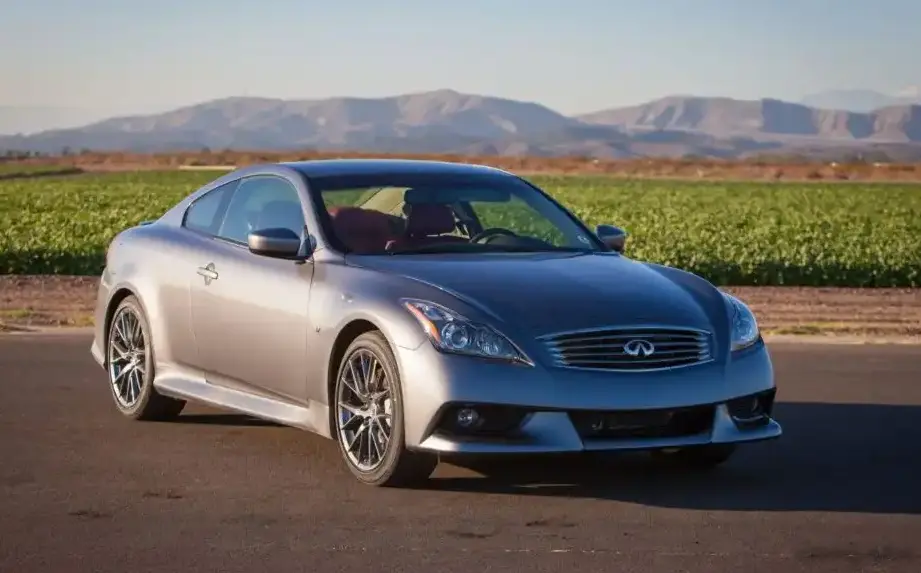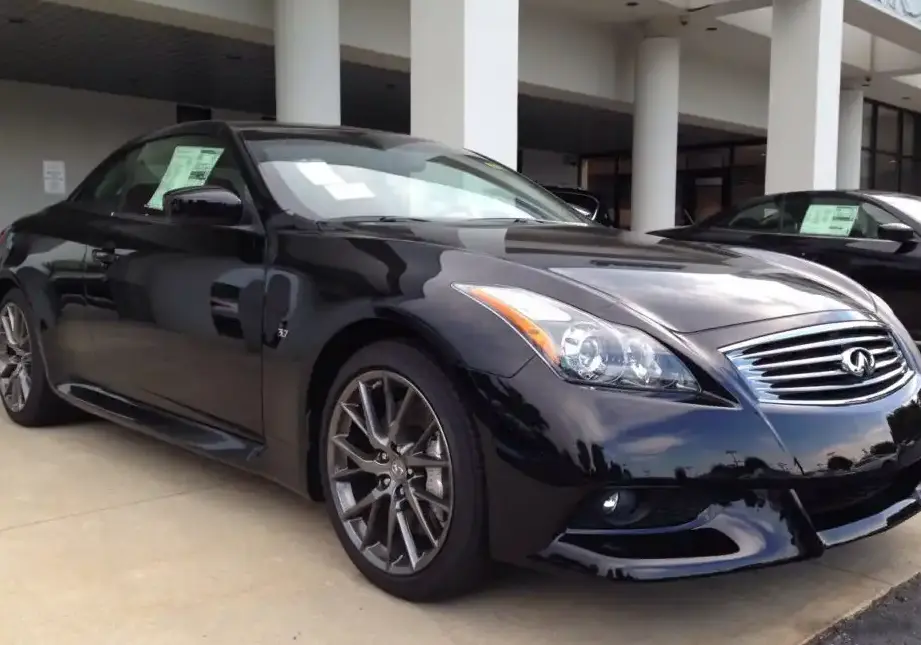
The Infiniti Q60 Convertible, specifically the 3.7-liter V6 variant producing 330 horsepower and paired with a 7-speed automatic transmission, was a luxury sports convertible offered for a relatively short production run from 2014 to 2016. Positioned as the premium offering within the Q60 Convertible lineup, it represented the highest performance option available. This model aimed to blend open-air driving enjoyment with the refined power expected from the Infiniti brand, competing with vehicles like the BMW 4 Series Convertible and the Lexus IS C. It was based on the Infiniti G37 Convertible, receiving a facelift and rebranding as part of the Q60 series.
Technical Specifications
| Brand | Infiniti |
| Model | Q60 |
| Generation | Q60 I Convertible |
| Type (Engine) | 3.7 V6 (330 Hp) Automatic |
| Start of production | 2014 |
| End of production | 2016 |
| Powertrain Architecture | Internal Combustion engine |
| Body type | Cabriolet |
| Seats | 4 |
| Doors | 2 |
| Fuel consumption (urban) | 13.1 l/100 km (18 US mpg, 21.6 UK mpg, 7.6 km/l) |
| Fuel consumption (extra urban) | 9 l/100 km (26.1 US mpg, 31.4 UK mpg, 11.1 km/l) |
| Fuel consumption (combined) | 11.8 l/100 km (19.9 US mpg, 23.9 UK mpg, 8.5 km/l) |
| Fuel Type | Petrol (Gasoline) |
| Weight-to-power ratio | 5.6 kg/Hp, 178.2 Hp/tonne |
| Weight-to-torque ratio | 5.1 kg/Nm, 195.5 Nm/tonne |
| Power | 330 Hp @ 7000 rpm |
| Power per litre | 89.3 Hp/l |
| Torque | 362 Nm @ 5200 rpm (267 lb.-ft. @ 5200 rpm) |
| Engine layout | Front, Longitudinal |
| Engine Model/Code | VQ37VHR |
| Engine displacement | 3696 cm3 (225.54 cu. in.) |
| Number of cylinders | 6 |
| Engine configuration | V-engine |
| Cylinder Bore | 95.5 mm (3.76 in.) |
| Piston Stroke | 86 mm (3.39 in.) |
| Compression ratio | 11:1 |
| Number of valves per cylinder | 4 |
| Fuel injection system | Multi-port manifold injection |
| Engine aspiration | Naturally aspirated engine |
| Valvetrain | DOHC |
| Engine oil capacity | 4.9 l (5.18 US qt | 4.31 UK qt) |
| Coolant | 8.5 l (8.98 US qt | 7.48 UK qt) |
| Kerb Weight | 1852 kg (4082.96 lbs.) |
| Max. weight | 2304 kg (5079.45 lbs.) |
| Max load | 452 kg (996.49 lbs.) |
| Fuel tank capacity | 75 l (19.81 US gal | 16.5 UK gal) |
| Length | 4656 mm (183.31 in.) |
| Width | 1852 mm (72.91 in.) |
| Height | 1400 mm (55.12 in.) |
| Wheelbase | 2850 mm (112.2 in.) |
| Front track | 1544 mm (60.79 in.) |
| Rear track | 1595 mm (62.8 in.) |
| Drag coefficient (Cd) | 0.30 |
| Minimum turning circle | 11.0 m (36.09 ft.) |
| Drivetrain Architecture | Rear wheel drive |
| Number of gears | 7 |
| Gearbox type | Automatic transmission |
| Front brakes | Ventilated discs |
| Rear brakes | Ventilated discs |
| Assisting systems | ABS (Anti-lock braking system) |
| Steering type | Steering rack and pinion |
| Power steering | Electric Steering |
| Tires size | 225/50 R18 95W; 245/45 R18 96W |
| Wheel rims size | 18 |
Powertrain & Engine Architecture
The heart of the Q60 Convertible 3.7 was the VQ37VHR 3.7-liter V6 engine. This engine, a member of Nissan’s highly regarded VQ family, is a naturally aspirated powerplant known for its smooth power delivery and reliability. The “VHR” designation stands for “Variable Valve Timing and lift with high response.” This system allowed for precise control of valve timing and lift, optimizing performance across the rev range. The engine utilized multi-port fuel injection and a dual overhead camshaft (DOHC) design with four valves per cylinder. It produced 330 horsepower at 7000 rpm and 267 lb-ft of torque at 5200 rpm. The engine was mounted longitudinally in the front of the vehicle, driving the rear wheels. Paired with the engine was a 7-speed automatic transmission, offering smooth shifts and a balance between performance and fuel efficiency. This transmission featured adaptive shift control, adjusting shift points based on driving conditions.
Driving Characteristics
The Q60 Convertible 3.7 Automatic offered a comfortable and engaging driving experience. While not as overtly sporty as some of its European rivals, the 330 hp V6 provided ample power for both cruising and spirited driving. The 7-speed automatic transmission, while smooth, wasn’t particularly quick to downshift, meaning drivers sometimes needed to manually select a lower gear for optimal acceleration. The rear-wheel-drive configuration contributed to a balanced feel, although the added weight of the convertible top and mechanism did impact handling compared to the coupe version. The power delivery was linear, making it easy to modulate the throttle. The automatic transmission’s gear ratios were tuned for a blend of acceleration and highway cruising, with a relatively tall final drive.
Equipment & Trim Levels
The Q60 Convertible 3.7 Automatic typically came well-equipped with standard features including leather upholstery, power-adjustable front seats, a premium audio system, automatic climate control, and a power-retractable hardtop. Optional extras included navigation, heated and cooled front seats, a rearview camera, and advanced safety features like lane departure warning and blind-spot monitoring. Interior trim options included wood or aluminum accents. The convertible top was a key feature, offering a secure and insulated cabin when raised, and an open-air experience when lowered. The dashboard layout was driver-focused, with intuitive controls and a clear instrument cluster.
Chassis & Braking
The Q60 Convertible utilized a front independent suspension with multi-link rear suspension. The suspension was tuned for a balance between comfort and handling. The car featured ventilated disc brakes on all four wheels, providing adequate stopping power. An Anti-lock Braking System (ABS) was standard. The chassis was reinforced to compensate for the loss of structural rigidity associated with the convertible body style. The steering was a rack-and-pinion system with electric power assist, offering precise and responsive steering feel. The standard tire size was 225/50R18 for the front and 245/45R18 for the rear, mounted on 18-inch alloy wheels.
Market Reception & Comparison
Critics generally praised the Q60 Convertible 3.7 for its powerful engine, comfortable ride, and well-appointed interior. However, some reviewers noted that the handling wasn’t as sharp as some of its European competitors, and the automatic transmission could feel a bit sluggish at times. Fuel economy was also a point of concern, with the combined fuel consumption of 19.9 US mpg being relatively high for its class. Compared to the base Q60 Convertible models with smaller engines, the 3.7-liter variant offered a significant performance upgrade, but at a higher price point. Compared to the Q60 Coupe, the convertible added weight and a slight reduction in structural rigidity, but offered the added enjoyment of open-air driving.
Legacy
The Infiniti Q60 Convertible 3.7 Automatic, while a short-lived model, has developed a following among enthusiasts who appreciate its blend of luxury, performance, and open-air driving enjoyment. The VQ37VHR engine is known for its durability and relatively straightforward maintenance. On the used car market, these convertibles generally hold their value reasonably well, particularly those in good condition with low mileage. Common maintenance items include regular oil changes, coolant flushes, and inspection of the convertible top mechanism. The Q60 Convertible represents a unique offering from Infiniti, bridging the gap between a luxury grand tourer and a sporty roadster.