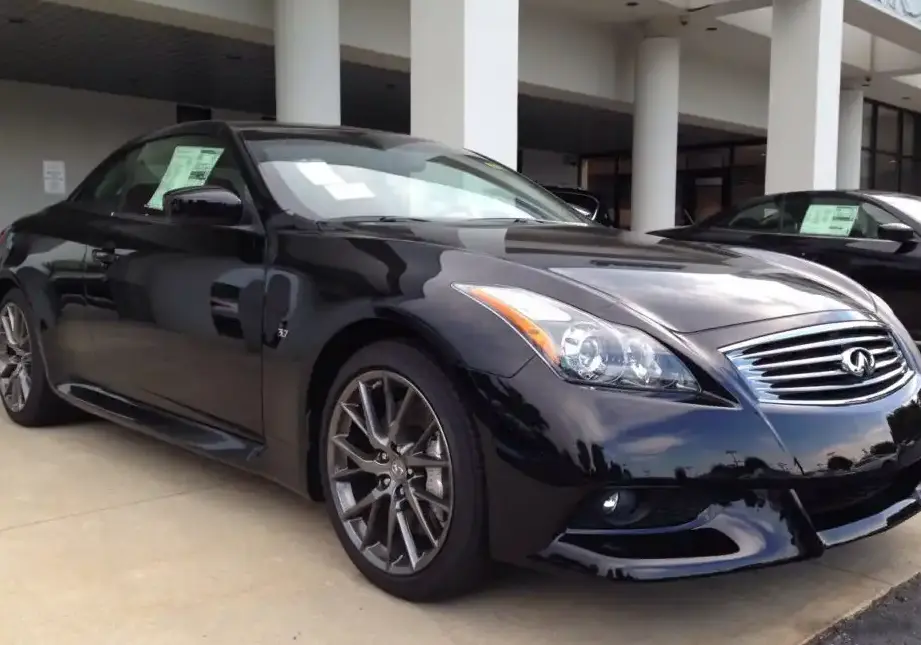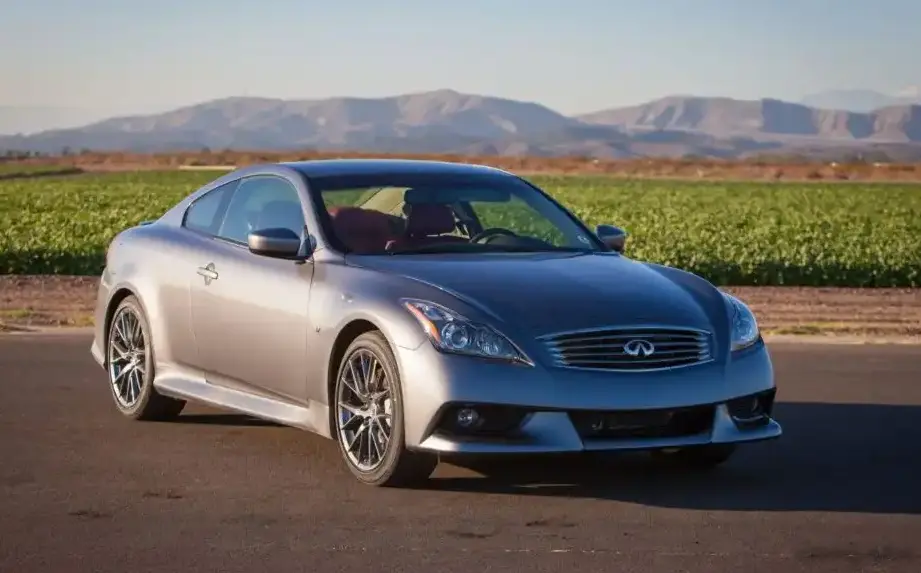
The Infiniti Q60 I Coupe, specifically the 3.7 V6 variant with the seven-speed automatic transmission, represented a significant offering in the luxury sports coupe segment. Produced from 2014 to 2016, this model served as a successor to the G37 Coupe, embodying Infiniti’s design language and performance aspirations. It was positioned as a driver-focused alternative to competitors like the BMW 4 Series and Audi A5, offering a blend of style, power, and relative affordability. The Q60 I Coupe was built on the FM platform, shared with other Infiniti and Nissan models, and aimed to deliver a refined yet engaging driving experience.
Technical Specifications
| Brand | Infiniti |
| Model | Q60 |
| Generation | Q60 I Coupe |
| Type (Engine) | 3.7 V6 (320 Hp) Automatic |
| Start of production | 2014 |
| End of production | 2016 |
| Powertrain Architecture | Internal Combustion engine |
| Body type | Coupe |
| Seats | 4 |
| Doors | 2 |
| Fuel consumption (urban) | 15.3 l/100 km (18.5 UK mpg, 6.5 km/l) |
| Fuel consumption (extra urban) | 7.8 l/100 km (30.2 US mpg, 36.2 UK mpg, 12.8 km/l) |
| Fuel consumption (combined) | 10.5 l/100 km (22.4 US mpg, 26.9 UK mpg, 9.5 km/l) |
| CO2 emissions | 246 g/km |
| Fuel Type | Petrol (Gasoline) |
| Acceleration 0 – 100 km/h | 5.9 sec |
| Acceleration 0 – 62 mph | 5.9 sec |
| Acceleration 0 – 60 mph | 5.6 sec |
| Maximum speed | 250 km/h (155.34 mph) |
| Emission standard | Euro 5 |
| Weight-to-power ratio | 5.1 kg/Hp |
| Weight-to-torque ratio | 4.6 kg/Nm |
| Power | 320 Hp @ 7000 rpm |
| Torque | 360 Nm @ 5200 rpm (265.52 lb.-ft. @ 5200 rpm) |
| Engine layout | Front, Longitudinal |
| Engine Model/Code | VQ37VHR |
| Engine displacement | 3696 cm3 (225.54 cu. in.) |
| Number of cylinders | 6 |
| Engine configuration | V-engine |
| Cylinder Bore | 95.5 mm (3.76 in.) |
| Piston Stroke | 86 mm (3.39 in.) |
| Compression ratio | 11:1 |
| Number of valves per cylinder | 4 |
| Fuel injection system | Multi-port manifold injection |
| Engine aspiration | Naturally aspirated engine |
| Valvetrain | DOHC |
| Engine oil capacity | 4.9 l (5.18 US qt | 4.31 UK qt) |
| Coolant capacity | 8.5 l (8.98 US qt | 7.48 UK qt) |
| Kerb Weight | 1643 kg (3622.19 lbs.) |
| Max. weight | 2140 kg (4717.89 lbs.) |
| Max load | 497 kg (1095.7 lbs.) |
| Trunk (boot) space | 275 l (9.71 cu. ft.) |
| Fuel tank capacity | 80 l (21.13 US gal | 17.6 UK gal) |
| Length | 4655 mm (183.27 in.) |
| Width | 1820 mm (71.65 in.) |
| Height | 1387 mm (54.61 in.) |
| Wheelbase | 2850 mm (112.2 in.) |
| Front track | 1545 mm (60.83 in.) |
| Rear track | 1560 mm (61.42 in.) |
| Drag coefficient (Cd) | 0.29 |
| Minimum turning circle | 11.0 m (36.09 ft.) |
| Drive wheel | Rear wheel drive |
| Number of gears | 7 |
| Gearbox type | Automatic transmission |
| Front brakes | Ventilated discs |
| Rear brakes | Ventilated discs |
| Assisting systems | ABS (Anti-lock braking system) |
| Steering type | Steering rack and pinion |
| Power steering | Electric Steering |
| Tires size | 225/50 R18 95W; 245/45 R18 96W |
| Wheel rims size | 18 |
Powertrain & Engine Architecture
The heart of the Q60 3.7 was the VQ37VHR engine, a 3.7-liter naturally aspirated V6. This engine was a member of Nissan’s highly regarded VQ engine family, known for its smoothness, reliability, and strong performance. The “VHR” designation indicated Variable Valve Timing and lift control, optimizing engine breathing across the rev range. The engine utilized multi-port fuel injection and a double overhead camshaft (DOHC) valvetrain with four valves per cylinder. The 320 horsepower and 265 lb-ft of torque were respectable figures for its time, providing brisk acceleration. Paired with the engine was a seven-speed automatic transmission, designed to provide smooth shifts and efficient power delivery. This transmission featured adaptive shift control, adjusting shift points based on driving conditions and driver input.
Driving Characteristics
The Q60 3.7 Automatic offered a comfortable and engaging driving experience. While not as overtly sporty as some of its European rivals, it provided ample power for everyday driving and spirited weekend excursions. The automatic transmission, while smooth, wasn’t the quickest shifting, and some drivers preferred the more direct engagement of the available six-speed manual transmission. The rear-wheel-drive configuration contributed to a balanced feel, and the suspension, tuned for comfort, still provided adequate body control in corners. The 0-60 mph time of around 5.6 seconds was competitive for the segment. The engine’s torque curve was relatively flat, providing good responsiveness throughout the rev range.
Equipment & Trim Levels
The Q60 3.7 Automatic typically came well-equipped, even in its base form. Standard features included leather upholstery, a power-adjustable driver’s seat, a rearview camera, and a premium audio system. Higher trim levels, such as the Premium and Sport models, added features like heated and ventilated front seats, a navigation system, a sunroof, and upgraded interior trim. Optional extras included a Bose premium sound system, adaptive cruise control, and a limited-slip differential. The interior design was modern and upscale, with a focus on driver ergonomics.
Chassis & Braking
The Q60 I Coupe utilized a front-engine, rear-wheel-drive layout. The suspension consisted of independent double wishbones at all four corners, providing a comfortable ride and good handling characteristics. Braking duties were handled by ventilated discs on all four wheels, providing ample stopping power. Anti-lock brakes (ABS) were standard, along with electronic brake-force distribution and brake assist. The steering was a rack-and-pinion system with electric power assist, offering a responsive and precise feel.
Market Reception & Comparison
The Infiniti Q60 3.7 Automatic was generally well-received by automotive critics. It was praised for its stylish design, powerful engine, and comfortable interior. However, some reviewers noted that the automatic transmission wasn’t as responsive as some competitors, and the fuel economy was relatively poor compared to turbocharged rivals. Compared to the manual transmission version, the automatic offered greater convenience but sacrificed some driver engagement. Against competitors like the BMW 4 Series and Audi A5, the Q60 offered a compelling value proposition, often undercutting their prices while providing similar levels of luxury and performance. The 3.7L engine was known to be reliable, but fuel consumption was a common complaint.
Legacy
The Infiniti Q60 I Coupe 3.7 V6 Automatic has proven to be a relatively reliable vehicle in the used car market. The VQ37VHR engine is known for its durability, and with proper maintenance, it can provide many years of trouble-free service. However, potential buyers should be aware of the relatively high fuel consumption and the potential for oil consumption as the engine ages. Today, the Q60 I Coupe is appreciated by enthusiasts for its classic coupe styling and its engaging driving experience. It remains a viable option for those seeking a stylish and powerful luxury sports coupe at an affordable price point.