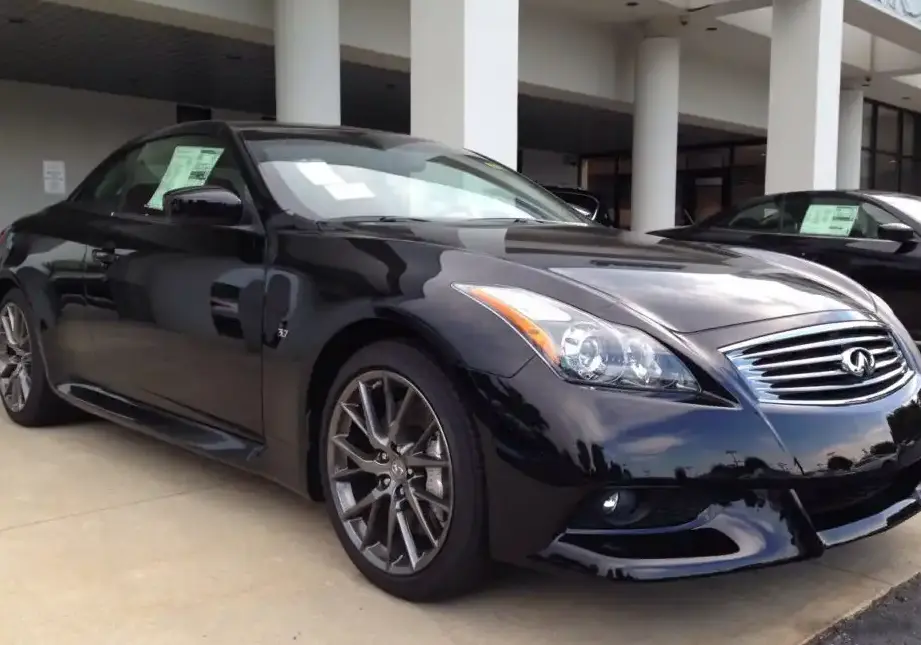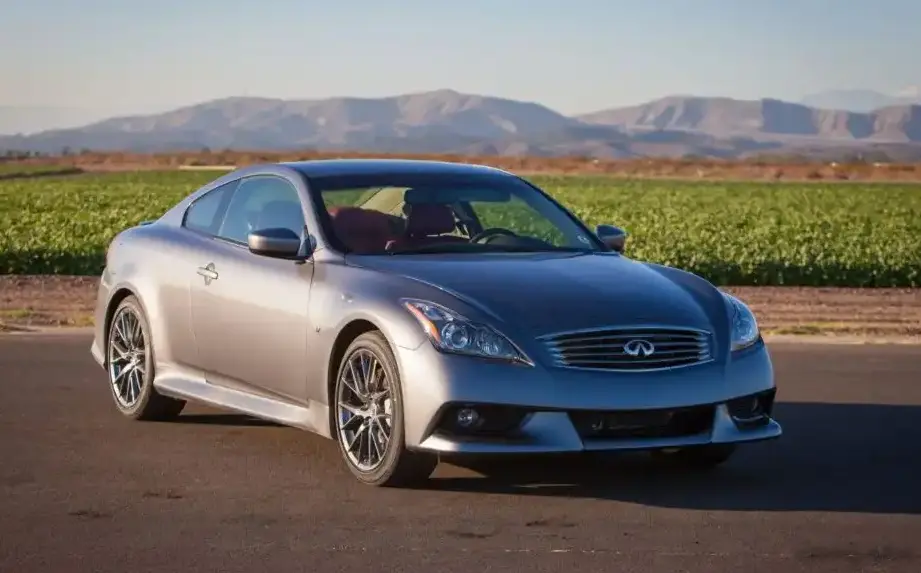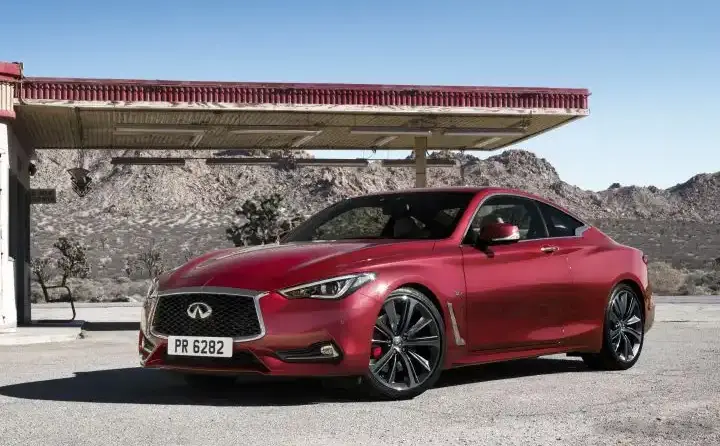
The Infiniti Q60 II Coupe S 3.0 V6 (405 Hp) AWD Automatic, produced from 2016 to 2018, represents the performance pinnacle of the second-generation Q60 lineup. Positioned as the flagship trim, it offered a significant step up in power and technology compared to the 2.0t models. The Q60 II, built on the VH platform shared with the Nissan 370Z and earlier Infiniti G37, aimed to blend sporty handling with luxurious comfort in a coupe package. This variant specifically targeted buyers seeking a high-performance, all-weather grand tourer, competing with vehicles like the BMW 4 Series and Audi S5.
Technical Specifications
| Brand | Infiniti |
| Model | Q60 |
| Generation | Q60 II Coupe |
| Type (Engine) | S 3.0 V6 (405 Hp) AWD Automatic |
| Start of production | 2016 |
| End of production | 2018 |
| Powertrain Architecture | Internal Combustion engine |
| Body type | Coupe |
| Seats | 4 |
| Doors | 2 |
| Fuel consumption (economy) – urban | 13.1 l/100 km (18 US mpg, 21.6 UK mpg, 7.6 km/l) |
| Fuel consumption (economy) – extra urban | 6.8 l/100 km (34.6 US mpg, 41.5 UK mpg, 14.7 km/l) |
| Fuel consumption (economy) – combined | 9.1 l/100 km (25.8 US mpg, 31 UK mpg, 11 km/l) |
| CO2 emissions | 208 g/km |
| Fuel Type | Petrol (Gasoline) |
| Acceleration 0 – 100 km/h | 5 sec |
| Acceleration 0 – 62 mph | 5 sec |
| Acceleration 0 – 60 mph | 4.8 sec |
| Maximum speed | 250 km/h (155.34 mph) |
| Weight-to-power ratio | 4.4 kg/Hp, 225.1 Hp/tonne |
| Weight-to-torque ratio | 3.8 kg/Nm, 264 Nm/tonne |
| Power | 405 Hp @ 6400 rpm |
| Power per litre | 135.1 Hp/l |
| Torque | 475 Nm @ 1600-5200 rpm (350.34 lb.-ft. @ 1600-5200 rpm) |
| Engine layout | Front, Longitudinal |
| Engine Model/Code | VR30DDTT |
| Engine displacement | 2997 cm3 (182.89 cu. in.) |
| Number of cylinders | 6 |
| Engine configuration | V-engine |
| Cylinder Bore | 86 mm (3.39 in.) |
| Piston Stroke | 86 mm (3.39 in.) |
| Compression ratio | 10.3:1 |
| Number of valves per cylinder | 4 |
| Fuel injection system | Direct injection |
| Engine aspiration | Twin-Turbo, Intercooler |
| Valvetrain | DOHC-CVVT |
| Engine oil capacity | 5.4 l (5.71 US qt | 4.75 UK qt) |
| Coolant | 10.3 l (10.88 US qt | 9.06 UK qt) |
| Kerb Weight | 1799-1815 kg (3966.12 – 4001.39 lbs.) |
| Max. weight | 2265 kg (4993.47 lbs.) |
| Max load | 450-466 kg (992.08 – 1027.35 lbs.) |
| Trunk (boot) space – minimum | 246 l (8.69 cu. ft.) |
| Fuel tank capacity | 76 l (20.08 US gal | 16.72 UK gal) |
| Length | 4684 mm (184.41 in.) |
| Width | 1849 mm (72.8 in.) |
| Height | 1394 mm (54.88 in.) |
| Wheelbase | 2850 mm (112.2 in.) |
| Drag coefficient (Cd) | 0.29 |
| Minimum turning circle | 11.6 m (38.06 ft.) |
| Drive wheel | All wheel drive (4×4) |
| Number of gears | 7 |
| Gearbox type | automatic transmission |
| Front suspension | Double wishbone |
| Rear suspension | Independent multi-link spring suspension with stabilizer |
| Front brakes | Ventilated discs |
| Rear brakes | Ventilated discs |
| Assisting systems | ABS (Anti-lock braking system) |
| Steering type | Steering rack and pinion |
| Power steering | Electric Steering |
| Tires size | 255/35 R20; 275/30 R20 |
| Wheel rims size | 9.0J x 20; 9.5J x 20 |
Powertrain & Engine Architecture
The heart of the Q60 S 3.0 AWD is the VR30DDTT 3.0-liter twin-turbocharged V6 engine. This engine represents a significant departure from the naturally aspirated VQ37VHR found in previous generations. The VR30DDTT utilizes direct injection and variable valve timing (CVVT) to optimize both power and efficiency. The twin-turbocharger setup employs electronically controlled wastegates for precise boost control. The engine produces 405 horsepower at 6400 rpm and 475 lb-ft of torque between 1600 and 5200 rpm. This broad torque curve contributes to strong acceleration across the rev range. The engine is longitudinally mounted, driving all four wheels through a seven-speed automatic transmission. This transmission features adaptive shift control, adjusting shift points based on driving conditions and driver input. While not a dual-clutch transmission, it provides relatively quick and smooth gear changes.
Driving Characteristics
The Q60 S 3.0 AWD delivers a compelling driving experience. The twin-turbo V6 provides strong and immediate acceleration, with the all-wheel-drive system ensuring excellent traction. The 0-60 mph time of around 4.8 seconds is competitive within its class. Compared to the 2.0t models, the S 3.0 offers a substantially more powerful and responsive driving experience. The seven-speed automatic transmission is well-tuned, providing smooth shifts during normal driving and quick downshifts when needed for overtaking. The all-wheel-drive system defaults to a rear-biased setup, enhancing handling dynamics. However, it can quickly shift power to the front wheels when traction is compromised. The steering is precise, but some reviewers noted a lack of ultimate feel compared to European rivals.
Equipment & Trim Levels
The Q60 S 3.0 AWD came standard with a comprehensive list of features, including leather upholstery, heated and ventilated front seats, a dual-screen infotainment system, a Bose premium audio system, and a suite of advanced safety technologies like forward emergency braking, lane departure warning, and blind-spot monitoring. Optional extras included adaptive cruise control, a 360-degree camera system, and carbon fiber interior trim. The interior design emphasized a driver-focused layout with a comfortable and well-appointed cabin. Exterior styling cues included unique alloy wheel designs, sportier front and rear fascias, and available carbon fiber accents.
Chassis & Braking
The Q60 S 3.0 AWD features a double wishbone front suspension and an independent multi-link rear suspension with a stabilizer bar. This suspension setup provides a good balance between ride comfort and handling performance. The car is equipped with ventilated disc brakes on all four wheels, providing ample stopping power. The all-wheel-drive system contributes to enhanced stability and braking performance, particularly in adverse weather conditions. The Q60’s chassis, while shared with older platforms, was refined with updated dampers and steering tuning to improve responsiveness.
Market Reception & Comparison
The Infiniti Q60 S 3.0 AWD was generally well-received by automotive critics. Praise was given for its powerful engine, comfortable ride, and generous standard features. However, some reviewers criticized its infotainment system for being somewhat complex and its handling for not being as sharp as some European competitors. Fuel economy was also considered average for its class. Compared to the Q60 2.0t models, the S 3.0 offered a significant performance upgrade, but at a higher price point. The 2.0t models were aimed at buyers prioritizing fuel efficiency and affordability, while the S 3.0 catered to those seeking a more engaging and powerful driving experience.
Legacy
The VR30DDTT engine, while relatively new at the time of the Q60’s launch, has proven to be generally reliable. Common issues reported by owners include occasional oil consumption and potential turbocharger issues, but these are not widespread. The Q60 S 3.0 AWD has maintained reasonable resale values in the used car market, reflecting its performance capabilities and luxurious features. It remains a compelling option for buyers seeking a stylish and powerful coupe with all-weather capability. The Q60 represented Infiniti’s attempt to recapture some of the sporting spirit of earlier models while offering a more modern and refined driving experience.