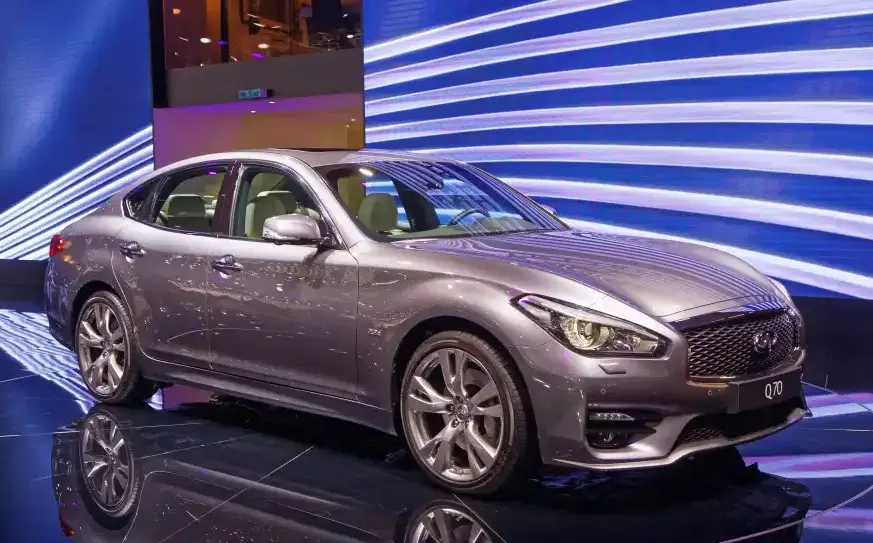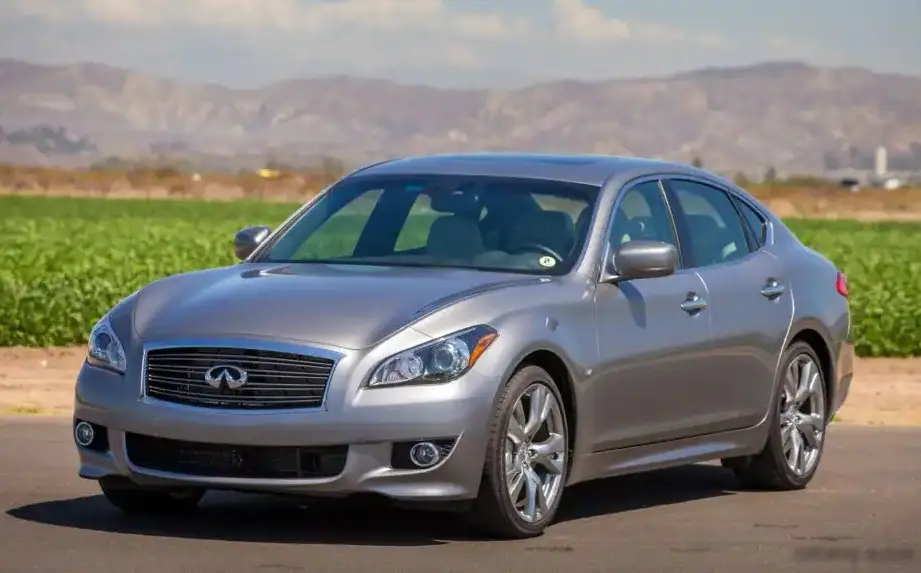
The Infiniti Q70 3.7 V6 AWD Automatic, produced from 2013 to 2014, represented a significant offering in the mid-size luxury sedan segment. Positioned as a step up from the base Q70 models, this variant combined a potent 3.7-liter V6 engine with a seven-speed automatic transmission and Infiniti’s all-wheel-drive system. It served as a direct competitor to vehicles like the Acura RLX, Lexus GS, and BMW 5 Series, aiming to deliver a blend of performance, luxury, and advanced technology. The Q70, originally launched as the Infiniti M, underwent a rebranding in 2013, and the 3.7L AWD model was a key component of the revised lineup.
Technical Specifications
| Brand | Infiniti |
| Model | Q70 |
| Generation | Q70 |
| Type (Engine) | 3.7 V6 (330 Hp) AWD Automatic |
| Start of production | 2013 |
| End of production | 2014 |
| Powertrain Architecture | Internal Combustion engine |
| Body type | Sedan |
| Seats | 5 |
| Doors | 4 |
| Fuel consumption (economy) – urban (EPA) | 13.8 l/100 km (17 US mpg, 20.5 UK mpg, 7.2 km/l) |
| Fuel consumption (economy) – extra urban (EPA) | 9.8 l/100 km (24 US mpg, 28.8 UK mpg, 10.2 km/l) |
| Fuel consumption (economy) – combined (EPA) | 11.8 l/100 km (19.9 US mpg, 23.9 UK mpg, 8.5 km/l) |
| Fuel Type | Petrol (Gasoline) |
| Weight-to-power ratio | 5.5 kg/Hp, 180.5 Hp/tonne |
| Weight-to-torque ratio | 5 kg/Nm, 200.2 Nm/tonne |
| Power | 330 Hp @ 7000 rpm |
| Power per litre | 89.3 Hp/l |
| Torque | 366 Nm @ 5200 rpm (269.95 lb.-ft. @ 5200 rpm) |
| Maximum engine speed | 7500 rpm |
| Engine layout | Front, Longitudinal |
| Engine Model/Code | VQ37VHR |
| Engine displacement | 3696 cm3 (225.54 cu. in.) |
| Number of cylinders | 6 |
| Engine configuration | V-engine |
| Cylinder Bore | 95.5 mm (3.76 in.) |
| Piston Stroke | 86 mm (3.39 in.) |
| Compression ratio | 11:1 |
| Number of valves per cylinder | 4 |
| Fuel injection system | Multi-port manifold injection |
| Engine aspiration | Naturally aspirated engine |
| Valvetrain | DOHC, VVEL, CVTCS |
| Engine oil capacity | 4.9 l (5.18 US qt | 4.31 UK qt) |
| Coolant | 8.4 l (8.88 US qt | 7.39 UK qt) |
| Kerb Weight | 1828 kg (4030.05 lbs.) |
| Max. weight | 2330 kg (5136.77 lbs.) |
| Max load | 502 kg (1106.72 lbs.) |
| Trunk (boot) space – minimum | 422 l (14.9 cu. ft.) |
| Fuel tank capacity | 76 l (20.08 US gal | 16.72 UK gal) |
| Length | 4945 mm (194.69 in.) |
| Width | 1845 mm (72.64 in.) |
| Height | 1515 mm (59.65 in.) |
| Wheelbase | 2900 mm (114.17 in.) |
| Front track | 1575 mm (62.01 in.) |
| Rear (Back) track | 1565 mm (61.61 in.) |
| Ride height (ground clearance) | 147 mm (5.79 in.) |
| Drag coefficient (Cd) | 0.27 |
| Minimum turning circle (turning diameter) | 11.4 m (37.4 ft.) |
| Drivetrain Architecture | The Internal combustion engine (ICE) drives the rear wheels permanently, and the front wheels are driven through an electrically or mechanically operated clutch if necessary. |
| Drive wheel | All wheel drive (4×4) |
| Number of gears and type of gearbox | 7 gears, automatic transmission |
| Front suspension | Double wishbone, Independent coil spring, Transverse stabilizer |
| Rear suspension | Independent multi-link spring suspension with stabilizer |
| Front brakes | Ventilated discs, 320×28 mm |
| Rear brakes | Ventilated discs, 308×15 mm |
| Assisting systems | ABS (Anti-lock braking system) |
| Steering type | Steering rack and pinion |
| Power steering | Electric Steering |
| Tires size | 245/50 R18; 245/40 R20 |
| Wheel rims size | 8J x 18; 9J x 20 |
Powertrain & Engine Architecture
At the heart of the Q70 3.7L AWD lies the VQ37VHR engine, a 3.7-liter naturally aspirated V6. This engine is a member of Nissan/Infiniti’s highly regarded VQ engine family, known for its smoothness, reliability, and strong performance. The “VHR” designation stands for “Variable Valve Event and Lift,” indicating the engine’s advanced valvetrain technology. This system, combined with Continuously Variable Valve Timing Control System (CVTCS), optimizes airflow into the cylinders for improved power and efficiency across the rev range. The engine utilizes multi-port fuel injection, delivering fuel directly to each cylinder. The seven-speed automatic transmission, sourced from Jatco, was specifically tuned to complement the engine’s characteristics. It features adaptive shift control, adjusting shift points based on driving conditions and driver input. The all-wheel-drive system employs a rear-biased configuration, sending power primarily to the rear wheels for a more engaging driving experience, while automatically engaging the front wheels when traction is needed.
Driving Characteristics
The Q70 3.7L AWD offered a compelling driving experience, balancing comfort and performance. The 330 horsepower and 269 lb-ft of torque provided brisk acceleration, with 0-60 mph times typically around 5.6 seconds. The seven-speed automatic transmission shifted smoothly and responsively, although it wasn’t as quick or sporty as some dual-clutch transmissions found in competitors. The all-wheel-drive system instilled confidence in various weather conditions, providing enhanced grip and stability. Compared to the base Q70 models with the 3.5-liter V6, the 3.7L variant offered a noticeable increase in power and a more refined driving experience. It didn’t quite match the outright performance of the Q70 Hybrid, but it provided a more traditional and engaging driving feel. The gear ratios were optimized for both highway cruising and spirited driving, offering a good balance between fuel efficiency and responsiveness.
Equipment & Trim Levels
The Q70 3.7L AWD typically came well-equipped with standard features including leather upholstery, heated front seats, a power-adjustable driver’s seat, a Bose premium audio system, a navigation system, and a rearview camera. Available options included a premium package that added features like semi-aniline leather, heated and cooled front seats, a power-adjustable passenger seat, and a climate-controlled front seats. Other optional extras included a technology package with features like lane departure warning, blind-spot monitoring, and adaptive cruise control. Interior trim options typically included wood or aluminum accents, and exterior color choices were varied, offering buyers a degree of personalization.
Chassis & Braking
The Q70 3.7L AWD featured a double-wishbone front suspension and an independent multi-link rear suspension, providing a comfortable and controlled ride. Stabilizer bars were fitted to both axles to minimize body roll during cornering. The braking system consisted of ventilated discs on all four wheels, providing ample stopping power. Anti-lock brakes (ABS) and electronic brake-force distribution were standard features. The steering was electrically assisted, offering a light and precise feel. The Q70’s chassis was tuned to prioritize comfort and refinement, rather than outright sportiness, making it a pleasant grand tourer.
Market Reception & Comparison
Critics generally praised the Q70 3.7L AWD for its powerful engine, comfortable ride, and luxurious interior. However, some reviewers noted that the styling was somewhat conservative compared to its European rivals. Fuel economy was considered average for the segment, with the combined EPA rating of 19.9 mpg. Compared to the Q70 3.5, the 3.7L offered a significant performance upgrade, but at a higher price point. The Q70 Hybrid offered better fuel economy, but the 3.7L provided a more traditional driving experience. Reliability ratings were generally good, although some owners reported minor issues with the infotainment system.
Legacy
The Infiniti Q70 3.7L AWD Automatic, while not a massive sales success, remains a well-regarded luxury sedan. The VQ37VHR engine is known for its durability and longevity, and with proper maintenance, these engines can reliably exceed 200,000 miles. On the used car market, the Q70 3.7L AWD offers a compelling value proposition, providing a luxurious and well-equipped vehicle at a relatively affordable price. Its blend of performance, comfort, and all-wheel-drive capability continues to appeal to buyers seeking a capable and refined mid-size luxury sedan.