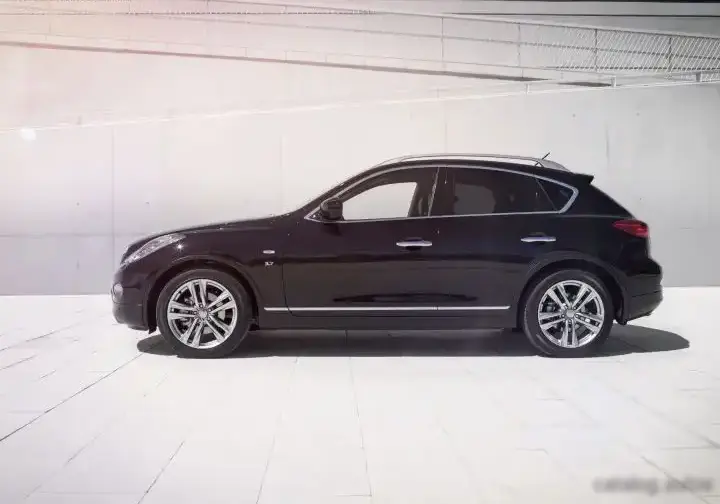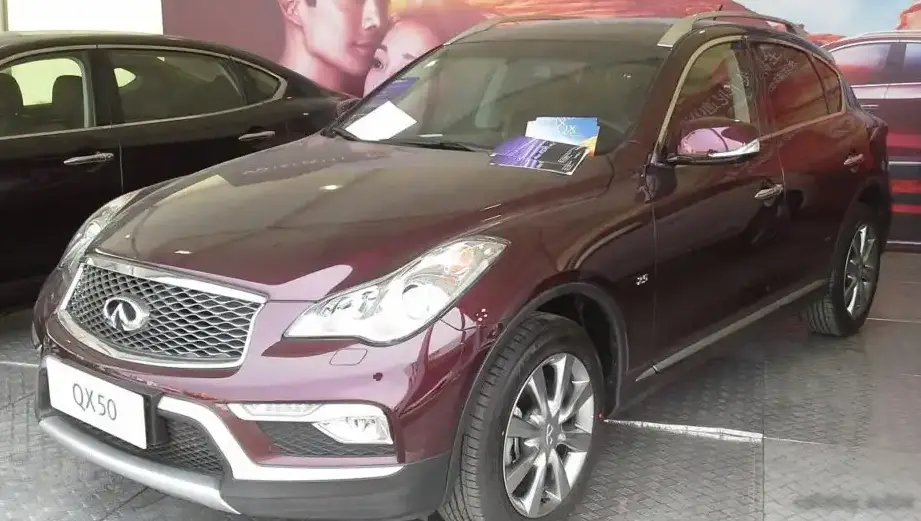
The Infiniti QX50, specifically the first generation facelift model produced from 2015 to 2016, equipped with the 3.7-liter V6 engine and a seven-speed automatic transmission, represented a significant offering in the mid-size luxury crossover segment. This variant aimed to balance performance with relative practicality, slotting in as the top-tier engine option within the QX50 lineup. It served as Infiniti’s competitor to vehicles like the Acura RDX, BMW X3, and Audi Q5, offering a distinctive blend of Japanese engineering and luxury features aimed at the North American market. The QX50, initially introduced as the EX35 in 2008, underwent a facelift in 2015, receiving revised styling and the more powerful 3.7-liter engine, rebranding as the QX50.
Technical Specifications
| Brand | Infiniti |
| Model | QX50 |
| Generation | QX50 I (facelift 2015) |
| Type (Engine) | 3.7 V6 (325 Hp) Automatic |
| Start of production | 2015 |
| End of production | 2016 |
| Powertrain Architecture | Internal Combustion engine |
| Body type | SUV |
| Seats | 5 |
| Doors | 5 |
| Fuel consumption (urban) | 13.8 l/100 km (17 US mpg, 20.5 UK mpg, 7.2 km/l) |
| Fuel consumption (extra urban) | 9.8 l/100 km (24 US mpg, 28.8 UK mpg, 10.2 km/l) |
| Fuel Type | Petrol (Gasoline) |
| Acceleration 0 – 100 km/h | 6.7 sec |
| Acceleration 0 – 62 mph | 6.7 sec |
| Acceleration 0 – 60 mph | 6.4 sec |
| Maximum speed | 225 km/h (139.81 mph) |
| Emission standard | Euro 6 |
| Weight-to-power ratio | 5.4 kg/Hp, 185.8 Hp/tonne |
| Weight-to-torque ratio | 6.6 kg/Nm, 152.7 Nm/tonne |
| Power | 325 Hp @ 7000 rpm |
| Power per litre | 87.9 Hp/l |
| Torque | 267 Nm @ 5200 rpm (196.93 lb.-ft. @ 5200 rpm) |
| Engine layout | Front, Longitudinal |
| Engine Model/Code | VQ37VHR |
| Engine displacement | 3696 cm3 (225.54 cu. in.) |
| Number of cylinders | 6 |
| Engine configuration | V-engine |
| Cylinder Bore | 95.5 mm (3.76 in.) |
| Piston Stroke | 86 mm (3.39 in.) |
| Compression ratio | 11:1 |
| Number of valves per cylinder | 4 |
| Fuel injection system | Multi-port manifold injection |
| Engine aspiration | Naturally aspirated engine |
| Engine oil capacity | 4.9 l (5.18 US qt | 4.31 UK qt) |
| Coolant | 9 l (9.51 US qt | 7.92 UK qt) |
| Kerb Weight | 1749 kg (3855.88 lbs.) |
| Max. weight | 2305 kg (5081.66 lbs.) |
| Max load | 556 kg (1225.77 lbs.) |
| Trunk (boot) space – minimum | 309 l (10.91 cu. ft.) |
| Fuel tank capacity | 80 l (21.13 US gal | 17.6 UK gal) |
| Length | 4745 mm (186.81 in.) |
| Width | 1800 mm (70.87 in.) |
| Height | 1613 mm (63.5 in.) |
| Wheelbase | 2880 mm (113.39 in.) |
| Front track | 1535 mm (60.43 in.) |
| Rear (Back) track | 1550 mm (61.02 in.) |
| Ride height (ground clearance) | 175 mm (6.89 in.) |
| Drag coefficient (Cd) | 0.33 |
| Drivetrain Architecture | The Internal combustion engine (ICE) drives the rear wheels of the vehicle. |
| Drive wheel | Rear wheel drive |
| Number of gears and type of gearbox | 7 gears, automatic transmission |
| Front suspension | Double wishbone |
| Rear suspension | Independent multi-link spring suspension with stabilizer |
| Front brakes | Ventilated discs |
| Rear brakes | Ventilated discs |
| Assisting systems | ABS (Anti-lock braking system) |
| Steering type | Steering rack and pinion |
| Power steering | Electric Steering |
| Tires size | 225/55 R18 |
| Wheel rims size | 18 |
Powertrain & Engine Architecture
The heart of the 2015-2016 Infiniti QX50 was the VQ37VHR 3.7-liter V6 engine. This engine, a member of Nissan’s highly regarded VQ engine family, is a naturally aspirated powerplant known for its smooth operation and robust construction. The “VHR” designation stands for “Variable Valve Timing and lift with high response.” This system allowed for precise control over valve timing and lift, optimizing performance across the rev range. The engine utilized multi-port fuel injection and a compression ratio of 11:1. Paired with this engine was a seven-speed automatic transmission, offering relatively quick and smooth shifts. This transmission was designed to balance fuel efficiency with responsive acceleration. The drivetrain configuration was rear-wheel drive, a somewhat uncommon setup in the luxury crossover segment, contributing to a more engaging driving experience.
Driving Characteristics
The QX50 3.7L Automatic delivered a noticeably more spirited driving experience compared to the earlier EX35 models or competitors equipped with smaller displacement engines. The 325 horsepower and 267 lb-ft of torque provided ample power for both city driving and highway passing maneuvers. Acceleration from 0-60 mph was achieved in approximately 6.4 seconds. The seven-speed automatic transmission, while generally smooth, wasn’t the fastest shifting unit on the market. The rear-wheel-drive configuration contributed to a balanced feel, although it could be less confident in inclement weather compared to all-wheel-drive rivals. The gear ratios were tuned for a blend of acceleration and highway cruising efficiency, with a relatively tall final drive.
Equipment & Trim Levels
The 2015-2016 QX50 3.7L Automatic typically came well-equipped as standard. Features included leather upholstery, heated front seats, a power-adjustable driver’s seat, a rearview camera, a seven-inch touchscreen display, and a Bose audio system. Optional extras included navigation, a panoramic sunroof, adaptive cruise control, lane departure warning, and blind-spot monitoring. Interior trim options were generally limited to wood or metallic accents. The QX50 didn’t offer a wide range of trim levels; the 3.7L variant represented the highest level of performance and features available.
Chassis & Braking
The QX50 utilized a double wishbone front suspension and an independent multi-link rear suspension, both incorporating stabilizer bars to minimize body roll. The suspension tuning aimed for a balance between comfort and handling. Braking duties were handled by ventilated discs on all four wheels, providing adequate stopping power. The ABS (Anti-lock Braking System) was standard. The steering system employed an electric power steering rack and pinion, offering a reasonable level of feedback and assistance.
Market Reception & Comparison
Critics generally praised the QX50 3.7L for its powerful engine and engaging driving dynamics, particularly its rear-wheel-drive configuration. However, some reviewers noted that the interior, while well-appointed, felt somewhat dated compared to newer competitors. Fuel economy was also a point of criticism, with the 3.7L engine consuming more fuel than some of its turbocharged rivals. Compared to the earlier EX35, the QX50 offered a significant performance upgrade. Against competitors like the Acura RDX and BMW X3, the QX50 offered a unique driving experience but often lagged behind in terms of fuel efficiency and cutting-edge technology.
Legacy
The VQ37VHR engine, in general, has proven to be a reliable and durable powerplant. The QX50’s 3.7L variant is no exception, with many examples exceeding 150,000 miles with proper maintenance. Common maintenance items include regular oil changes, timing chain inspection (though generally robust), and monitoring of coolant levels. On the used car market, the QX50 3.7L represents a relatively affordable entry point into the luxury crossover segment. Its combination of performance, features, and reliability makes it an attractive option for buyers seeking a sporty and comfortable SUV.