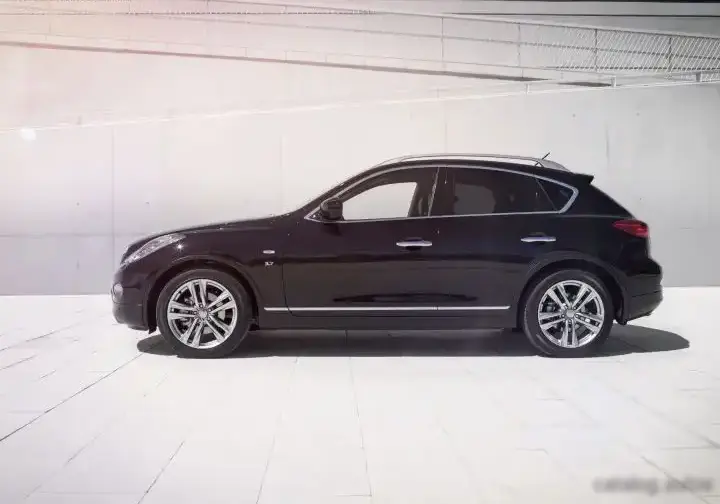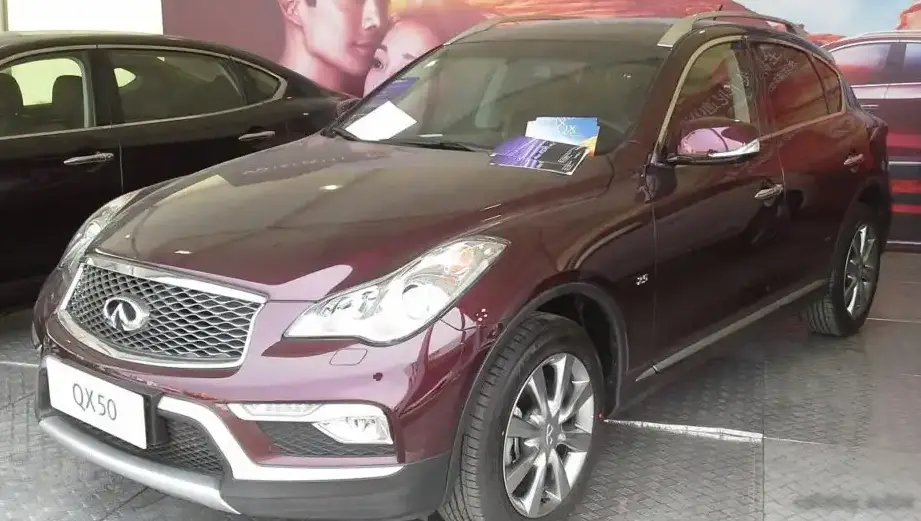
The Infiniti QX50 II, specifically the 2.0 VC-Turbo (272 Hp) AWD variant with the XTRONIC continuously variable transmission, represents a significant step in the luxury compact SUV segment. Introduced for the 2017 model year, this iteration of the QX50 aimed to blend performance, efficiency, and innovative technology. It slots into the mid-to-upper range of the QX50 lineup, offering a more potent engine option than the base models while remaining more accessible than potential future high-performance trims. The QX50 II is built on the Renault-Nissan-Mitsubishi Alliance’s D-platform, shared with vehicles like the Nissan Murano and the Renault Koleos, but Infiniti distinguishes itself through unique styling and a focus on a more premium driving experience.
Technical Specifications
| Brand | Infiniti |
| Model | QX50 |
| Generation | QX50 II |
| Type (Engine) | 2.0 VC-Turbo (272 Hp) AWD XTRONIC |
| Start of production | 2017 |
| Powertrain Architecture | Internal Combustion engine |
| Body type | SUV |
| Seats | 5 |
| Doors | 5 |
| Fuel Type | Petrol (Gasoline) |
| Acceleration 0 – 100 km/h | 6.3 sec |
| Acceleration 0 – 62 mph | 6.3 sec |
| Acceleration 0 – 60 mph | 6 sec |
| Maximum speed | 230 km/h (142.92 mph) |
| Weight-to-power ratio | 6.6 kg/Hp, 151.5 Hp/tonne |
| Weight-to-torque ratio | 4.7 kg/Nm, 211.7 Nm/tonne |
| Power | 272 Hp @ 5600 rpm |
| Power per litre | 136.2 Hp/l |
| Torque | 380 Nm @ 4400 rpm (280.27 lb.-ft. @ 4400 rpm) |
| Engine layout | Front, Transverse |
| Engine Model/Code | KR20DDET |
| Engine displacement | 1997 cm3 (121.86 cu. in.) |
| Number of cylinders | 4 |
| Engine configuration | Inline |
| Compression ratio | 8:1 |
| Number of valves per cylinder | 4 |
| Fuel injection system | Direct injection and Multi-port manifold injection |
| Engine aspiration | Turbocharger, Intercooler |
| Engine oil capacity | 4.7 l (4.97 US qt | 4.14 UK qt) |
| Coolant | 7.7 l (8.14 US qt | 6.78 UK qt) |
| Kerb Weight | 1795 kg (3957.3 lbs) |
| Max. weight | 2296 kg (5061.81 lbs) |
| Max load | 501 kg (1104.52 lbs) |
| Trunk (boot) space – minimum | 895 l (31.61 cu. ft) |
| Trunk (boot) space – maximum | 1699 l (60 cu. ft) |
| Fuel tank capacity | 60 l (15.85 US gal | 13.2 UK gal) |
| Permitted trailer load with brakes (12%) | 1361 kg (3000.49 lbs) |
| Length | 4693 mm (184.76 in) |
| Width | 1903 mm (74.92 in) |
| Height | 1679 mm (66.1 in) |
| Wheelbase | 2800 mm (110.24 in) |
| Front overhang | 941 mm (37.05 in) |
| Rear overhang | 952 mm (37.48 in) |
| Ride height (ground clearance) | 218 mm (8.58 in) |
| Minimum turning circle | 11.2 m (36.75 ft) |
| Drive wheel | All wheel drive (4×4) |
| Number of gears and type of gearbox | automatic transmission XTRONIC |
| Front suspension | Independent, type McPherson with coil spring and anti-roll bar |
| Rear suspension | Independent multi-link spring suspension with stabilizer |
| Front brakes | Ventilated discs |
| Rear brakes | Ventilated discs |
| Assisting systems | ABS (Anti-lock braking system) |
| Steering type | Steering rack and pinion |
| Power steering | Electric Steering |
| Tires size | 235/55 R19; 255/45 R20 |
| Wheel rims size | 7.5J x 19; 8.5J x 20 |
Powertrain & Engine Architecture
The heart of the QX50 II 2.0 VC-Turbo is the KR20DDET engine, a 2.0-liter inline-four cylinder powerplant. What sets this engine apart is its Variable Compression (VC) technology. This innovative system allows the engine to seamlessly adjust its compression ratio between 8:1 and 12:1, optimizing for both power and efficiency depending on driving conditions. At lower loads, a higher compression ratio improves fuel economy, while during spirited driving, a lower ratio maximizes power output. The engine utilizes direct injection combined with multi-port fuel injection to ensure optimal combustion. A single turbocharger with an intercooler provides forced induction, boosting horsepower and torque. The XTRONIC continuously variable transmission (CVT) is paired with the engine, offering smooth, stepless gear changes. This CVT is programmed for both fuel efficiency and responsive acceleration, with simulated shift points available for a more traditional driving feel.
Driving Characteristics
The 272-horsepower and 280 lb-ft of torque delivered by the 2.0 VC-Turbo engine provide brisk acceleration. The 0-60 mph sprint is achieved in around 6 seconds, making it competitive within its class. The XTRONIC CVT, while efficient, can sometimes feel less engaging than a traditional automatic transmission. However, Infiniti has tuned the CVT to minimize the “rubber band” effect often associated with CVTs, and the simulated shift points help to provide a more familiar driving experience. The all-wheel-drive system provides enhanced traction in various weather conditions. Compared to lower-powered QX50 variants, the VC-Turbo offers a noticeably more responsive and confident driving experience, particularly when merging onto highways or overtaking other vehicles. It doesn’t quite match the performance of some sport-tuned SUVs, but it strikes a good balance between comfort and capability.
Equipment & Trim Levels
The 2.0 VC-Turbo AWD XTRONIC trim typically came well-equipped. Standard features included leather upholstery, heated front seats, a dual-screen infotainment system with navigation, a rearview camera, and a suite of advanced driver-assistance systems (ADAS) such as automatic emergency braking, lane departure warning, and blind-spot monitoring. Optional extras included a panoramic sunroof, premium audio system, and adaptive cruise control. Interior materials were generally of high quality, reflecting Infiniti’s luxury positioning. The dashboard layout was clean and modern, with a focus on user-friendliness. Trim levels above the base model often added features like ventilated front seats, quilted leather, and unique interior accents.
Chassis & Braking
The QX50 II utilizes an independent suspension system at all four corners. The front suspension employs a McPherson strut design with coil springs and an anti-roll bar, while the rear features a multi-link setup with a stabilizer bar. This configuration provides a comfortable ride while maintaining reasonable handling characteristics. Braking duties are handled by ventilated discs on all four wheels, providing ample stopping power. The ABS (Anti-lock Braking System) and electronic brake-force distribution (EBD) enhance safety and control. The steering is electrically assisted, offering a light and precise feel.
Market Reception & Comparison
The QX50 II 2.0 VC-Turbo received generally positive reviews from automotive critics. The innovative VC-Turbo engine was widely praised for its blend of performance and efficiency. However, some reviewers noted that the CVT transmission could feel less engaging than traditional automatics. Compared to competitors like the Acura RDX and BMW X3, the QX50 offered a unique engine technology and a competitive price point. Fuel economy was a strong point, with the QX50 achieving around 24 mpg combined. Reliability has been generally good, although some owners have reported minor issues with the infotainment system.
Legacy
The Infiniti QX50 II 2.0 VC-Turbo represents a bold attempt to push the boundaries of engine technology. The VC-Turbo engine, while complex, has proven to be relatively reliable in real-world use. On the used car market, these QX50s hold their value reasonably well, particularly those with lower mileage and a well-maintained service history. The innovative engine and luxurious features continue to appeal to buyers seeking a unique and capable compact SUV. As technology continues to evolve, the QX50 II 2.0 VC-Turbo will be remembered as a pivotal model in Infiniti’s history, showcasing the brand’s commitment to innovation and luxury.