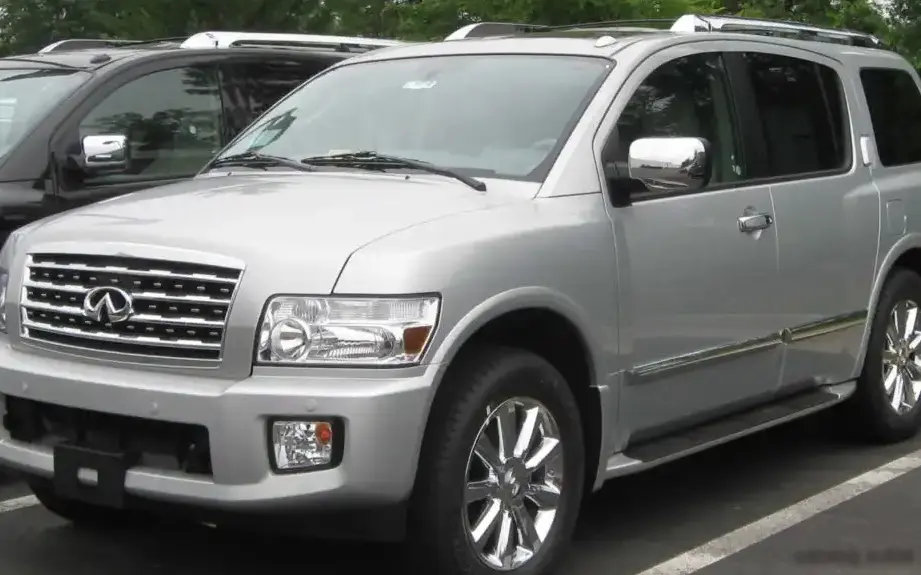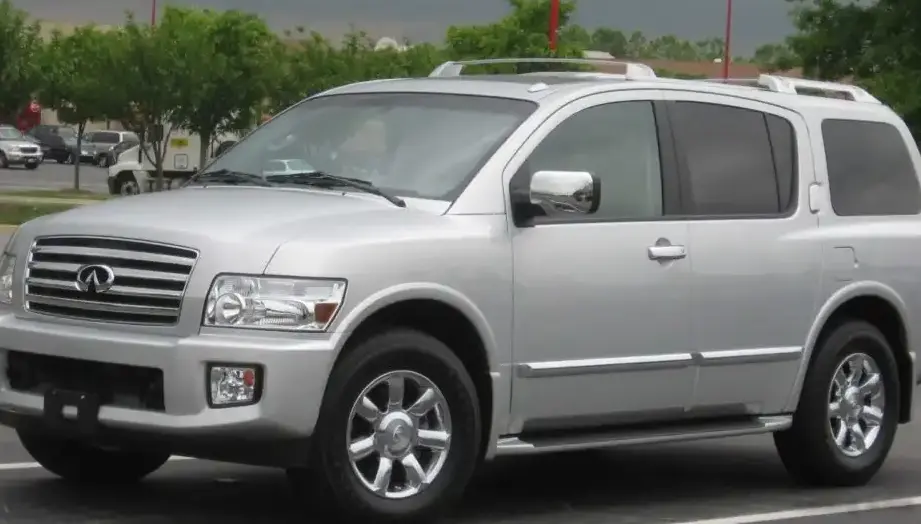
The Infiniti QX56, produced from 2004 to 2007, represented Infiniti’s entry into the full-size luxury SUV segment. Built on the Nissan F-Alpha platform (shared with the Nissan Armada and Titan), the QX56 aimed to provide a blend of American-sized proportions, robust capability, and a more refined driving experience than its Nissan counterparts. The 5.6-liter V8 engine paired with an automatic transmission was the sole powertrain offering throughout its production run, positioning it as a premium, fully-equipped SUV aimed at buyers needing space, towing capacity, and a luxurious interior. This generation QX56 served as a foundational model for Infiniti in the large SUV market, paving the way for subsequent generations.
Technical Specifications
| Brand | Infiniti |
| Model | QX56 |
| Generation | QX56 |
| Type (Engine) | 5.6 V8 (313 Hp) AWD Automatic |
| Start of production | 2004 |
| End of production | 2007 |
| Powertrain Architecture | Internal Combustion engine |
| Body type | SUV |
| Seats | 7-8 |
| Doors | 5 |
| Fuel Type | Petrol (Gasoline) |
| Emission standard | Euro 4 |
| Weight-to-power ratio | 7.8 kg/Hp, 128.8 Hp/tonne |
| Weight-to-torque ratio | 4.6 kg/Nm, 217.7 Nm/tonne |
| Power | 313 Hp @ 4900 rpm |
| Power per litre | 56.4 Hp/l |
| Torque | 529 Nm @ 3600 rpm, 390.17 lb.-ft. @ 3600 rpm |
| Engine layout | Front, Longitudinal |
| Engine Model/Code | VK56DE |
| Engine displacement | 5551 cm3, 338.74 cu. in. |
| Number of cylinders | 8 |
| Engine configuration | V-engine |
| Cylinder Bore | 98 mm, 3.86 in. |
| Piston Stroke | 92 mm, 3.62 in. |
| Compression ratio | 9.8:1 |
| Number of valves per cylinder | 4 |
| Fuel injection system | Multi-port manifold injection |
| Engine aspiration | Naturally aspirated engine |
| Valvetrain | DOHC |
| Engine oil capacity | 6.2 l, 6.55 US qt | 5.46 UK qt |
| Coolant | 14.4 l, 15.22 US qt | 12.67 UK qt |
| Kerb Weight | 2430 kg, 5357.23 lbs |
| Trunk (boot) space – minimum | 1733 l, 61.2 cu. ft |
| Fuel tank capacity | 106 l, 28 US gal | 23.32 UK gal |
| Length | 5250 mm, 206.69 in |
| Width | 2000 mm, 78.74 in |
| Height | 1970 mm, 77.56 in |
| Wheelbase | 3130 mm, 123.23 in |
| Front track | 1715 mm, 67.52 in |
| Rear (Back) track | 1715 mm, 67.52 in |
| Ride height (ground clearance) | 270 mm, 10.63 in |
| Drive wheel | All wheel drive (4×4) |
| Number of gears and type of gearbox | 5 gears, automatic transmission |
| Front suspension | Double wishbone |
| Rear suspension | Double wishbone |
| Front brakes | Ventilated discs |
| Rear brakes | Disc |
| Assisting systems | ABS (Anti-lock braking system) |
| Steering type | Steering rack and pinion |
| Tires size | 265/70 R18 |
| Wheel rims size | 8J x 18 |
Powertrain & Engine Architecture
The heart of the QX56 is the VK56DE 5.6-liter V8 engine. This engine, part of Nissan’s VK engine family, is a naturally aspirated, 32-valve DOHC powerplant. It utilizes a cast iron block with aluminum cylinder heads. The VK56DE employs multi-port fuel injection, delivering fuel directly into the intake ports. The engine’s design prioritized smooth power delivery and reliability over outright performance. The 5-speed automatic transmission, designated as the RE5R05A, was the only transmission option. This transmission is known for its robustness but isn’t particularly fuel-efficient by modern standards. The transmission features electronically controlled shift points and a tow/haul mode for optimized performance when towing.
Driving Characteristics
The QX56 5.6L Automatic delivers a comfortable and capable driving experience. While not a sports SUV, the 313 horsepower and 390 lb-ft of torque provide ample power for everyday driving and towing. Acceleration from 0 to 60 mph takes around 7.5 seconds. The automatic transmission, while smooth, can feel somewhat dated compared to more modern transmissions with more gears. The gear ratios are tuned for towing and cruising, resulting in a relaxed driving experience at highway speeds. Compared to a hypothetical manual transmission version (which was never offered), the automatic prioritizes ease of use over driver engagement. The all-wheel-drive system provides enhanced traction in various weather conditions, making it a capable vehicle for year-round use.
Equipment & Trim Levels
The QX56 came well-equipped, even in its base form. Standard features included leather upholstery, tri-zone automatic climate control, a Bose premium audio system, power-adjustable front seats, and a rear air suspension system for a smoother ride. Higher trim levels added features such as a navigation system, power-folding rear seats, and a rear entertainment system. The interior design focused on luxury and comfort, with wood trim and metallic accents. Available options included a sunroof, heated and cooled front seats, and upgraded leather upholstery.
Chassis & Braking
The QX56 utilizes a body-on-frame construction, providing a robust and durable chassis. The suspension consists of double wishbones at both the front and rear, offering a comfortable ride. The rear suspension also incorporates an auto-leveling system to maintain ride height when carrying heavy loads. Braking duties are handled by ventilated discs at all four corners, coupled with an Anti-lock Braking System (ABS). The braking system is adequate for the vehicle’s weight, but it doesn’t offer the same stopping power as some of its competitors. The steering is a rack-and-pinion system, providing responsive and predictable handling.
Market Reception & Comparison
The Infiniti QX56 was generally well-received by critics, who praised its spacious interior, comfortable ride, and powerful engine. However, some reviewers noted its relatively poor fuel economy and somewhat dated interior design compared to European competitors. Compared to the Cadillac Escalade and Lincoln Navigator, the QX56 offered a more refined driving experience and a more understated exterior design. The QX56’s fuel economy, averaging around 13 mpg city and 18 mpg highway, was typical for a full-size SUV of its era but lagged behind some of the more fuel-efficient options. Reliability was generally good, although some owners reported issues with the rear air suspension system.
Legacy
The first-generation QX56 established Infiniti as a serious contender in the full-size luxury SUV market. While the original VK56DE engine is known for its durability, routine maintenance is crucial to prevent issues. Common maintenance items include regular oil changes, coolant flushes, and inspection of the rear air suspension components. Today, the QX56 represents an affordable entry point into the luxury SUV segment. Well-maintained examples can still provide years of reliable service, making them a popular choice for buyers seeking a spacious and capable vehicle at a reasonable price. The QX56’s legacy continues in subsequent generations, which have built upon its foundation of luxury, capability, and comfort.