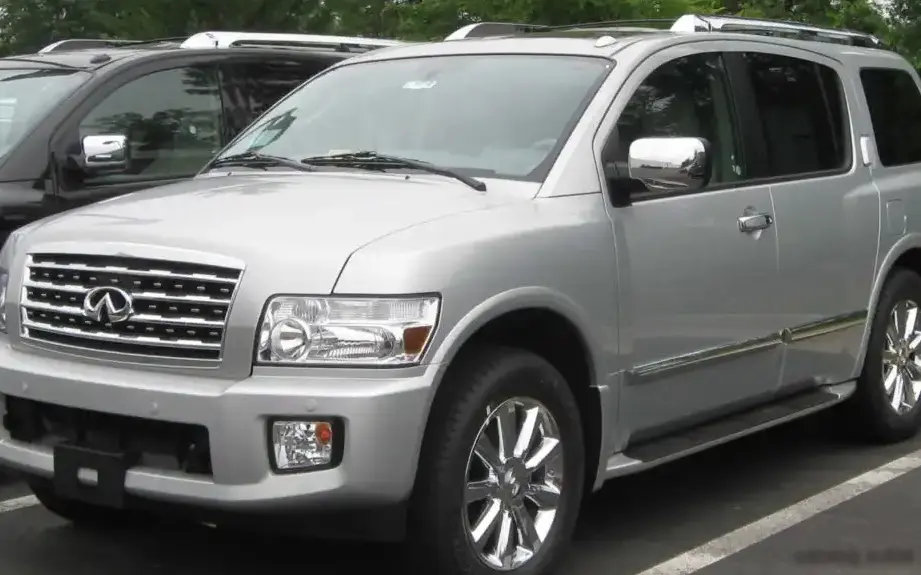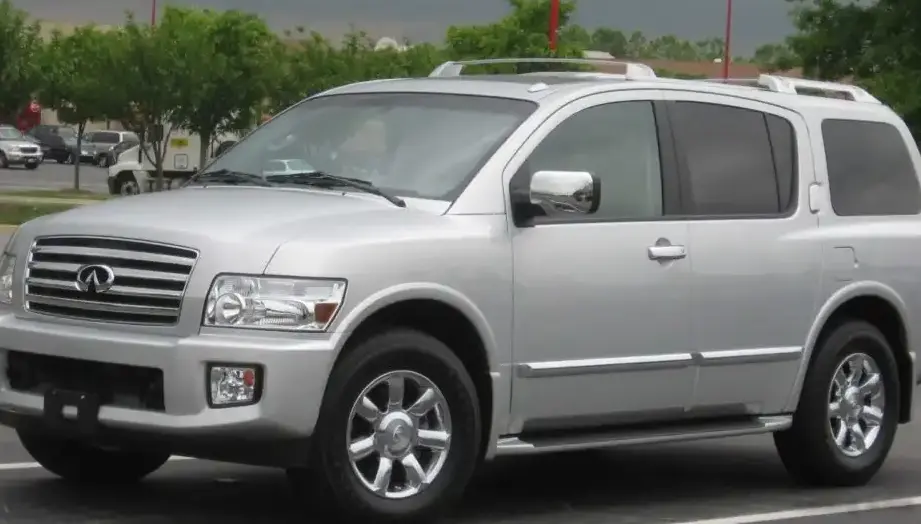
The Infiniti QX56, produced from 2004 to 2007, represented Infiniti’s entry into the full-size luxury SUV segment. Built on the Nissan F-Alpha platform (shared with the Nissan Armada and Titan), the QX56 aimed to provide a blend of American-sized proportions, robust V8 power, and a more upscale experience than its Nissan counterparts. The 5.6-liter V8 engine paired with a five-speed automatic transmission was the sole powertrain offering throughout its production run, positioning it as a premium, capable vehicle focused on comfort and towing capacity. This variant was the cornerstone of the QX56 lineup, offering a single, well-equipped package aimed at buyers seeking a large, luxurious SUV.
Technical Specifications
| Brand | Infiniti |
| Model | QX56 |
| Generation | QX56 |
| Type (Engine) | 5.6 V8 (320 Hp) Automatic |
| Start of production | 2004 |
| End of production | 2007 |
| Powertrain Architecture | Internal Combustion engine |
| Body type | SUV |
| Seats | 7-8 |
| Doors | 5 |
| Fuel consumption (urban) | 18.1 l/100 km (13 US mpg, 15.6 UK mpg, 5.5 km/l) |
| Fuel consumption (extra urban) | 12.4 l/100 km (19 US mpg, 22.8 UK mpg, 8.1 km/l) |
| Fuel Type | Petrol (Gasoline) |
| Acceleration 0 – 100 km/h | 7.2 sec |
| Acceleration 0 – 62 mph | 7.2 sec |
| Acceleration 0 – 60 mph | 6.8 sec |
| Maximum speed | 180 km/h (111.85 mph) |
| Emission standard | Euro 4 |
| Weight-to-power ratio | 7.8 kg/Hp, 128.3 Hp/tonne |
| Weight-to-torque ratio | 4.7 kg/Nm, 212 Nm/tonne |
| Power | 320 Hp @ 4900 rpm |
| Power per litre | 57.6 Hp/l |
| Torque | 529 Nm @ 3600 rpm (390.17 lb.-ft. @ 3600 rpm) |
| Engine layout | Front, Longitudinal |
| Engine Model/Code | VK56DE |
| Engine displacement | 5552 cm3 (338.8 cu. in.) |
| Number of cylinders | 8 |
| Engine configuration | V-engine |
| Cylinder Bore | 98 mm (3.86 in.) |
| Piston Stroke | 92 mm (3.62 in.) |
| Compression ratio | 9.8:1 |
| Number of valves per cylinder | 4 |
| Fuel injection system | Multi-port manifold injection |
| Engine aspiration | Naturally aspirated engine |
| Valvetrain | DOHC |
| Engine oil capacity | 6.2 l (6.55 US qt | 5.46 UK qt) |
| Coolant | 14.4 l (15.22 US qt | 12.67 UK qt) |
| Kerb Weight | 2495 kg (5500.53 lbs.) |
| Max. weight | 3175 kg (6999.68 lbs.) |
| Max load | 680 kg (1499.14 lbs.) |
| Trunk (boot) space – minimum | 1733 l (61.2 cu. ft.) |
| Fuel tank capacity | 106 l (28 US gal | 23.32 UK gal) |
| Length | 5250 mm (206.69 in.) |
| Width | 2000 mm (78.74 in.) |
| Height | 1970 mm (77.56 in.) |
| Wheelbase | 3130 mm (123.23 in.) |
| Front track | 1715 mm (67.52 in.) |
| Rear (Back) track | 1715 mm (67.52 in.) |
| Ride height (ground clearance) | 270 mm (10.63 in.) |
| Drivetrain Architecture | The Internal combustion engine (ICE) drives the rear wheels of the vehicle. |
| Drive wheel | Rear wheel drive |
| Number of gears and type of gearbox | 5 gears, automatic transmission |
| Front suspension | Double wishbone |
| Rear suspension | Double wishbone |
| Front brakes | Ventilated discs |
| Rear brakes | Disc |
| Assisting systems | ABS (Anti-lock braking system) |
| Steering type | Steering rack and pinion |
| Tires size | 265/70 R18 |
| Wheel rims size | 8J x 18 |
Powertrain & Engine Architecture
The heart of the QX56 was the VK56DE 5.6-liter V8 engine. This engine, part of Nissan’s VK engine family, featured a cast-iron block and aluminum cylinder heads. It utilized a dual overhead camshaft (DOHC) valvetrain with four valves per cylinder, and a multi-port fuel injection system. The VK56DE was designed for smooth power delivery and durability, rather than outright performance. The engine produced 320 horsepower at 4900 rpm and 529 Nm (390 lb-ft) of torque at 3600 rpm. The five-speed automatic transmission, designated as the 5R110W, was a heavy-duty unit designed to handle the engine’s torque and the vehicle’s substantial weight. This transmission featured electronic controls and overdrive for improved fuel efficiency at highway speeds. The transmission’s gear ratios were tuned for comfortable cruising and towing capability, prioritizing usability over sporty acceleration.
Driving Characteristics
The QX56 5.6L Automatic offered a comfortable and relaxed driving experience. While not particularly agile, the V8 engine provided ample power for effortless acceleration and confident highway merging. The automatic transmission shifted smoothly, though it wasn’t known for its responsiveness. Compared to potential higher-output variants (had they existed), this configuration prioritized refinement and ease of use. The substantial weight of the vehicle was noticeable, particularly during cornering, but the double wishbone suspension provided a reasonably comfortable ride. The 0-60 mph time of around 6.8 seconds was respectable for a full-size SUV of its era. The focus was on providing a quiet and comfortable cabin, making it well-suited for long road trips and family transportation.
Equipment & Trim Levels
The QX56 came relatively well-equipped as standard. Typical features included leather upholstery, tri-zone automatic climate control, a Bose premium audio system, power-adjustable front seats with memory function, and a rear entertainment system with a DVD player. Optional extras included a navigation system, power-folding rear seats, and upgraded interior trim. The QX56’s interior was designed to convey a sense of luxury, with woodgrain accents and a generally upscale aesthetic. The standard seating configuration accommodated seven or eight passengers, depending on the second-row seating arrangement (captain’s chairs or a bench seat).
Chassis & Braking
The QX56 utilized a body-on-frame construction, providing a robust and durable chassis. The suspension consisted of double wishbones at both the front and rear, with coil springs and shock absorbers. The braking system featured ventilated discs at the front and solid discs at the rear, along with an Anti-lock Braking System (ABS). Given the vehicle’s weight, the braking performance was adequate but not exceptional. The rear suspension design and brake configuration were typical for full-size SUVs of the time, prioritizing load-carrying capacity and durability over ultimate stopping power.
Market Reception & Comparison
The Infiniti QX56 was generally well-received by critics as a capable and luxurious full-size SUV. It was praised for its spacious interior, comfortable ride, and powerful V8 engine. However, some reviewers noted its large size and relatively poor fuel economy. Compared to competitors like the Cadillac Escalade and Lincoln Navigator, the QX56 offered a slightly more understated and refined experience. Fuel economy was a significant drawback, averaging around 13 mpg in the city and 19 mpg on the highway. Reliability was generally good, although some owners reported issues with the cooling system and electronic components. The QX56 offered a compelling alternative for buyers seeking a luxurious and capable SUV without the overt flashiness of some of its rivals.
Legacy
The first-generation QX56 established Infiniti as a serious contender in the full-size luxury SUV market. While the VK56DE engine proved to be generally reliable, preventative maintenance, particularly regarding the cooling system, is crucial for long-term durability. On the used car market, the QX56 remains a relatively affordable option for those seeking a large, comfortable SUV with V8 power. Its robust construction and spacious interior continue to appeal to buyers who need a vehicle capable of hauling passengers and cargo. However, potential buyers should be aware of the vehicle’s fuel consumption and the potential for age-related maintenance issues.