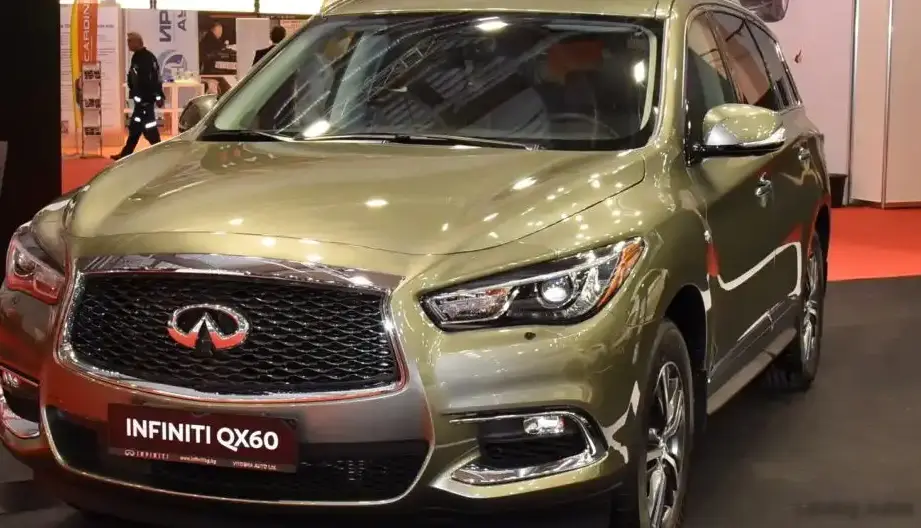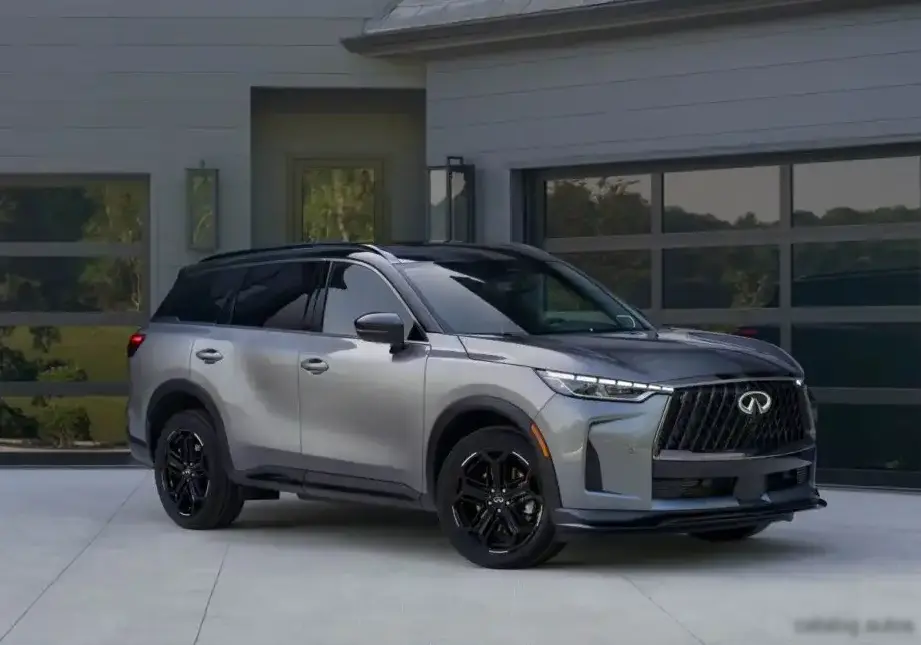
The Infiniti QX60 II, specifically the 2.0T variant introduced in December 2021, represents the second generation of Infiniti’s three-row luxury crossover SUV. Positioned as the entry-level engine option within the L51 chassis series, this model aimed to balance fuel efficiency with acceptable performance for the family-oriented buyer. It serves as a key offering in the North American market, where three-row SUVs are exceptionally popular, competing with vehicles like the Acura MDX, Buick Enclave, and Volvo XC90. The QX60 II moved away from the outgoing JX/QX60’s CVT transmission, adopting a conventional nine-speed automatic, and a new turbocharged four-cylinder engine.
Technical Specifications
| Brand | Infiniti |
| Model | QX60 |
| Generation | QX60 II (L51) |
| Type (Engine) | 2.0T (252 Hp) Automatic |
| Start of production | December, 2021 |
| Powertrain Architecture | Internal Combustion engine |
| Body type | SUV |
| Seats | 7 |
| Doors | 5 |
| Fuel consumption (combined) | 9.6 l/100 km (24.5 US mpg, 29.4 UK mpg, 10.4 km/l) |
| Fuel Type | Petrol (Gasoline) |
| Weight-to-power ratio | 8.2 kg/Hp, 121.4 Hp/tonne |
| Weight-to-torque ratio | 5.5 kg/Nm, 181.2 Nm/tonne |
| Power | 252 Hp @ 5600 rpm |
| Power per litre | 126.2 Hp/l |
| Torque | 376 Nm @ 4400 rpm (277.32 lb.-ft. @ 4400 rpm) |
| Engine layout | Front, Transverse |
| Engine Model/Code | KR20DDET |
| Engine displacement | 1997 cm3 (121.86 cu. in.) |
| Number of cylinders | 4 |
| Engine configuration | Inline |
| Number of valves per cylinder | 4 |
| Fuel injection system | Direct injection |
| Engine aspiration | Turbocharger, Intercooler |
| Engine oil capacity | 4.7 l (4.97 US qt | 4.14 UK qt) |
| Kerb Weight | 2075 kg (4574.59 lbs.) |
| Trunk (boot) space – minimum | 326 l (11.51 cu. ft.) |
| Trunk (boot) space – maximum | 2352 l (83.06 cu. ft.) |
| Fuel tank capacity | 70 l (18.49 US gal | 15.4 UK gal) |
| Length | 5127 mm (201.85 in.) |
| Width | 2005 mm (78.94 in.) |
| Height | 1767 mm (69.57 in.) |
| Wheelbase | 2900 mm (114.17 in.) |
| Front track | 1698 mm (66.85 in.) |
| Rear (Back) track | 1699 mm (66.89 in.) |
| Minimum turning circle | 12 m (39.37 ft.) |
| Drivetrain Architecture | Front wheel drive |
| Number of gears and type of gearbox | 9 gears, automatic transmission |
| Front suspension | Independent type McPherson |
| Rear suspension | Independent multi-link suspension |
| Front brakes | Ventilated discs |
| Rear brakes | Ventilated discs |
| Assisting systems | ABS (Anti-lock braking system) |
| Steering type | Steering rack and pinion |
| Power steering | Electric Steering |
| Tires size | 255/60 R18 |
| Wheel rims size | 18 |
Powertrain & Engine Architecture
The heart of the QX60 2.0T is the KR20DDET, a 2.0-liter inline-four cylinder engine. This engine utilizes direct fuel injection and is coupled with a single twin-scroll turbocharger and intercooler to boost power output. The engine’s design prioritizes thermal efficiency and responsiveness. The nine-speed automatic transmission, sourced from ZF, replaced the previous continuously variable transmission (CVT). This shift was largely in response to customer feedback regarding the driving experience. The transmission features adaptive shift logic, aiming to provide smooth and efficient gear changes. The engine incorporates a Start & Stop System to further improve fuel economy during city driving.
Driving Characteristics
The 2.0T powertrain delivers a respectable, though not exhilarating, driving experience. With 252 horsepower and 277 lb-ft of torque, acceleration is adequate for everyday driving and highway merging. However, it’s noticeably less powerful than the previous generation’s optional 3.5-liter V6. The nine-speed automatic transmission generally shifts smoothly, but some drivers have reported occasional hesitation during downshifts. The front-wheel-drive configuration contributes to a comfortable ride, but it doesn’t offer the all-weather capability of the available all-wheel-drive system. The gear ratios are tuned for fuel efficiency, meaning the engine can feel strained when pushed hard, particularly when fully loaded with passengers and cargo.
Equipment & Trim Levels
The QX60 2.0T typically came standard with a generous array of features, including leather upholstery, tri-zone automatic climate control, a power liftgate, and a comprehensive suite of safety technologies like automatic emergency braking, lane departure warning, and blind-spot monitoring. Infiniti’s InTouch infotainment system, with a 12.3-inch touchscreen display, was also standard. Higher trim levels, such as the Sensory, added features like quilted leather seats, a premium audio system, and advanced driver-assistance systems like ProPilot Assist. Optional extras included a panoramic sunroof, rear-seat entertainment system, and various cosmetic enhancements.
Chassis & Braking
The QX60 II utilizes a unibody construction. The front suspension employs an independent McPherson strut setup, while the rear features an independent multi-link suspension. This configuration aims to balance ride comfort with handling stability. All four wheels are equipped with ventilated disc brakes, providing adequate stopping power for the vehicle’s weight. The steering system is an electric power-assisted rack-and-pinion setup, offering a light and responsive feel. The standard tire size is 255/60 R18, providing a good balance of comfort and grip.
Market Reception & Comparison
Critics generally praised the QX60 II for its luxurious interior, comfortable ride, and improved technology compared to the previous generation. However, the 2.0T engine received mixed reviews. Some found it adequate for daily driving, while others criticized its lack of power, especially when compared to competitors offering V6 engines. Fuel economy was generally considered competitive for the segment, averaging around 24.5 mpg in combined driving. Compared to the outgoing V6 model, the 2.0T offered slightly better fuel economy but less overall performance. The reliability of the KR20DDET engine has been generally good, though some owners have reported minor issues with the infotainment system.
Legacy
The Infiniti QX60 II 2.0T represents a significant step forward for the model in terms of refinement and technology. While the engine may not be the most powerful in its class, it provides a reasonable balance of performance and fuel efficiency for many buyers. On the used car market, these models are becoming increasingly popular due to their relatively affordable price point and comprehensive feature set. The adoption of the nine-speed automatic transmission addressed a major criticism of the previous generation, and the overall build quality and interior design have been well-received. Long-term reliability appears to be solid, making the QX60 2.0T a viable option for families seeking a comfortable and well-equipped three-row SUV.