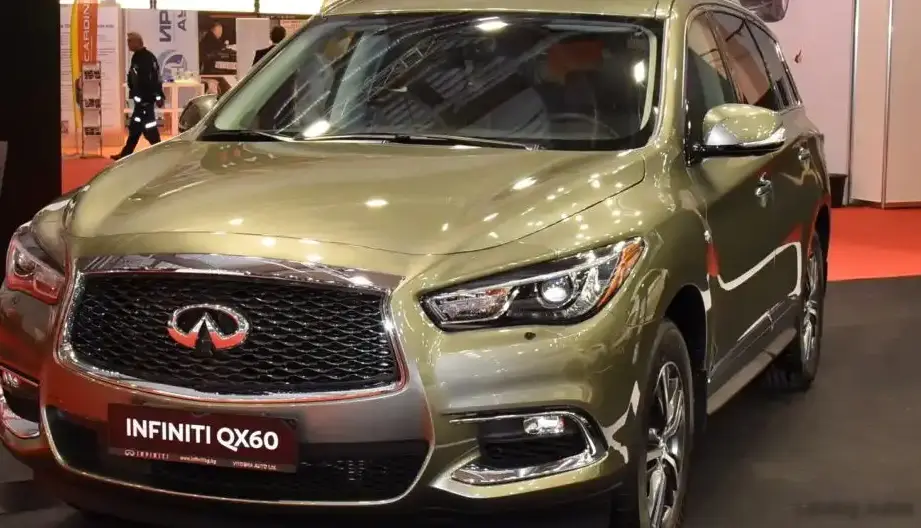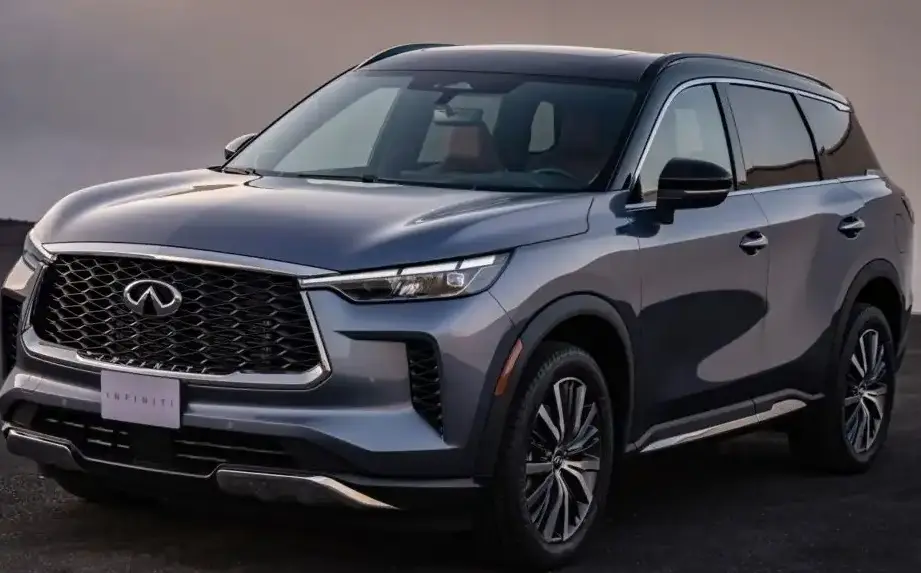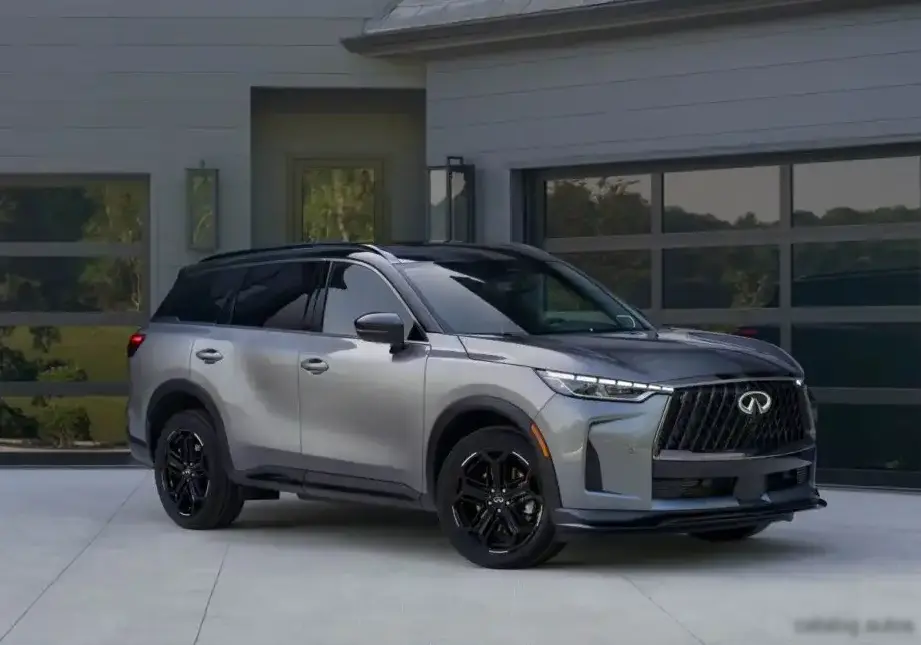
The Infiniti QX60 II, specifically the 2.0 VC-Turbo (268 Hp) Automatic variant introduced with the 2025 facelift (L51 series), represents a significant evolution of Infiniti’s mid-size luxury SUV. Launched in 2025, this iteration builds upon the second-generation QX60, aiming to refine the driving experience and enhance fuel efficiency through the implementation of Infiniti’s Variable Compression-Ratio (VC-Turbo) engine. Positioned as the primary powertrain option for the updated QX60, it caters to buyers seeking a balance of performance, luxury, and modern technology within the three-row SUV segment. The QX60 competes directly with vehicles like the Acura MDX, Buick Enclave, and Volvo XC90.
Technical Specifications
| Brand | Infiniti |
| Model | QX60 |
| Generation | QX60 II (L51, facelift 2025) |
| Type (Engine) | 2.0 VC-Turbo (268 Hp) Automatic |
| Start of production | 2025 |
| Powertrain Architecture | Internal Combustion engine |
| Body type | SUV |
| Seats | 6-7 |
| Doors | 5 |
| Fuel consumption (urban) | 10.7 l/100 km (22 US mpg, 26.4 UK mpg, 9.3 km/l) |
| Fuel consumption (extra urban) | 8.4 l/100 km (28 US mpg, 33.6 UK mpg, 11.9 km/l) |
| Fuel consumption (combined) | 9.8 l/100 km (24 US mpg, 28.8 UK mpg, 10.2 km/l) |
| Fuel Type | Petrol (Gasoline) |
| Emission standard | LEV4 ULEV40 |
| Weight-to-power ratio | 7.7 kg/Hp, 130.2 Hp/tonne |
| Weight-to-torque ratio | 5.3 kg/Nm, 188.4 Nm/tonne |
| Power | 268 Hp @ 5600 rpm |
| Power per litre | 134.2 Hp/l |
| Torque | 388 Nm @ 4400 rpm (286.17 lb.-ft. @ 4400 rpm) |
| Maximum engine speed | 6000 rpm |
| Engine layout | Front, Transverse |
| Engine Model/Code | KR20DDET |
| Engine displacement | 1997 cm3 (121.86 cu. in.) |
| Number of cylinders | 4 |
| Engine configuration | Inline |
| Cylinder Bore | 84 mm (3.31 in.) |
| Piston Stroke | 90.1 mm (3.55 in.) |
| Compression ratio | 14:1 |
| Number of valves per cylinder | 4 |
| Fuel injection system | Direct injection |
| Engine aspiration | Turbocharger, Intercooler |
| Valvetrain | DOHC |
| Engine systems | Start & Stop System |
| Kerb Weight | 2059-2072 kg (4539.32 – 4567.98 lbs.) |
| Max. weight | 2995 kg (6602.84 lbs.) |
| Max load | 923-936 kg (2034.87 – 2063.53 lbs.) |
| Trunk (boot) space – minimum | 411 l (14.51 cu. ft.) |
| Trunk (boot) space – maximum | 2135 l (75.4 cu. ft.) |
| Permitted trailer load with brakes (12%) | 2722 kg (6000.98 lbs.) |
| Length | 5042 mm (198.5 in.) |
| Width including mirrors | 2184 mm (85.98 in.) |
| Height | 1770 mm (69.69 in.) |
| Wheelbase | 2901 mm (114.21 in.) |
| Front track | 1699 mm (66.89 in.) |
| Rear (Back) track | 1699 mm (66.89 in.) |
| Ride height (ground clearance) | 173 mm (6.81 in.) |
| Drag coefficient (Cd) | 0.32-0.33 |
| Minimum turning circle (turning diameter) | 11.8 m (38.71 ft.) |
| Approach angle | 14.7° |
| Departure angle | 22.6° |
| Ramp-over (brakeover) angle | 15.5° |
| Drivetrain Architecture | The Internal combustion engine (ICE) drives the front wheels of the vehicle. |
| Drive wheel | Front wheel drive |
| Number of gears and type of gearbox | 9 gears, automatic transmission |
| Front suspension | Independent, type McPherson with coil spring and anti-roll bar |
| Rear suspension | Independent multi-link spring suspension with stabilizer |
| Front brakes | Ventilated discs, 350×30 mm |
| Rear brakes | Ventilated discs, 330×16 mm |
| Assisting systems | ABS (Anti-lock braking system) |
| Steering type | Steering rack and pinion |
| Power steering | Electric Steering |
| Tires size | 255/50 R20 |
| Wheel rims size | 8J x 20 |
Powertrain & Engine Architecture
The heart of the 2025 QX60 2.0 VC-Turbo is the KR20DDET engine, a 1.997-liter inline-four cylinder powerplant. What sets this engine apart is its Variable Compression-Ratio (VC-Turbo) technology. This system allows the engine to seamlessly adjust the compression ratio between 8:1 and 14:1, optimizing for both power and efficiency depending on driving conditions. At lower loads, a higher compression ratio maximizes fuel economy, while during spirited driving, the compression ratio lowers to prevent knocking and deliver increased power. The engine utilizes direct fuel injection and is paired with a single turbocharger and intercooler. The nine-speed automatic transmission is specifically tuned to work in conjunction with the VC-Turbo engine, providing smooth and responsive shifts. The transmission’s gear ratios are optimized for both acceleration and highway cruising.
Driving Characteristics
The 268 horsepower and 388 lb-ft of torque produced by the 2.0 VC-Turbo engine provide adequate performance for the QX60’s size and weight. While not a sports SUV, the powertrain delivers smooth and confident acceleration in most driving situations. The nine-speed automatic transmission contributes to a refined driving experience, minimizing noticeable gear changes. Compared to potential higher-output engine options (had Infiniti offered them), this configuration prioritizes fuel efficiency and a more relaxed driving experience. The front-wheel-drive configuration contributes to a slightly less engaging driving feel than an all-wheel-drive variant, but it also helps to reduce weight and improve fuel economy.
Equipment & Trim Levels
The 2025 QX60 2.0 VC-Turbo Automatic typically comes well-equipped, even in its base trim. Standard features generally include leather upholstery, a large touchscreen infotainment system with Apple CarPlay and Android Auto compatibility, a suite of advanced driver-assistance systems (ADAS) such as automatic emergency braking, lane departure warning, and blind-spot monitoring, and a premium sound system. Higher trim levels add features like quilted leather seats, a panoramic sunroof, a head-up display, and enhanced ADAS capabilities. Optional extras often include premium paint colors, upgraded wheel designs, and various accessory packages.
Chassis & Braking
The QX60 utilizes an independent McPherson strut suspension in the front and an independent multi-link suspension in the rear, providing a comfortable and controlled ride. Stabilizer bars are included at both ends to minimize body roll during cornering. The braking system consists of ventilated discs on all four wheels, with larger discs up front (350x30mm) compared to the rear (330x16mm). Anti-lock braking system (ABS) is standard, along with electronic brake-force distribution and brake assist. The electric power steering provides a light and responsive feel.
Market Reception & Comparison
The 2025 QX60 2.0 VC-Turbo has been generally well-received by automotive critics, with praise directed towards its comfortable ride, spacious interior, and advanced technology. The VC-Turbo engine has been noted for its smooth operation and respectable fuel economy, although some reviewers have pointed out that it doesn’t deliver the same level of outright performance as some competitors. Compared to other trims within the QX60 lineup (if other options were available), the 2.0 VC-Turbo strikes a balance between performance and efficiency, making it an attractive option for buyers who prioritize fuel economy and a refined driving experience over outright speed.
Legacy
The long-term reliability of the KR20DDET engine and the nine-speed automatic transmission remains to be fully established, as the 2025 QX60 is a relatively new model. However, Infiniti’s VC-Turbo technology has been implemented in other vehicles, providing some data points for potential reliability concerns. Early reports suggest that the powertrain is generally reliable, but ongoing monitoring will be necessary to assess its long-term durability. In the used car market, the 2025 QX60 2.0 VC-Turbo is expected to hold its value reasonably well, given its modern features, luxurious interior, and fuel-efficient powertrain.