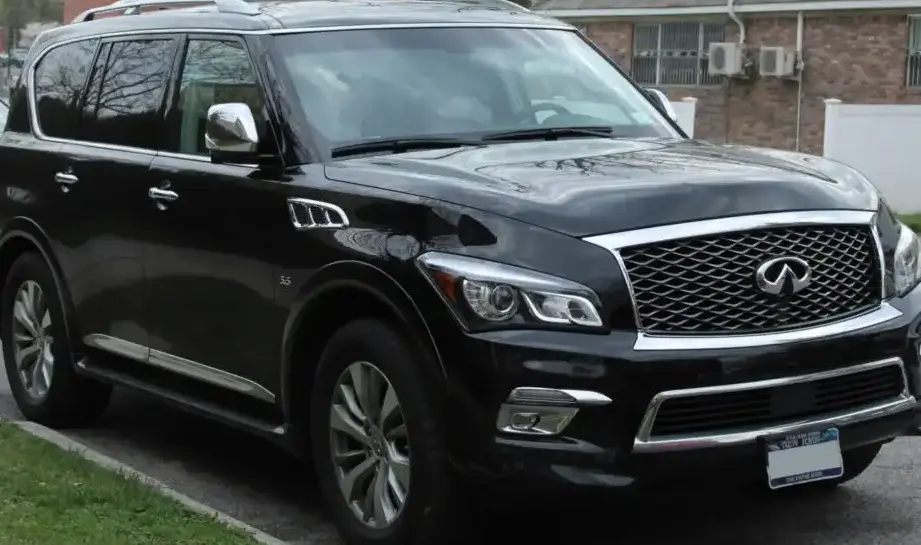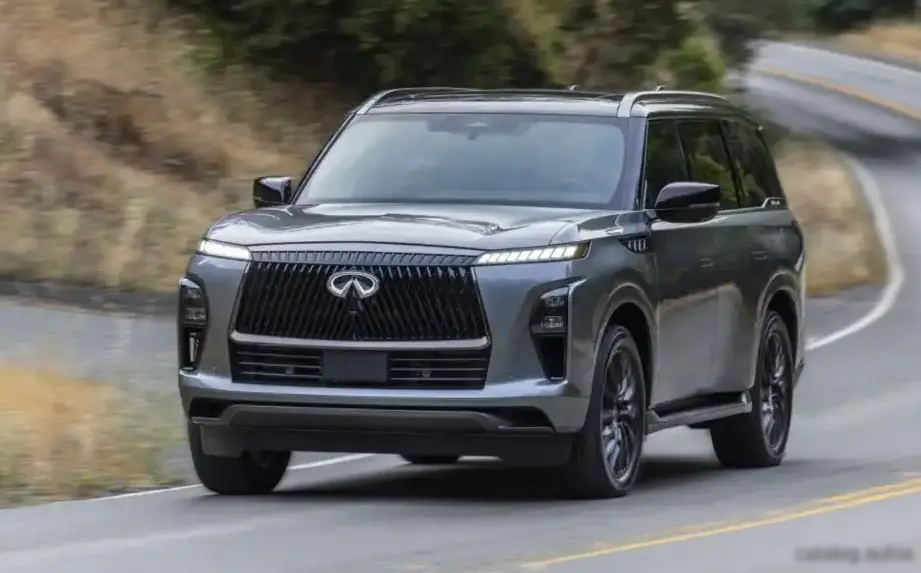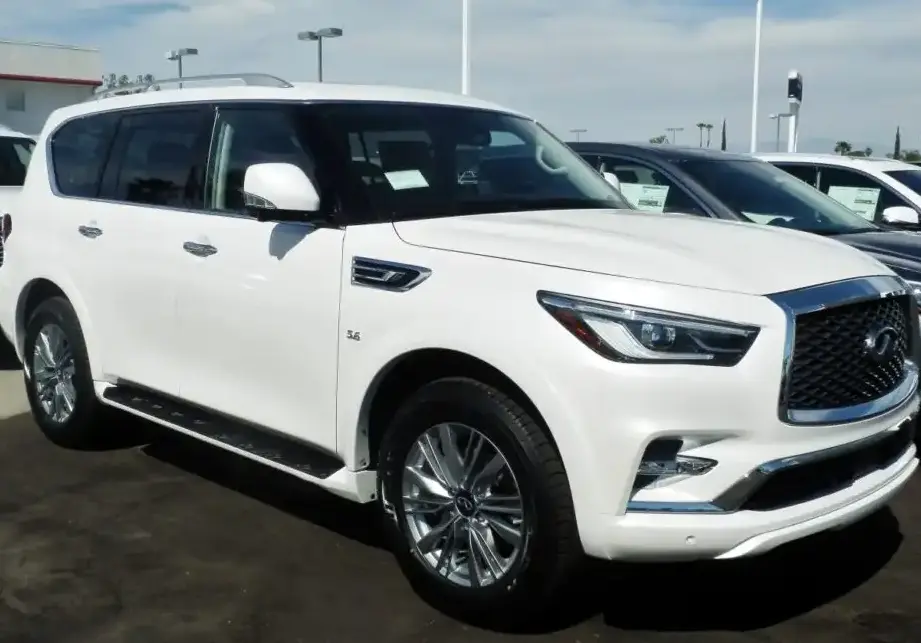
The Infiniti QX80 (Z62, facelifted in 2017) with the 5.6-liter V8 engine and automatic transmission represents the pinnacle of Infiniti’s full-size luxury SUV offerings during its production run from 2017 to 2024. Positioned as the flagship model, it aimed to compete with established American and European luxury SUVs like the Cadillac Escalade, Lincoln Navigator, and Range Rover. This iteration of the QX80, a significant refresh of the original Z62 platform introduced in 2013, focused on enhancing the vehicle’s exterior styling, interior refinement, and technology features while retaining its robust body-on-frame construction and powerful V8 powertrain. The facelift brought a more imposing front fascia, revised interior materials, and updated safety technologies, solidifying its appeal in the North American market where large, comfortable SUVs remain highly sought after.
Technical Specifications
| Brand | Infiniti |
| Model | QX80 |
| Generation | QX80 (Z62, facelift 2017) |
| Type (Engine) | 5.6 V8 (400 Hp) Automatic |
| Start of production | 2017 |
| End of production | 2024 |
| Powertrain Architecture | Internal Combustion engine |
| Body type | SUV |
| Seats | 7-8 |
| Doors | 5 |
| Fuel consumption (economy) – urban (NEDC) | 17 l/100 km (13.8 US mpg, 16.6 UK mpg, 5.9 km/l) |
| Fuel consumption (economy) – extra urban (NEDC) | 11.7 l/100 km (20.1 US mpg, 24.1 UK mpg, 8.5 km/l) |
| Fuel consumption (economy) – combined (NEDC) | 14.7 l/100 km (16 US mpg, 19.2 UK mpg, 6.8 km/l) |
| Fuel Type | Petrol (Gasoline) |
| Weight-to-power ratio | 6.4 kg/Hp, 156.3 Hp/tonne |
| Weight-to-torque ratio | 4.6 kg/Nm, 218.8 Nm/tonne |
| Power | 400 Hp @ 5800 rpm |
| Power per litre | 72 Hp/l |
| Torque | 560 Nm @ 4000 rpm (413.03 lb.-ft. @ 4000 rpm) |
| Maximum engine speed | 6000 rpm |
| Engine layout | Front, Longitudinal |
| Engine Model/Code | VK56VD |
| Engine displacement | 5552 cm3 (338.8 cu. in.) |
| Number of cylinders | 8 |
| Engine configuration | V-engine |
| Cylinder Bore | 98 mm (3.86 in.) |
| Piston Stroke | 92 mm (3.62 in.) |
| Compression ratio | 11.2:1 |
| Number of valves per cylinder | 4 |
| Fuel injection system | Direct injection |
| Engine aspiration | Naturally aspirated engine |
| Valvetrain | DOHC |
| Engine oil capacity | 6.5 l (6.87 US qt | 5.72 UK qt) |
| Coolant | 16.2 l (17.12 US qt | 14.25 UK qt) |
| Kerb Weight | 2560 kg (5643.83 lbs.) |
| Max. weight | 3311 kg (7299.51 lbs.) |
| Max load | 751 kg (1655.67 lbs.) |
| Trunk (boot) space – minimum | 470 l (16.6 cu. ft.) |
| Trunk (boot) space – maximum | 2693 l (95.1 cu. ft.) |
| Fuel tank capacity | 98 l (25.89 US gal | 21.56 UK gal) |
| Permitted trailer load with brakes (12%) | 3856 kg (8501.02 lbs.) |
| Length | 5339 mm (210.2 in.) |
| Width | 2029 mm (79.88 in.) |
| Height | 1925 mm (75.79 in.) |
| Wheelbase | 3076 mm (121.1 in.) |
| Front track | 1715 mm (67.52 in.) |
| Rear (Back) track | 1725 mm (67.91 in.) |
| Ride height (ground clearance) | 234 mm (9.21 in.) |
| Drag coefficient (Cd) | 0.36 |
| Minimum turning circle (turning diameter) | 12.5 m (41.01 ft.) |
| Approach angle | 20.9° |
| Departure angle | 22.3° |
| Ramp-over (brakeover) angle | 20.7° |
| Drivetrain Architecture | The Internal combustion engine (ICE) drives the rear wheels of the vehicle. |
| Drive wheel | Rear wheel drive |
| Number of gears and type of gearbox | 7 gears, automatic transmission |
| Front suspension | Double wishbone |
| Rear suspension | Double wishbone |
| Front brakes | Ventilated discs |
| Rear brakes | Ventilated discs |
| Assisting systems | ABS (Anti-lock braking system) |
| Steering type | Steering rack and pinion |
| Power steering | Electric Steering |
| Tires size | 275/60 R20 |
| Wheel rims size | 8.0J x 20 |
Powertrain & Engine Architecture
The heart of the 2017-2024 QX80 is the VK56VD 5.6-liter naturally aspirated V8 engine. This engine, a member of Nissan’s VK engine family, is known for its smooth power delivery and robust construction. It features direct fuel injection, a double overhead camshaft (DOHC) valvetrain with four valves per cylinder, and a relatively high 11.2:1 compression ratio. The engine produces 400 horsepower at 5800 rpm and 413 lb-ft of torque at 4000 rpm. The engine’s architecture is a 60-degree V-configuration, contributing to its balance and refinement. Paired with the VK56VD is a seven-speed automatic transmission. This transmission, while not the most modern in terms of gear count compared to some competitors, is known for its durability and smooth shifts. It’s designed to handle the engine’s substantial torque output and provide comfortable cruising at highway speeds. The drivetrain is rear-wheel drive as standard, with a part-time four-wheel drive system available as an option.
Driving Characteristics
The QX80 5.6L Automatic delivers a driving experience focused on comfort and effortless power. The naturally aspirated V8 provides strong acceleration, particularly from a standstill and during passing maneuvers. While not a sports car, the QX80 feels surprisingly agile for its size. The seven-speed automatic transmission is well-tuned for relaxed cruising, with smooth gear changes and a willingness to downshift when needed. Compared to potential lower-trim levels (had they existed with smaller engines), this V8/automatic combination offers a significantly more refined and capable driving experience. The weight of the vehicle is noticeable, but the robust suspension and powerful engine work together to provide a stable and controlled ride. Fuel economy, however, is a significant drawback, averaging around 16 mpg combined.
Equipment & Trim Levels
The 2017-2024 QX80 with the 5.6L V8 typically came well-equipped, even in its base trim. Standard features included leather upholstery, tri-zone automatic climate control, a power-adjustable driver’s seat, a rear-seat entertainment system with dual 8-inch screens, and a Bose premium audio system. Higher trim levels added features like quilted leather seats, a more advanced climate control system, and additional driver-assistance technologies. Optional extras included a rear-seat refrigerator, a panoramic sunroof, and a hydraulic body motion control system for improved ride quality. The interior design emphasized luxury and spaciousness, with ample room for passengers in all three rows.
Chassis & Braking
The QX80 utilizes a traditional body-on-frame construction, providing a solid and durable platform. The suspension consists of double wishbones at both the front and rear, offering a comfortable ride and good handling characteristics. Ventilated disc brakes are standard on all four wheels, providing ample stopping power. An anti-lock braking system (ABS) is also standard. The QX80’s chassis is designed to handle its substantial weight and provide a stable and controlled driving experience, even when towing. The rear suspension typically featured coil springs, while the front utilized independent coil springs.
Market Reception & Comparison
The QX80 5.6L Automatic received generally positive reviews, with critics praising its powerful engine, luxurious interior, and spacious cabin. However, its poor fuel economy and somewhat dated technology were often cited as drawbacks. Compared to competitors like the Cadillac Escalade and Lincoln Navigator, the QX80 offered a more traditional luxury experience, with a focus on comfort and refinement rather than cutting-edge technology. Reliability was generally considered good, although maintenance costs could be higher due to the vehicle’s size and complexity.
Legacy
The Infiniti QX80 5.6L Automatic remains a popular choice in the used car market, particularly for buyers seeking a large, comfortable, and capable luxury SUV. The VK56VD engine is known for its durability, and with proper maintenance, it can provide many years of reliable service. While fuel economy is a concern, the QX80’s overall value proposition and luxurious features continue to appeal to a wide range of buyers. The model represents a significant chapter in Infiniti’s history, showcasing the brand’s commitment to building large, luxurious SUVs that can compete with the best in the segment.