
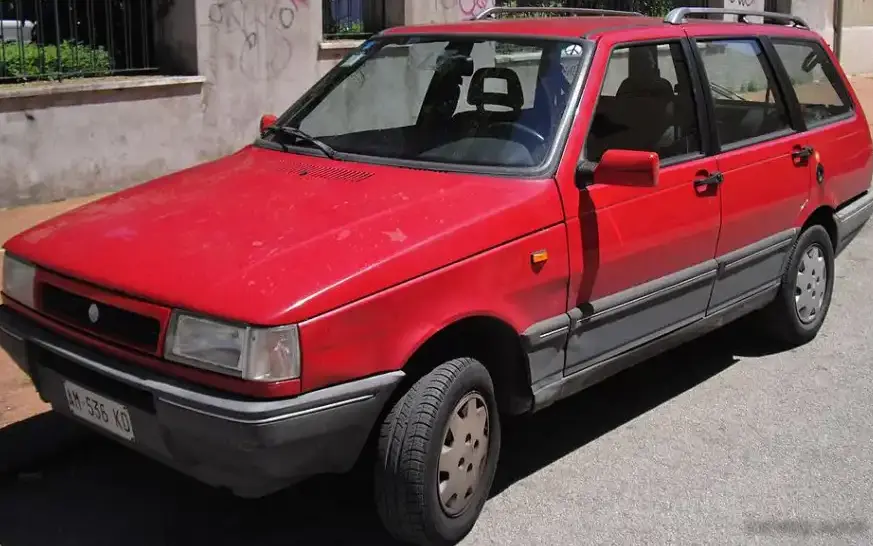
The Innocenti Elba 1.7 D, produced from 1986 to 1996, was a practical and economical station wagon aimed at the European market. It represented a key offering in Innocenti’s lineup during a period of transition and was based heavily on the Fiat Regata, itself a derivative of the Fiat Ritmo. The Elba, named after the Italian island, was designed to provide a spacious and affordable family vehicle, particularly appealing to those needing a versatile load-carrying capacity. This specific 1.7 D variant, producing 58 horsepower, occupied the entry-level position within the Elba range, prioritizing fuel efficiency and low running costs over outright performance. It was a popular choice for fleet buyers and individuals seeking a no-frills, dependable vehicle.
Technical Specifications
| Brand | Innocenti |
| Model | Elba |
| Generation | Elba |
| Type (Engine) | 1.7 D (58 Hp) |
| Start of production | 1986 |
| End of production | 1996 |
| Powertrain Architecture | Internal Combustion engine |
| Body type | Station wagon (estate) |
| Seats | 5 |
| Doors | 5 |
| Fuel consumption (combined) | 5.7 l/100 km (41.3 US mpg, 49.6 UK mpg, 17.5 km/l) |
| Fuel Type | Diesel |
| Acceleration 0 – 100 km/h | 20 sec |
| Acceleration 0 – 62 mph | 20 sec |
| Acceleration 0 – 60 mph | 19 sec |
| Maximum speed | 150 km/h (93.21 mph) |
| Weight-to-power ratio | 16.7 kg/Hp, 59.8 Hp/tonne |
| Weight-to-torque ratio | 9.9 kg/Nm, 101 Nm/tonne |
| Power | 58 Hp @ 4600 rpm |
| Power per litre | 34.2 Hp/l |
| Torque | 98 Nm @ 2900 rpm (72.28 lb.-ft. @ 2900 rpm) |
| Engine layout | Front, Transverse |
| Engine displacement | 1697 cm3 (103.56 cu. in.) |
| Number of cylinders | 4 |
| Engine configuration | Inline |
| Cylinder Bore | 82.6 mm (3.25 in.) |
| Piston Stroke | 79.2 mm (3.12 in.) |
| Compression ratio | 20.5:1 |
| Number of valves per cylinder | 2 |
| Fuel injection system | Precombustion chamber injection |
| Engine aspiration | Naturally aspirated engine |
| Valvetrain | OHC |
| Kerb Weight | 970 kg (2138.48 lbs.) |
| Max. weight | 1430 kg (3152.61 lbs.) |
| Max load | 460 kg (1014.13 lbs.) |
| Trunk (boot) space – minimum | 490 l (17.3 cu. ft.) |
| Trunk (boot) space – maximum | 1430 l (50.5 cu. ft.) |
| Fuel tank capacity | 54 l (14.27 US gal | 11.88 UK gal) |
| Length | 4037 mm (158.94 in.) |
| Width | 1555 mm (61.22 in.) |
| Height | 1450 mm (57.09 in.) |
| Wheelbase | 2362 mm (92.99 in.) |
| Front track | 1321 mm (52.01 in.) |
| Rear (Back) track | 1344 mm (52.91 in.) |
| Drivetrain Architecture | The Internal combustion engine (ICE) drives the front wheels of the vehicle. |
| Drive wheel | Front wheel drive |
| Number of gears and type of gearbox | 5 gears, manual transmission |
| Front suspension | Spring-loaded rack |
| Rear suspension | Leaf spring |
| Front brakes | Disc |
| Rear brakes | Drum |
| Assisting systems | ABS (Anti-lock braking system) |
| Tires size | 165/70 R13 S |
Powertrain & Engine Architecture
The heart of the Elba 1.7 D was the 1697cc inline-four cylinder diesel engine. This engine, often identified by its engine codes (though variations existed), was a relatively simple, naturally aspirated unit. It utilized a precombustion chamber injection system, a common technology for diesel engines of the era, which improved combustion efficiency and reduced engine noise compared to direct injection systems. The engine featured an overhead camshaft (OHC) valvetrain operating two valves per cylinder. The 58 horsepower output was achieved at 4600 rpm, while peak torque of 98 Nm (72.28 lb-ft) arrived at 2900 rpm. The engine’s design prioritized durability and fuel economy over high performance. The five-speed manual transmission was the standard offering, chosen for its simplicity and cost-effectiveness. The transmission’s gear ratios were geared towards maximizing fuel efficiency and providing adequate, if not exhilarating, acceleration.
Driving Characteristics
The Elba 1.7 D was not known for its speed. Acceleration was leisurely, taking around 20 seconds to reach 62 mph (100 km/h). The engine’s limited horsepower and torque meant that overtaking required careful planning. However, the engine was surprisingly tractable, offering a reasonable amount of pulling power at lower revs. The five-speed gearbox allowed drivers to keep the engine within its optimal operating range, although frequent gear changes were often necessary, especially when tackling hills. Compared to the more powerful gasoline-powered Elba variants, the 1.7 D offered a significantly more relaxed driving experience, focusing on economy and ease of use. The manual transmission provided a more engaging driving experience than an automatic would have, given the engine’s characteristics.
Equipment & Trim Levels
The 1.7 D Elba was typically equipped with basic, functional features. Standard equipment generally included cloth upholstery, a simple dashboard layout, and manual windows and door locks. Power steering was not typically standard on this base model. Optional extras could include upgraded upholstery, a radio, and, in some markets, air conditioning. The interior was designed for practicality and durability rather than luxury. The focus was on providing a comfortable and functional space for passengers and cargo. Trim levels were relatively limited, with the 1.7 D representing the entry point to the Elba range.
Chassis & Braking
The Elba 1.7 D utilized a front-wheel-drive layout with a spring-loaded rack front suspension and a leaf spring rear suspension. This suspension setup was a cost-effective solution, providing a reasonable ride quality for everyday use. The front brakes were discs, offering better stopping power than the drum brakes fitted to the rear wheels. An anti-lock braking system (ABS) was available as an option, enhancing safety. The chassis was designed to balance ride comfort with load-carrying capacity, reflecting the Elba’s role as a practical family vehicle. The relatively lightweight construction of the vehicle (around 970 kg or 2138 lbs) helped to mitigate the effects of the engine’s limited power.
Market Reception & Comparison
The Innocenti Elba 1.7 D was generally well-received in its target markets as a practical and affordable station wagon. Critics praised its fuel efficiency and spacious interior, but noted its lack of performance. Compared to other diesel-powered station wagons of the era, the Elba offered a competitive price point and a reasonable level of equipment. Within the Elba lineup, the 1.7 D was positioned as the entry-level model, appealing to budget-conscious buyers. The gasoline-powered versions offered more performance but came at a higher cost. The 1.7 D’s fuel economy was a significant advantage, making it a popular choice for those covering long distances or seeking to minimize running costs.
Legacy
The Innocenti Elba 1.7 D, while not a performance icon, has earned a reputation for reliability and durability. The simple diesel engine is known for its longevity, and many examples are still on the road today. In the used car market, the Elba 1.7 D remains an affordable and practical option for those seeking a classic station wagon. Parts availability can be a challenge, but the engine’s simplicity makes it relatively easy to maintain. The Elba 1.7 D represents a bygone era of automotive design, prioritizing practicality and affordability over luxury and performance. It remains a testament to the enduring appeal of the humble station wagon.
