
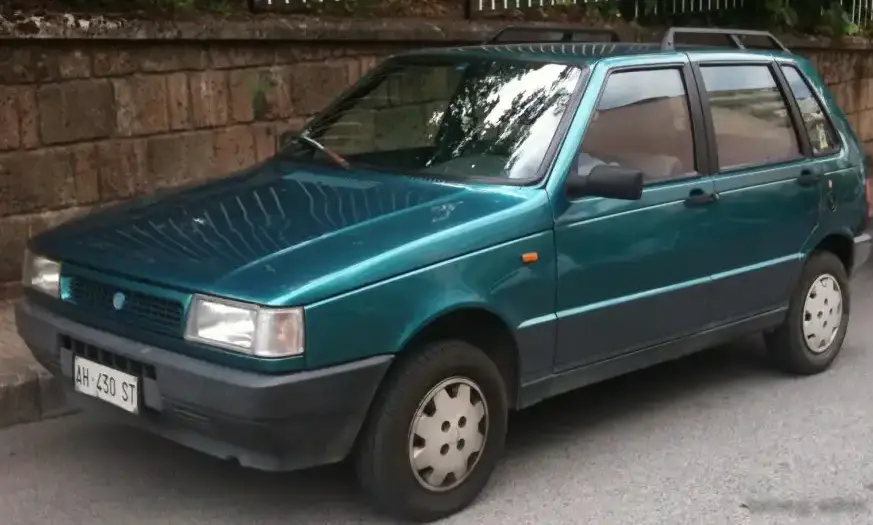
The Innocenti Mille 1.0 i, produced between 1993 and 1997, represents a significant, if often overlooked, chapter in the history of the Italian automaker Innocenti. Positioned as the entry-level model within the Mille range, this variant aimed to provide affordable transportation within the European market, particularly in Italy. The Mille, meaning “thousand” in Italian, was intended to be a modern, economical hatchback, building upon the foundations laid by the earlier Innocenti models but with a focus on cost-effectiveness. It was a product of the Leyland era of Innocenti, and later, the Fiat Group, reflecting a period of shifting ownership and market strategies. The 1.0 i utilized a small displacement engine paired with a manual transmission, making it a popular choice for urban commuters and first-time car buyers.
Technical Specifications
| Brand | Innocenti |
| Model | Mille |
| Generation | Mille |
| Type (Engine) | 1.0 i (48 Hp) |
| Start of production | 1993 |
| End of production | 1997 |
| Powertrain Architecture | Internal Combustion engine |
| Body type | Hatchback |
| Seats | 5 |
| Doors | 3 |
| Fuel consumption (combined) | 7 l/100 km (33.6 US mpg, 40.4 UK mpg, 14.3 km/l) |
| Fuel Type | Petrol (Gasoline) |
| Maximum speed | 143 km/h (88.86 mph) |
| Weight-to-power ratio | 17.9 kg/Hp, 55.8 Hp/tonne |
| Weight-to-torque ratio | 11.9 kg/Nm, 83.7 Nm/tonne |
| Power | 48 Hp @ 6000 rpm |
| Power per litre | 48.3 Hp/l |
| Torque | 72 Nm @ 2600 rpm (53.1 lb.-ft. @ 2600 rpm) |
| Engine layout | Front, Transverse |
| Engine displacement | 994 cm3 (60.66 cu. in.) |
| Number of cylinders | 4 |
| Engine configuration | Inline |
| Cylinder Bore | 76 mm (2.99 in.) |
| Piston Stroke | 54.8 mm (2.16 in.) |
| Compression ratio | 9.4:1 |
| Number of valves per cylinder | 2 |
| Fuel injection system | Single-point injection |
| Engine aspiration | Naturally aspirated engine |
| Valvetrain | OHC |
| Kerb Weight | 860 kg (1895.98 lbs.) |
| Max. weight | 1260 kg (2777.82 lbs.) |
| Max load | 400 kg (881.85 lbs.) |
| Trunk (boot) space – minimum | 290 l (10.24 cu. ft.) |
| Trunk (boot) space – maximum | 620 l (21.9 cu. ft.) |
| Fuel tank capacity | 50 l (13.21 US gal | 11 UK gal) |
| Length | 3644 mm (143.46 in.) |
| Width | 1555 mm (61.22 in.) |
| Height | 1499 mm (59.02 in.) |
| Wheelbase | 2362 mm (92.99 in.) |
| Front track | 1336 mm (52.6 in.) |
| Rear (Back) track | 1348 mm (53.07 in.) |
| Drivetrain Architecture | The Internal combustion engine (ICE) drives the front wheels of the vehicle. |
| Drive wheel | Front wheel drive |
| Number of gears and type of gearbox | 5 gears, manual transmission |
| Front suspension | Spring-loaded rack |
| Rear suspension | Leaf spring |
| Front brakes | Disc |
| Rear brakes | Drum |
| Assisting systems | ABS (Anti-lock braking system) |
| Tires size | 165/70 R13 S |
Powertrain & Engine Architecture
The heart of the Mille 1.0 i was the 994cc inline-four cylinder engine, typically identified by its engine code. This engine, while modest in output, was designed for fuel efficiency and reliability. It featured a single overhead camshaft (OHC) operating two valves per cylinder. The fuel system employed single-point fuel injection, a relatively simple and cost-effective technology for the time. This system delivered fuel to a common manifold, rather than directly into each cylinder, as seen in more advanced multi-point injection systems. The engine’s 48 horsepower at 6000 rpm and 72 Nm (53.1 lb-ft) of torque at 2600 rpm were sufficient for city driving, but performance on the open road was limited. The engine was transversely mounted, a common layout for front-wheel-drive vehicles, contributing to a more compact engine bay and improved space utilization. The standard transmission was a five-speed manual gearbox, chosen to maximize fuel economy and provide reasonable control over the limited power output.
Driving Characteristics
The driving experience in the Mille 1.0 i was characterized by its light steering and nimble handling, making it easy to maneuver in urban environments. However, acceleration was slow, and overtaking required careful planning. The five-speed manual transmission allowed drivers to keep the engine in its optimal power band, but the lack of significant torque meant frequent gear changes were necessary, especially when climbing hills or carrying a full load. Compared to higher-spec Mille models equipped with larger engines, the 1.0 i felt significantly underpowered. The gear ratios were tuned for economy rather than performance, resulting in a relatively high final drive ratio. While not a sporty vehicle, the Mille 1.0 i offered a comfortable and predictable ride, making it a practical choice for everyday transportation.
Equipment & Trim Levels
The Mille 1.0 i was typically offered with a basic level of equipment, reflecting its position as the entry-level model. Standard features generally included cloth upholstery, a basic instrument cluster, and manual windows and door locks. Power steering was often an optional extra. Interior plastics were durable but utilitarian. The dashboard layout was simple and functional, prioritizing ease of use over aesthetic appeal. Optional extras could include a radio/cassette player, upgraded seat fabrics, and occasionally, air conditioning, though this was less common on the base model. The trim level was generally consistent, with minimal variations in interior appointments.
Chassis & Braking
The Mille 1.0 i utilized a relatively simple chassis design. Front suspension consisted of a spring-loaded rack, while the rear suspension employed a leaf spring setup. This configuration was chosen for its cost-effectiveness and durability. The front brakes were disc brakes, providing adequate stopping power for the vehicle’s weight and performance. However, the rear brakes were drum brakes, which offered less stopping power and were more prone to fading under heavy use. ABS (Anti-lock Braking System) was often included as standard equipment, enhancing safety by preventing wheel lockup during emergency braking. Tire size was typically 165/70 R13 S, a common size for small European hatchbacks of the era.
Market Reception & Comparison
The Innocenti Mille 1.0 i was generally well-received as an affordable and economical city car. Critics praised its nimble handling and fuel efficiency, but noted its lack of power and basic interior. Compared to other small hatchbacks of the time, such as the Fiat Punto or the Renault Clio, the Mille 1.0 i offered a competitive price point but lacked the refinement and performance of its rivals. The 1.0 i’s fuel economy was comparable to other small-displacement engines, typically achieving around 7 liters per 100 kilometers (33.6 US mpg). Reliability was generally good, although the single-point fuel injection system could require occasional maintenance. The Mille 1.0 i appealed to budget-conscious buyers who prioritized practicality and economy over performance and luxury.
Legacy
The Innocenti Mille 1.0 i, while not a groundbreaking vehicle, holds a place in automotive history as a representative of affordable European motoring in the 1990s. The 994cc engine proved to be reasonably durable, and many examples remain on the road today, often cherished by enthusiasts for their simplicity and low running costs. In the used car market, the Mille 1.0 i is typically valued for its affordability and ease of maintenance. Parts availability can be a challenge, as Innocenti ceased production in the late 1990s, but many components are shared with other Fiat Group vehicles, making sourcing replacements relatively straightforward. The Mille 1.0 i serves as a reminder of a time when small, economical cars were a dominant force in the European automotive landscape.
