
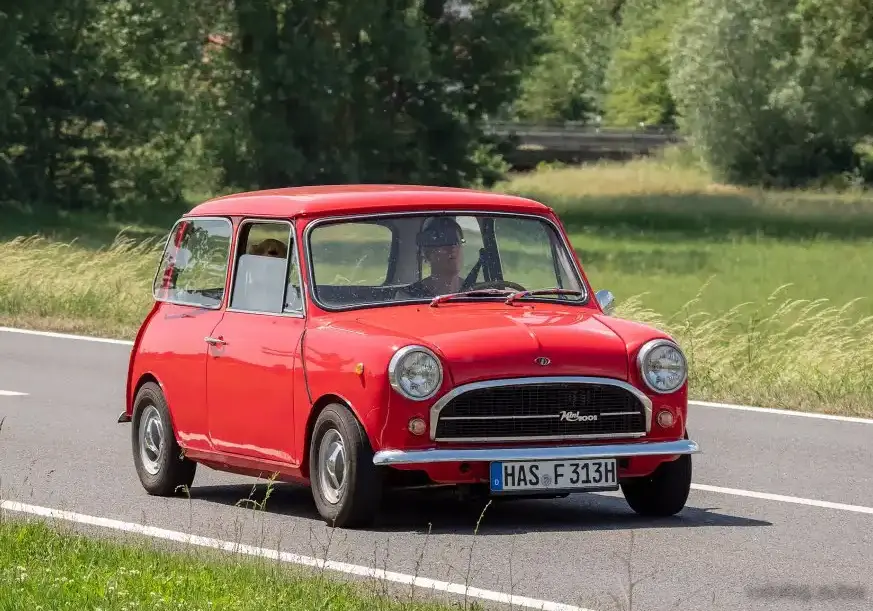
The Innocenti Mini 1.0, produced between 1974 and 1982, represents a significant chapter in the story of the original British Mini, manufactured under license by the Italian firm Innocenti. While the classic Mini is renowned for its innovative design and sporting character, the 1.0-liter variant occupied a unique position within the lineup, offering a more economical and accessible option for the Italian and European markets. This version aimed to broaden the Mini’s appeal beyond its established enthusiast base, providing a practical and affordable city car. It was a key model during a period of economic change in Europe, when fuel efficiency and affordability were becoming increasingly important to consumers.
Technical Specifications
| Brand | Innocenti |
| Model | Mini |
| Generation | Mini |
| Type (Engine) | 1.0 (44 Hp) |
| Start of Production | 1974 |
| End of Production | 1982 |
| Powertrain Architecture | Internal Combustion Engine |
| Body Type | Hatchback |
| Fuel Type | Petrol (Gasoline) |
| Power | 44 Hp |
| Engine Aspiration | Naturally Aspirated |
Powertrain & Engine Architecture
The Innocenti Mini 1.0 was powered by a 998cc inline-four cylinder engine, a derivative of the original Mini engine designed by Alec Issigonis. While retaining the core principles of the original – a compact, transverse-mounted engine with a four-speed manual gearbox – the 1.0-liter version featured subtle refinements aimed at improving reliability and drivability. The engine utilized a single SU carburetor for fuel delivery, a relatively simple system that contributed to its ease of maintenance. The engine block was cast iron, while the cylinder head was aluminum, a common construction for the era. Valve actuation was via a pushrod-operated overhead valve (OHV) configuration. The 44 horsepower output was achieved at approximately 6,000 rpm, and peak torque of around 57 lb-ft was available at 4,000 rpm. The Innocenti Mini 1.0 typically featured a standard four-speed manual transmission, although a three-speed automatic transmission was offered as an optional extra, albeit rarely chosen due to its performance impact. The automatic transmission was a Borg Warner unit, known for its robustness but also for its relatively slow shift times.
Driving Characteristics
The driving experience of the Innocenti Mini 1.0 was characterized by its nimble handling and surprisingly spacious interior for its diminutive size. However, the 44 horsepower output meant that performance was modest, particularly when compared to the more powerful Mini Cooper variants. Acceleration from 0 to 60 mph took approximately 18-20 seconds, and the top speed was around 85 mph. The car felt most at home in urban environments, where its small size and light steering made it easy to maneuver through congested streets. The gear ratios were relatively short, designed to maximize acceleration in lower gears, but this also meant that the engine could become noisy and strained at higher speeds. The automatic transmission, when equipped, further dulled performance, resulting in even slower acceleration and a less engaging driving experience. The suspension, featuring independent front suspension with rubber cones and a subframe-mounted rear suspension, provided a comfortable ride, absorbing bumps and imperfections in the road surface effectively. However, the car was prone to body roll in corners, a characteristic of the original Mini design.
Equipment & Trim Levels
The Innocenti Mini 1.0 was generally offered in a relatively basic trim level, reflecting its position as the entry-level model in the range. Standard equipment typically included cloth upholstery, vinyl floor coverings, and basic instrumentation consisting of a speedometer, fuel gauge, and temperature gauge. Exterior features included chrome bumpers, steel wheels with hubcaps, and relatively simple lighting. Optional extras included a sunroof, upgraded upholstery, and a radio. The interior design was functional and utilitarian, prioritizing practicality over luxury. The Innocenti Mini 1.0 was available in a range of colors, reflecting the fashion trends of the 1970s and early 1980s. The trim level was often referred to simply as the “L” model, denoting its basic specification. Later models saw the introduction of minor cosmetic updates, such as revised dashboard layouts and updated interior trim materials.
Chassis & Braking
The Innocenti Mini 1.0 retained the original Mini’s monocoque construction, with a separate subframe supporting the engine and transmission. The front suspension utilized independent suspension with rubber cones, providing a unique and comfortable ride. The rear suspension was also independent, mounted on a subframe, and featured a transverse leaf spring. Braking was initially provided by drum brakes on all four wheels, although later models were upgraded with front disc brakes, improving stopping performance. The steering was rack and pinion, providing precise and responsive handling. The car’s relatively light weight – around 1,500 lbs – contributed to its nimble handling characteristics. Stabilizer bars were not typically fitted to the standard Mini 1.0, further emphasizing its focus on comfort over outright performance. The wheel size was typically 10 inches, with narrow tires providing a balance between grip and fuel efficiency.
Market Reception & Comparison
The Innocenti Mini 1.0 was generally well-received in the Italian market as an affordable and practical city car. Critics praised its fuel efficiency, nimble handling, and spacious interior for its size. However, the 44 horsepower output was often criticized as being inadequate, particularly when compared to the more powerful Mini Cooper and other contemporary small cars. Compared to the 1.1L and 1.3L Innocenti Mini variants, the 1.0L offered lower running costs but sacrificed performance. The automatic transmission version was particularly criticized for its sluggish performance and reduced fuel economy. The Mini 1.0 competed with other small European cars such as the Fiat 126 and the Citroën 2CV, offering a similar level of practicality and affordability. Fuel economy was a key selling point, averaging around 45-50 mpg in typical driving conditions.
Legacy
The Innocenti Mini 1.0, while not the most iconic version of the Mini, played an important role in extending the model’s lifespan and broadening its appeal. The 998cc engine proved to be relatively reliable, and many examples are still on the road today. The car has become a popular choice among classic car enthusiasts, particularly those seeking an affordable and easy-to-maintain vintage vehicle. Parts availability remains relatively good, thanks to the enduring popularity of the Mini. The Innocenti Mini 1.0 represents a unique chapter in the history of this iconic British car, showcasing its adaptability and enduring appeal. In the used car market, well-maintained examples of the Innocenti Mini 1.0 can fetch prices ranging from $5,000 to $15,000, depending on condition and originality. The automatic transmission versions generally command lower prices due to their reduced desirability among enthusiasts.
