
Technical Specifications
| Brand | Innocenti |
| Model | Mini |
| Generation | Mini |
| Type (Engine) | 1.0 (53 Hp) |
| Start of Production | 1974 |
| End of Production | 1982 |
| Powertrain Architecture | Internal Combustion Engine |
| Body Type | Hatchback |
| Fuel Type | Petrol (Gasoline) |
| Power | 53 Hp |
| Engine Aspiration | Naturally Aspirated |
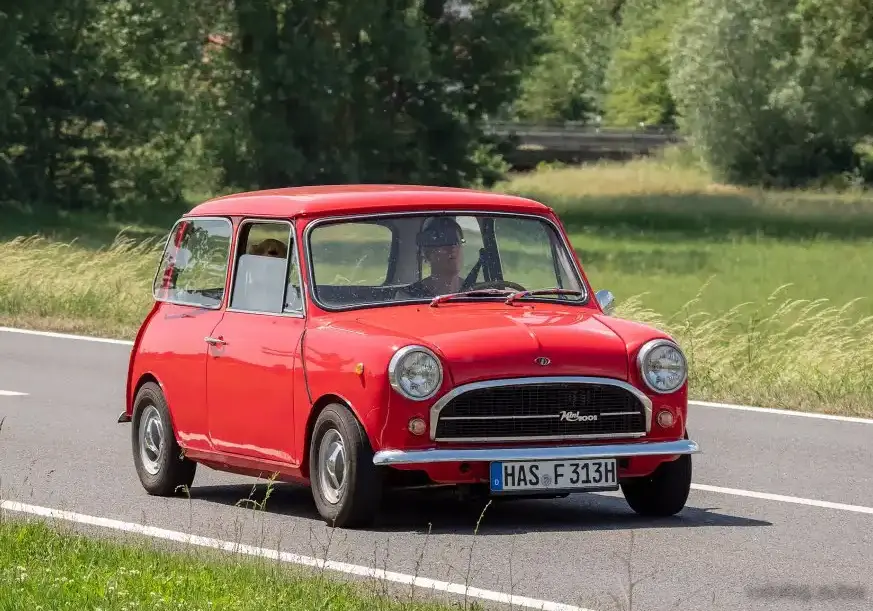
The Innocenti Mini 1.0, produced between 1974 and 1982, represents a significant chapter in the story of the original British Mini, adapted and manufactured under license by the Italian firm Innocenti. While the original Mini, designed by Sir Alec Issigonis, revolutionized small car design in the late 1950s, its production continued under various ownerships and in different countries. The Innocenti version, particularly the 1.0-liter variant, aimed to modernize the classic formula while retaining its core appeal – affordability, nimble handling, and compact dimensions. This model occupied a crucial position in Innocenti’s lineup, offering a more accessible entry point compared to the more powerful and often more expensive variants. It was primarily aimed at urban drivers seeking economical transportation.
Powertrain & Engine Architecture
The Innocenti Mini 1.0 was powered by a 998cc inline-four cylinder engine, a derivative of the original Mini engine but with some modifications. While retaining the classic A-Series engine block, the Innocenti version often featured slight differences in components and tuning. This 998cc unit produced 53 horsepower, a modest output even for the time, but sufficient for the Mini’s lightweight construction. The engine was naturally aspirated, relying on atmospheric pressure for intake, and utilized a single SU carburetor for fuel delivery. This carburetor, while simple and relatively reliable, wasn’t known for precise fuel metering compared to later fuel injection systems. The engine featured a chain-driven overhead valve (OHV) valvetrain, a design choice that contributed to its durability but limited its potential for high-revving performance. The transmission was a four-speed manual, a standard feature for this variant. The gearbox was directly mounted to the engine, a characteristic of the original Mini design, contributing to mechanical noise but also enhancing structural rigidity. The Innocenti Mini 1.0’s powertrain was designed for simplicity and ease of maintenance, reflecting the car’s intended role as an affordable and practical city car.
Driving Characteristics
The Innocenti Mini 1.0 offered a unique driving experience. The 53 horsepower engine, coupled with the car’s incredibly light weight (around 680-720 kg or 1500-1600 lbs), resulted in surprisingly peppy acceleration in urban environments. However, on highways or when fully loaded, the engine felt strained, and overtaking required careful planning. The four-speed gearbox had relatively widely spaced ratios, meaning the engine often operated at higher RPMs during cruising, contributing to noise and potentially reducing fuel economy. The Mini’s iconic handling characteristics were largely preserved in the Innocenti version. The transverse engine layout and front-wheel drive provided excellent traction and nimble steering. The suspension, featuring independent rubber suspension cones, offered a comfortable ride on most road surfaces, although it could feel somewhat bouncy on larger bumps. Compared to later, more powerful Innocenti Mini variants, the 1.0-liter model prioritized fuel efficiency and ease of driving over outright performance. It was a car best suited for navigating crowded city streets rather than long-distance journeys.
Equipment & Trim Levels
The Innocenti Mini 1.0 was typically offered in a relatively basic trim level, reflecting its position as the entry-level model. Standard features generally included cloth upholstery, vinyl floor covering, and basic instrumentation – a speedometer, fuel gauge, and temperature gauge. The dashboard was typically constructed from plastic, and the interior was functional rather than luxurious. Optional extras were available, such as a radio, upgraded upholstery, and a sunroof. However, these options were often relatively expensive, and many examples were delivered with minimal additional equipment. The exterior trim was also fairly simple, with chrome bumpers and basic hubcaps. Paint options were limited to a range of solid colors. The overall emphasis was on providing a practical and affordable vehicle, rather than one laden with creature comforts.
Chassis & Braking
The Innocenti Mini 1.0 retained the original Mini’s space-saving chassis design. The transverse engine layout allowed for a remarkably spacious interior given the car’s diminutive exterior dimensions. The suspension utilized independent rubber suspension cones, a unique and effective system that provided a comfortable ride and good handling. The front brakes were typically disc brakes, while the rear brakes were drums. This configuration was adequate for the car’s weight and performance, but it lacked the stopping power of more modern braking systems. Steering was rack and pinion, providing precise and responsive control. The car’s lightweight construction contributed to its agility and reduced the strain on the suspension and braking components. The chassis and braking systems were designed for simplicity and reliability, prioritizing functionality over high performance.
Market Reception & Comparison
The Innocenti Mini 1.0 was generally well-received in the Italian market and other European countries where it was sold. Critics praised its affordability, nimble handling, and fuel efficiency. However, the engine’s modest power output was often criticized, particularly by those accustomed to more powerful cars. Compared to other small cars of the era, such as the Fiat 127 and the Renault 5, the Mini 1.0 offered a unique driving experience and a distinctive style. It was often seen as a more characterful and engaging car than its rivals, but it lacked the refinement and practicality of some of its competitors. Within the Innocenti Mini lineup, the 1.0-liter model served as the entry point, appealing to budget-conscious buyers. More powerful variants, such as the 1.2 and 1.3-liter models, offered improved performance but came at a higher price.
Legacy
The Innocenti Mini 1.0, while not the most powerful or luxurious version of the classic Mini, holds a significant place in automotive history. It represents a continuation of the original Mini’s legacy of affordability, practicality, and fun-to-drive character. The 998cc engine proved to be remarkably durable, and many examples are still on the road today. In the used car market, the Innocenti Mini 1.0 is often sought after by enthusiasts and collectors who appreciate its classic styling and simple mechanicals. While maintenance can be required due to the car’s age, parts are generally readily available. The Innocenti Mini 1.0 remains a testament to the enduring appeal of Sir Alec Issigonis’s groundbreaking design, and a charming reminder of a bygone era of automotive innovation.
