
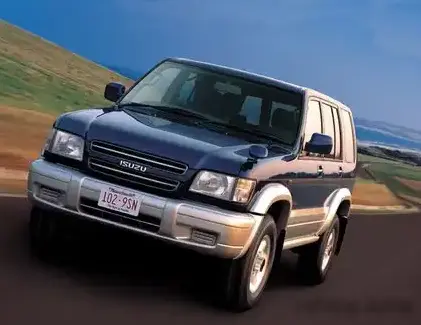
The Isuzu Bighorn, known as the Isuzu Mu in some markets, was a mid-size SUV produced by Isuzu between 1991 and 1998. This generation, often referred to as the first generation, aimed to provide a robust and capable vehicle for both on and off-road use. The 3.2 i V6 variant, equipped with the 6VD1 engine producing 200 horsepower, represented a higher-performance option within the Bighorn lineup, targeting buyers who desired more power for towing, hauling, or simply a more spirited driving experience. It was primarily sold in Japan, Australia, and parts of Europe, and was not officially offered in the North American market.
Technical Specifications
| Brand | Isuzu |
| Model | Bighorn |
| Generation | Bighorn (SUV) |
| Type (Engine) | 3.2 i V6 (200 Hp) |
| Start of production | 1991 |
| End of production | 1998 |
| Powertrain Architecture | Internal Combustion engine |
| Body type | SUV |
| Seats | 5 |
| Doors | 5 |
| Fuel Type | Petrol (Gasoline) |
| Weight-to-power ratio | 10.2 kg/Hp, 98.5 Hp/tonne |
| Weight-to-torque ratio | 7.7 kg/Nm, 130.5 Nm/tonne |
| Power | 200 Hp @ 5600 rpm |
| Power per litre | 63.2 Hp/l |
| Torque | 265 Nm @ 3600 rpm, 195.45 lb.-ft. @ 3600 rpm |
| Engine layout | Front, Longitudinal |
| Engine Model/Code | 6VD1 |
| Engine displacement | 3165 cm3, 193.14 cu. in. |
| Number of cylinders | 6 |
| Engine configuration | V-engine |
| Cylinder Bore | 93.4 mm, 3.68 in. |
| Piston Stroke | 77 mm, 3.03 in. |
| Compression ratio | 9:1 |
| Fuel injection system | Multi-port manifold injection |
| Engine aspiration | Naturally aspirated engine |
| Engine oil capacity | 5.3 l, 5.6 US qt | 4.66 UK qt |
| Coolant | 8.8 l, 9.3 US qt | 7.74 UK qt |
| Kerb Weight | 2030 kg, 4475.38 lbs |
| Fuel tank capacity | 85 l, 22.45 US gal | 18.7 UK gal |
| Length | 4750 mm, 187.01 in |
| Width | 1745 mm, 68.7 in |
| Height | 1840 mm, 72.44 in |
| Wheelbase | 2760 mm, 108.66 in |
| Front track | 1455 mm, 57.28 in |
| Rear (Back) track | 1460 mm, 57.48 in |
| Minimum turning circle | 11.6 m, 38.06 ft |
| Drive wheel | All wheel drive (4×4) |
| Number of gears and type of gearbox | 5 gears, manual transmission |
| Front brakes | Ventilated discs |
| Rear brakes | Drum |
| Tires size | 245/70 R16 |
| Wheel rims size | 7JJ x 16 |
Powertrain & Engine Architecture
The heart of the Bighorn 3.2 i V6 is the 6VD1 engine, a 3.2-liter naturally aspirated V6. This engine utilizes a 60-degree V-angle, contributing to a relatively compact engine bay layout. The 6VD1 features a cast iron block and aluminum cylinder heads, a common construction for engines of this era aiming for a balance of durability and weight reduction. Fuel delivery is managed by a multi-port fuel injection system, providing precise fuel metering for improved efficiency and performance. The valvetrain employs single overhead camshafts (SOHC) per cylinder bank, operating two valves per cylinder. This configuration, while not as sophisticated as dual overhead camshafts, offered a good compromise between complexity and maintenance requirements. The 5-speed manual transmission was the standard offering for this variant, providing direct control over the engine’s power.
Driving Characteristics
The 200 horsepower and 265 Nm (195 lb-ft) of torque provided by the 6VD1 engine gave the Bighorn 3.2 i V6 a noticeable performance advantage over lower-powered variants. While not a sports car, the V6 offered brisk acceleration and ample power for highway cruising and towing. The manual transmission allowed drivers to fully utilize the engine’s powerband, although the gear ratios were geared more towards relaxed cruising than outright performance. Compared to the smaller 2.0-liter or 2.5-liter engines available in other Bighorn models, the 3.2 V6 felt significantly more responsive and capable, especially when fully loaded or tackling challenging terrain. The all-wheel-drive system further enhanced its capabilities, providing improved traction in slippery conditions.
Equipment & Trim Levels
The 3.2 i V6 Bighorn typically came with a reasonably well-equipped interior, reflecting its position as a higher-end trim level. Standard features often included power windows, power steering, air conditioning, and a basic audio system. Interior upholstery was typically cloth, although leather options were available. The dashboard layout was functional and straightforward, prioritizing usability over flashy design. Optional extras could include a sunroof, upgraded audio systems, and alloy wheels. The level of equipment varied depending on the specific market and optional packages selected by the original buyer.
Chassis & Braking
The Bighorn’s chassis was a traditional body-on-frame construction, providing robustness and off-road capability. The front suspension utilized independent double wishbones, while the rear suspension employed a multi-link setup with coil springs. This configuration aimed to balance ride comfort with handling stability. Braking duties were handled by ventilated discs at the front and drum brakes at the rear. While adequate for most driving situations, the rear drum brakes were a point of criticism compared to the all-disc setups found on some competitors. Stabilizer bars were fitted to both the front and rear axles to reduce body roll during cornering.
Market Reception & Comparison
The Isuzu Bighorn 3.2 i V6 was generally well-received by automotive critics, particularly for its powerful engine and capable all-wheel-drive system. It was often praised for its robust construction and comfortable ride. However, some reviewers noted that the interior design was somewhat dated compared to more modern SUVs. Compared to other V6-powered SUVs of the era, such as the Mitsubishi Pajero or Toyota Land Cruiser, the Bighorn offered a more affordable alternative, although it lacked some of the refinement and brand prestige of its competitors. Fuel economy was typical for a V6 SUV of its size and weight, and reliability was generally good, although maintenance costs could be higher than for smaller, more economical vehicles.
Legacy
The Isuzu Bighorn 3.2 i V6 has developed a cult following among enthusiasts who appreciate its ruggedness and reliability. The 6VD1 engine is known for its durability, and well-maintained examples can still provide years of reliable service. In the used car market, these vehicles are often sought after by off-road enthusiasts and those looking for a capable and affordable SUV. While parts availability can be a challenge in some regions, a dedicated community of owners and online resources helps to keep these vehicles on the road. The Bighorn represents a significant chapter in Isuzu’s history, showcasing the company’s expertise in building robust and capable off-road vehicles.

