
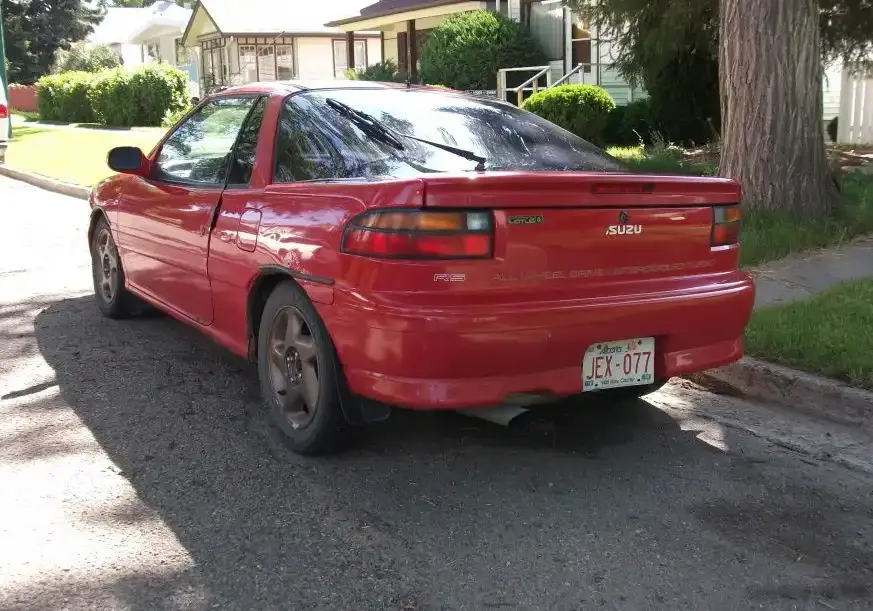
The Isuzu Impulse Coupe 1.6i Turbo, produced between 1991 and 1996, represents a unique entry in the North American sports coupe market. Positioned as a more affordable and technologically advanced alternative to rivals like the Toyota Celica and Nissan NX, the Impulse aimed to deliver a blend of performance, handling, and distinctive styling. This particular variant, equipped with the 1.6-liter turbocharged engine and a four-speed automatic transmission, occupied a middle ground within the Impulse lineup, offering a balance between the base model’s economy and the more potent manual transmission versions. The Impulse Coupe itself was part of a broader effort by Isuzu to establish a stronger presence in the US market, leveraging its engineering expertise and a growing dealer network.
Technical Specifications
| Brand | Isuzu |
| Model | Impulse |
| Generation | Impulse Coupe |
| Type (Engine) | 1.6 i Turbo (160 Hp) |
| Start of Production | 1991 |
| End of Production | 1996 |
| Powertrain Architecture | Internal Combustion Engine |
| Body Type | Coupe |
| Fuel Type | Petrol (Gasoline) |
| Power | 160 Hp |
| Engine Aspiration | Turbocharger |
Powertrain & Engine Architecture
The heart of the 1.6i Turbo Impulse is the 4ZE1 engine, a 1.6-liter inline-four cylinder powerplant. This engine is notable for its use of a single overhead camshaft (SOHC) design, coupled with two valves per cylinder. The key feature, of course, is the turbocharger, a Garrett T25 unit, which significantly boosts power output. Fuel delivery is managed by a multi-point fuel injection system, contributing to improved efficiency and responsiveness. The engine’s block is constructed from cast iron, providing durability, while the cylinder head is aluminum, helping to reduce weight. The 4ZE1 engine produces 160 horsepower at 5,600 rpm and 176 lb-ft of torque at 3,600 rpm.
Paired with the 1.6i Turbo engine is a four-speed automatic transmission. This transmission, while offering convenience, was often criticized for its relatively conservative gear ratios, which somewhat muted the engine’s potential. The automatic transmission was geared more towards comfortable cruising than aggressive acceleration, a characteristic that differentiated it from the five-speed manual option. The transmission features electronic control, optimizing shift points based on throttle position and vehicle speed.
Driving Characteristics
The driving experience in the 1.6i Turbo Impulse Coupe with the automatic transmission is characterized by smooth, relatively quiet operation. The turbocharger provides a noticeable surge of power during acceleration, but the automatic transmission’s shift points can sometimes feel slightly delayed, diminishing the immediacy of the boost. Compared to the manual transmission version, the automatic feels less engaging and offers slightly slower acceleration times. However, it provides a more relaxed driving experience, particularly in city traffic. The suspension, while tuned for a sporty feel, leans towards comfort, absorbing bumps reasonably well. Steering is responsive, providing decent feedback, but lacks the precision found in some European sports coupes of the era. The automatic transmission’s gear ratios prioritize fuel economy over outright performance, resulting in a highway cruising speed that feels comfortable but not particularly exhilarating.
Equipment & Trim Levels
The 1.6i Turbo Impulse Coupe, in its automatic transmission guise, typically came equipped with a reasonable level of standard features. These included power windows, power door locks, air conditioning, and a basic audio system. Upholstery was typically cloth, with a choice of color schemes. Optional extras included a sunroof, upgraded audio systems (often featuring a cassette player and equalizer), and alloy wheels. The interior design was functional and modern for its time, with a driver-focused layout. The dashboard featured analog gauges for speed, tachometer, fuel level, and coolant temperature. The automatic transmission selector was a traditional column shifter. The trim level generally fell between the base model and the more fully equipped manual transmission variants.
Chassis & Braking
The Impulse Coupe utilizes a front-wheel-drive layout. The suspension consists of independent MacPherson struts in the front and a semi-independent torsion beam setup in the rear. This configuration provides a good balance between handling and ride comfort. The front suspension incorporates stabilizer bars to reduce body roll during cornering. Braking duties are handled by disc brakes in the front and drum brakes in the rear. While adequate for everyday driving, the rear drum brakes were a point of criticism, as they offered less stopping power and fade resistance compared to rear disc brakes. The Impulse’s chassis is relatively lightweight, contributing to its nimble handling characteristics. The steering system is a rack-and-pinion setup, providing responsive steering feel.
Market Reception & Comparison
The Isuzu Impulse Coupe 1.6i Turbo received mixed reviews from automotive critics. The engine was generally praised for its power and responsiveness, but the automatic transmission was often seen as a limiting factor. Critics noted that the automatic transmission didn’t fully exploit the engine’s potential, resulting in a less engaging driving experience compared to the manual version. Fuel economy was considered average for the class. Compared to the base model Impulse, the 1.6i Turbo offered a significant performance upgrade. However, it was often more expensive than competitors like the Toyota Celica and Nissan NX, which offered similar levels of performance and features. Reliability was generally good, although some owners reported issues with the turbocharger and fuel injection system over the long term.
Legacy
Today, the Isuzu Impulse Coupe 1.6i Turbo is a relatively rare sight on the roads. Its unique styling and turbocharged engine have earned it a small but dedicated following among enthusiasts. The 4ZE1 engine, while not known for being particularly easy to modify, is considered reasonably durable. Finding parts can be challenging, as Isuzu no longer supports the Impulse. However, a network of online forums and parts suppliers exists to help owners keep their vehicles running. The automatic transmission version, while not as sought after as the manual, offers a more accessible entry point into Impulse ownership. The car represents a unique chapter in Isuzu’s history, showcasing the company’s engineering capabilities and its attempt to carve out a niche in the competitive North American sports coupe market. Well-maintained examples are increasingly collectible, appealing to those seeking a distinctive and affordable turbocharged coupe from the early 1990s.
