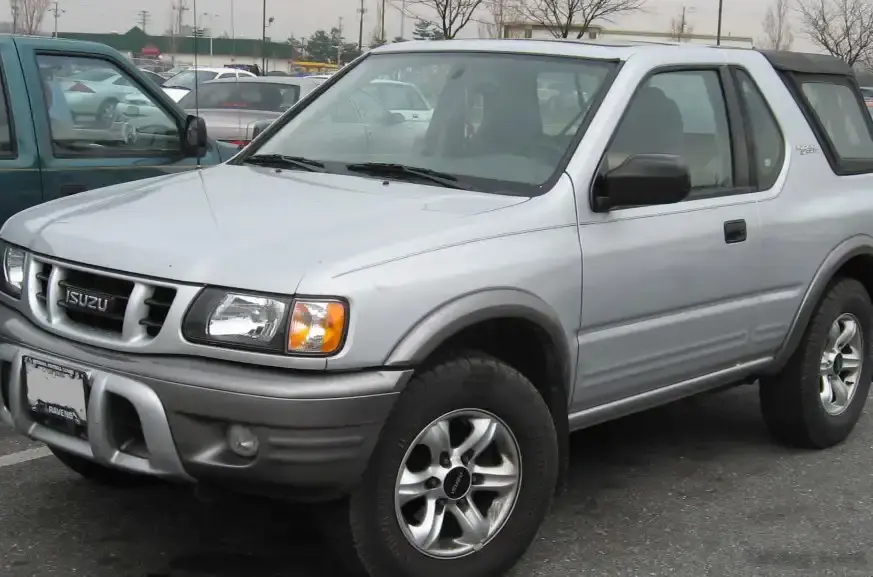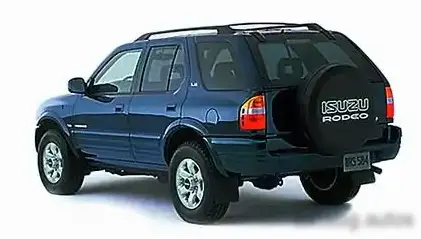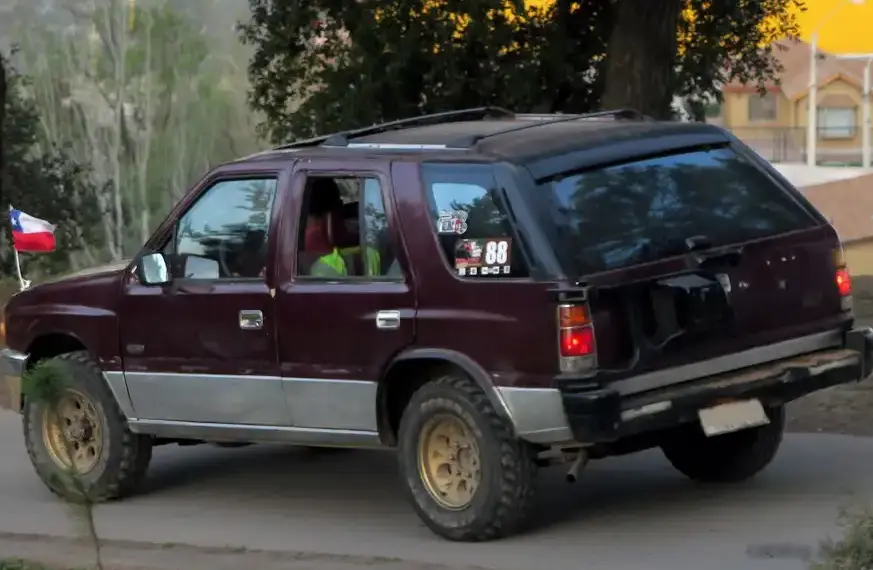
The Isuzu Rodeo 2.6 i S, produced between 1995 and 1998, represented a mid-range offering within the first generation of Isuzu Rodeos (known as the UBS series in some markets). Positioned as a practical and relatively affordable SUV, it aimed to provide a balance between capability and economy for families and individuals seeking a versatile vehicle. The Rodeo, in general, was Isuzu’s attempt to compete in the burgeoning mid-size SUV segment, primarily targeting the North American market where body-on-frame SUVs were highly popular. This particular 2.6-liter, 120 horsepower variant served as a stepping stone between the base models and the more powerful, V6-equipped Rodeos.
Technical Specifications
| Brand | Isuzu |
| Model | Rodeo |
| Generation | Rodeo (UBS Series) |
| Type (Engine) | 2.6 i S (120 Hp) |
| Start of production | 1995 |
| End of production | 1998 |
| Powertrain Architecture | Internal Combustion engine |
| Body type | SUV |
| Seats | 6 |
| Doors | 4 |
| Fuel consumption (combined) | 12.2 l/100 km (19.3 US mpg, 23.2 UK mpg, 8.2 km/l) |
| Fuel Type | Petrol (Gasoline) |
| Weight-to-power ratio | 13.4 kg/Hp, 74.8 Hp/tonne |
| Weight-to-torque ratio | 7.9 kg/Nm, 127.1 Nm/tonne |
| Power | 120 Hp @ 4600 rpm |
| Power per litre | 46.9 Hp/l |
| Torque | 204 Nm @ 2600 rpm (150.46 lb.-ft. @ 2600 rpm) |
| Engine layout | Front, Longitudinal |
| Engine displacement | 2559 cm3 (156.16 cu. in.) |
| Number of cylinders | 4 |
| Engine configuration | Inline |
| Cylinder Bore | 92.6 mm (3.65 in.) |
| Piston Stroke | 95 mm (3.74 in.) |
| Compression ratio | 8.3:1 |
| Number of valves per cylinder | 2 |
| Fuel injection system | Multi-port manifold injection |
| Engine aspiration | Naturally aspirated engine |
| Valvetrain | OHC |
| Kerb Weight | 1605 kg (3538.42 lbs.) |
| Max. weight | 2066 kg (4554.75 lbs.) |
| Max load | 461 kg (1016.33 lbs.) |
| Fuel tank capacity | 83 l (21.93 US gal | 18.26 UK gal) |
| Length | 4480 mm (176.38 in.) |
| Width | 1690 mm (66.54 in.) |
| Height | 1660 mm (65.35 in.) |
| Wheelbase | 2760 mm (108.66 in.) |
| Front track | 1440 mm (56.69 in.) |
| Rear track | 1445 mm (56.89 in.) |
| Drivetrain Architecture | Rear wheel drive |
| Number of gears | 5 |
| Type of gearbox | Manual transmission |
| Front suspension | Double wishbone |
| Rear suspension | Coil spring |
| Front brakes | Ventilated discs |
| Rear brakes | Drum |
| Assisting systems | ABS (Anti-lock braking system) |
| Tires size | 225/75 R15 |
Powertrain & Engine Architecture
The heart of the Rodeo 2.6 i S was the 4ZE1 2.6-liter inline-four cylinder engine. This engine, a staple in many Isuzu vehicles of the era, featured a cast iron block and an aluminum cylinder head. It utilized a single overhead camshaft (OHC) design operating two valves per cylinder. Fuel delivery was managed by a multi-port fuel injection system, providing a reasonable balance of efficiency and performance for its time. The 4ZE1 engine was known for its durability, though it wasn’t particularly powerful. The 120 horsepower output at 4600 rpm and 204 Nm (150.46 lb-ft) of torque at 2600 rpm were adequate for everyday driving, but it wasn’t designed for rapid acceleration or heavy towing. The engine’s 8.3:1 compression ratio was a compromise between performance and the ability to run on regular unleaded gasoline. This variant was exclusively offered with a five-speed manual transmission, providing drivers with full control over gear selection.
Driving Characteristics
The 2.6-liter engine and five-speed manual transmission combination in the Rodeo offered a fairly utilitarian driving experience. Acceleration was modest, and the engine required frequent downshifting to maintain speed when climbing hills or overtaking. The manual transmission, while not particularly sporty, was durable and relatively easy to operate. The gear ratios were spaced to prioritize fuel economy and low-end torque, rather than outright performance. Compared to the optional 3.2-liter V6 engine available in other Rodeo trims, the 2.6-liter felt significantly underpowered. However, the 2.6-liter offered better fuel economy and a lighter front end, which some drivers preferred for on-road handling. The rear-wheel-drive configuration provided a traditional SUV feel, but it lacked the all-weather capability of four-wheel-drive models.
Equipment & Trim Levels
The “S” designation in the 2.6 i S trim indicated a step up from the base Rodeo models. Standard features typically included air conditioning, a basic AM/FM radio, cloth upholstery, and power steering. Depending on the year and regional market, features like power windows and door locks were often optional extras. The interior was functional and durable, but lacked the refinement of more upscale SUVs. The dashboard layout was straightforward, with easy-to-read gauges and simple controls. Optional extras could include a cassette player, upgraded sound system, and alloy wheels.
Chassis & Braking
The Isuzu Rodeo utilized a traditional body-on-frame construction, providing a robust and durable chassis. The front suspension consisted of a double wishbone setup, while the rear employed a coil spring arrangement. This suspension configuration offered a reasonable ride quality, although it could feel somewhat bouncy on rough roads. The Rodeo 2.6 i S featured ventilated disc brakes on the front wheels and drum brakes on the rear. Anti-lock braking system (ABS) was included as a standard safety feature. The tires were typically 225/75 R15 size, providing adequate grip for most driving conditions.
Market Reception & Comparison
The Isuzu Rodeo 2.6 i S was generally well-received as a practical and affordable SUV. Critics praised its durability and relatively low price point, but noted its lack of power and refinement compared to competitors like the Ford Explorer or Jeep Cherokee. The 2.6-liter engine was considered adequate for everyday driving, but it struggled when faced with challenging terrain or heavy loads. Fuel economy was reasonable for its class, but not exceptional. Compared to the V6-equipped Rodeos, the 2.6 i S offered a lower purchase price and better fuel efficiency, making it an attractive option for budget-conscious buyers. However, the V6 models provided significantly more power and towing capacity.
Legacy
The Isuzu Rodeo 2.6 i S, while not a standout performer, has proven to be a relatively reliable vehicle over the long term. The 4ZE1 engine is known for its durability, and with proper maintenance, it can last for many years. The Rodeo’s body-on-frame construction also contributes to its longevity. Today, these Rodeos are often found in the used car market at very affordable prices. They appeal to buyers seeking a simple, rugged, and dependable SUV for basic transportation or light off-road use. While parts availability may be becoming more challenging, the Rodeo’s straightforward design makes it relatively easy to repair and maintain. The 2.6-liter engine, while not powerful, remains a reliable and economical option for those seeking a no-frills SUV experience.