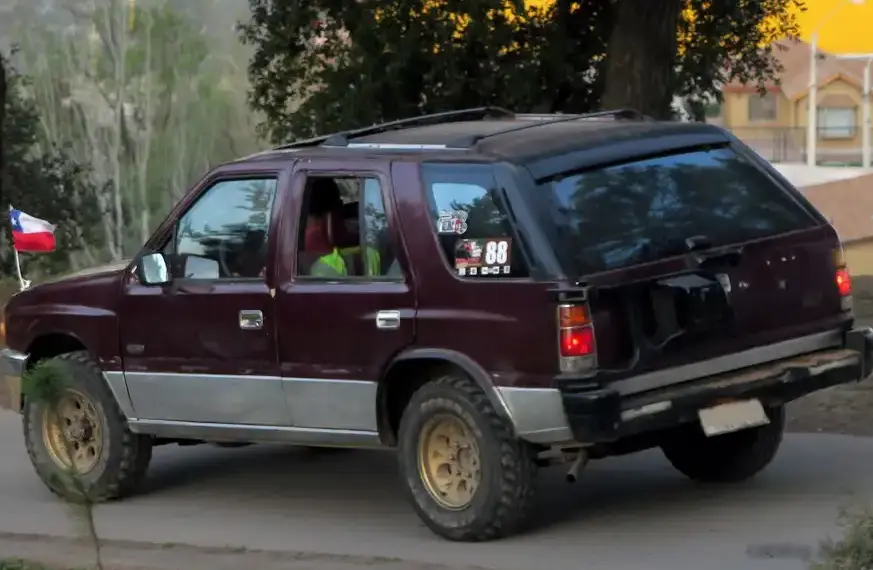
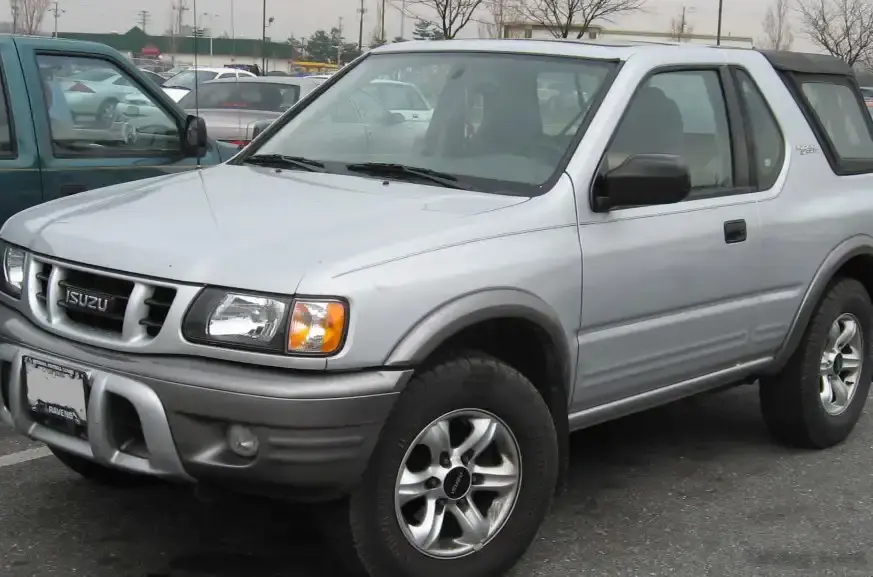
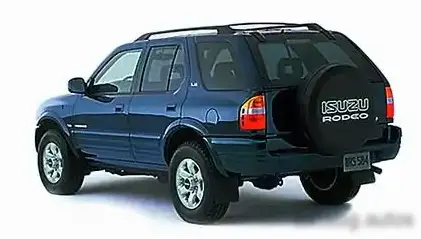
The Isuzu Rodeo Sport (UTS-145) 3.2 i V6 24V 4WD, produced between 1998 and 2004, represents a specific configuration within the second generation of the Isuzu Rodeo. Positioned as a compact SUV, the Rodeo Sport aimed to offer a blend of off-road capability and on-road comfort, primarily targeting the North American market. This particular variant, equipped with the 6VD1-W 3.2-liter V6 engine and a four-speed automatic transmission, occupied a mid-range position in the Rodeo lineup, offering more power than the base four-cylinder models but falling short of the performance offered by potential future turbocharged or larger displacement options. It was designed to appeal to buyers seeking a versatile vehicle for both daily driving and recreational activities.
Technical Specifications
| Brand | Isuzu |
| Model | Rodeo |
| Generation | Rodeo Sport (UTS-145) |
| Type (Engine) | 3.2 i V6 24V 4WD (208 Hp) |
| Start of production | 1998 |
| End of production | 2004 |
| Powertrain Architecture | Internal Combustion engine |
| Body type | SUV |
| Seats | 5 |
| Doors | 3 |
| Fuel consumption (urban) | 13.9 l/100 km (16.9 US mpg) |
| Fuel consumption (extra urban) | 10.7 l/100 km (22 US mpg) |
| Fuel Type | Petrol (Gasoline) |
| Maximum speed | 180 km/h (111.85 mph) |
| Weight-to-power ratio | 8.1 kg/Hp |
| Weight-to-torque ratio | 5.8 kg/Nm |
| Power | 208 Hp @ 5400 rpm |
| Power per litre | 65.7 Hp/l |
| Torque | 290 Nm @ 3000 rpm (213.89 lb.-ft. @ 3000 rpm) |
| Engine layout | Front, Longitudinal |
| Engine Model/Code | 6VD1-W |
| Engine displacement | 3165 cm3 (193.14 cu. in.) |
| Number of cylinders | 6 |
| Engine configuration | V-engine |
| Cylinder Bore | 93.4 mm (3.68 in.) |
| Piston Stroke | 77 mm (3.03 in.) |
| Compression ratio | 9.1:1 |
| Number of valves per cylinder | 4 |
| Fuel injection system | Multi-port manifold injection |
| Engine aspiration | Naturally aspirated engine |
| Engine oil capacity | 4.7 l (4.97 US qt | 4.14 UK qt) |
| Coolant capacity | 11 l (11.62 US qt | 9.68 UK qt) |
| Kerb Weight | 1680 kg (3703.77 lbs.) |
| Max. weight | 2245 kg (4949.38 lbs.) |
| Max load | 565 kg (1245.61 lbs.) |
| Trunk (boot) space – minimum | 595 l (21.01 cu. ft.) |
| Fuel tank capacity | 59 l (15.59 US gal | 12.98 UK gal) |
| Length | 4267 mm (167.99 in.) |
| Width | 1814 mm (71.42 in.) |
| Height | 1702 mm (67.01 in.) |
| Wheelbase | 2462 mm (96.93 in.) |
| Front track | 1514 mm (59.61 in.) |
| Rear track | 1519 mm (59.8 in.) |
| Drive wheel | All wheel drive (4×4) |
| Number of gears and type of gearbox | 4 gears, automatic transmission |
| Front suspension | Torsion |
| Rear suspension | Coil spring |
| Front brakes | Ventilated discs |
| Rear brakes | Disc |
| Assisting systems | ABS (Anti-lock braking system) |
| Power steering | Hydraulic Steering |
| Tires size | 245/50 R16 |
Powertrain & Engine Architecture
The heart of the Rodeo Sport 3.2 was the 6VD1-W engine, a 3.2-liter (193.14 cubic inches) naturally aspirated V6. This engine featured a 90-degree V-angle, four valves per cylinder, and a multi-port fuel injection system. The 6VD1-W was known for its relatively smooth operation and decent power output for its displacement. The engine produced 208 horsepower at 5400 rpm and 290 Nm (213.89 lb-ft) of torque at 3000 rpm. The four-speed automatic transmission, while providing convenience, was a somewhat dated design by the late 1990s. It lacked the efficiency and responsiveness of more modern automatic transmissions with additional gears. The transmission was electronically controlled, offering adaptive shift patterns, but was not known for particularly quick or sporty shifts.
Driving Characteristics
The 3.2L V6 and four-speed automatic combination in the Rodeo Sport delivered adequate performance for everyday driving. Acceleration was reasonable, but not particularly brisk. The automatic transmission’s gear ratios were geared more towards fuel economy and cruising comfort than outright performance. Compared to the five-speed manual transmission available on some Rodeo models, the automatic version felt noticeably slower, especially during overtaking maneuvers. The 4WD system provided enhanced traction in slippery conditions, making it suitable for light off-road use, but it wasn’t designed for serious rock crawling or extreme terrain. The Rodeo Sport’s ride quality was generally comfortable, thanks to its torsion bar front suspension and coil spring rear suspension.
Equipment & Trim Levels
The Rodeo Sport 3.2 typically came standard with features such as air conditioning, power windows and locks, and an AM/FM stereo. Higher trim levels offered options like a CD player, upgraded upholstery, alloy wheels, and a sunroof. Interior materials were generally durable but not luxurious. The dashboard layout was functional and straightforward, with easy-to-read gauges. Safety features included ABS brakes, but airbags were limited to the driver and front passenger in many models.
Chassis & Braking
The Rodeo Sport utilized a body-on-frame construction, which was common for SUVs of that era. The front suspension employed torsion bars, while the rear suspension used coil springs. This setup provided a good balance between ride comfort and off-road capability. The braking system consisted of ventilated discs at the front and solid discs at the rear. ABS was standard, enhancing braking performance in emergency situations. The steering was hydraulically assisted, providing reasonable steering feel and maneuverability.
Market Reception & Comparison
The Isuzu Rodeo Sport 3.2 i V6 24V 4WD received mixed reviews from automotive critics. While the engine was praised for its smoothness and power, the four-speed automatic transmission was often criticized for its lack of responsiveness. Fuel economy was also considered average for its class. Compared to competitors like the Ford Explorer and Jeep Cherokee, the Rodeo Sport offered a more affordable price point but lacked the brand recognition and refinement of those established models. The 3.2L V6 offered a significant power upgrade over the base 2.2L four-cylinder engine, but it came at the cost of increased fuel consumption.
Legacy
The Isuzu Rodeo Sport 3.2 i V6 4WD, while not a groundbreaking vehicle, remains a reasonably reliable and affordable option in the used car market. The 6VD1-W engine is generally considered durable, although regular maintenance is crucial to prevent issues. The four-speed automatic transmission, while not the most sophisticated, is generally reliable if properly maintained. Common issues include oil leaks, corrosion in areas exposed to road salt, and wear and tear on suspension components. Today, these vehicles are often sought after by enthusiasts looking for a capable and affordable off-road vehicle or a classic SUV from the late 1990s/early 2000s.