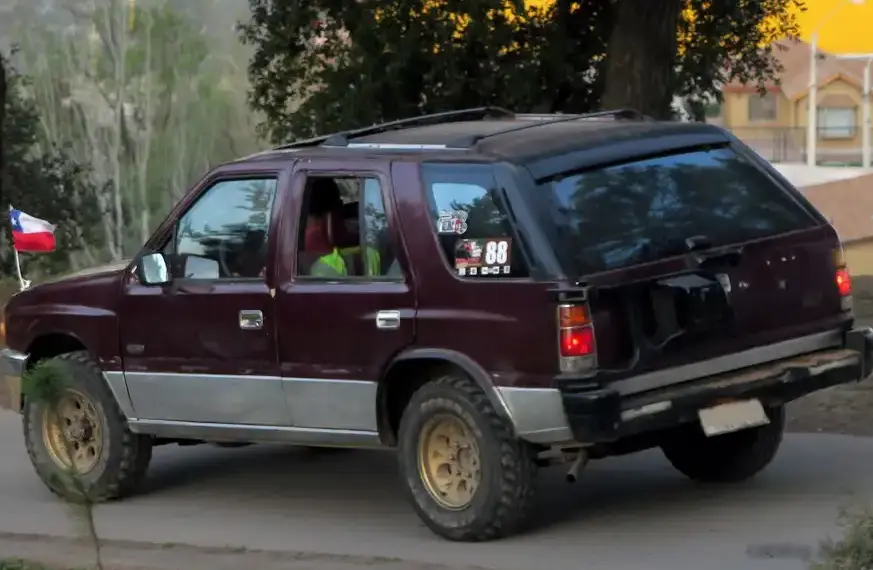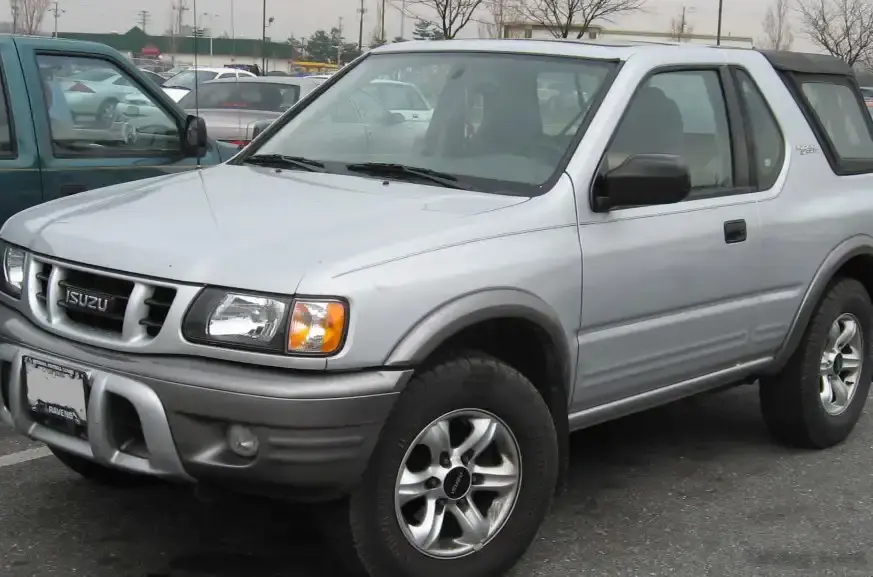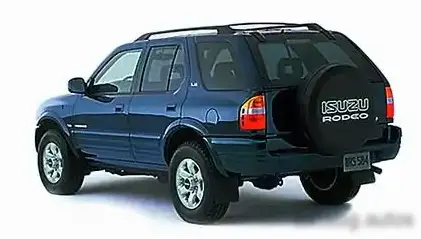
The Isuzu Rodeo (UTS-145) 3.2 i V6 24V 2WD, produced between 1998 and 2004, represents a significant iteration of Isuzu’s mid-size SUV offering. Positioned within the broader Rodeo lineup – a vehicle also marketed under different names globally, including the Honda Amigo and Passport – this variant catered to buyers seeking a balance of V6 power and a more traditional rear-wheel-drive configuration. It occupied a middle ground in the range, offering more performance than the base four-cylinder models but remaining more accessible than the four-wheel-drive versions. The UTS-145 designation refers to the chassis code for this generation of Rodeo.
Technical Specifications
| Brand | Isuzu |
| Model | Rodeo |
| Generation | Rodeo (UTS-145) |
| Type (Engine) | 3.2 i V6 24V 2WD (208 Hp) |
| Start of production | 1998 |
| End of production | 2004 |
| Powertrain Architecture | Internal Combustion engine |
| Body type | SUV |
| Seats | 5 |
| Doors | 5 |
| Fuel Type | Petrol (Gasoline) |
| Maximum speed | 180 km/h (111.85 mph) |
| Weight-to-power ratio | 7.9 kg/Hp, 126.4 Hp/tonne |
| Weight-to-torque ratio | 5.7 kg/Nm, 176.3 Nm/tonne |
| Power | 208 Hp @ 5400 rpm |
| Power per litre | 65.7 Hp/l |
| Torque | 290 Nm @ 3000 rpm (213.89 lb.-ft. @ 3000 rpm) |
| Engine layout | Front, Longitudinal |
| Engine Model/Code | 6VD1-W |
| Engine displacement | 3165 cm3 (193.14 cu. in.) |
| Number of cylinders | 6 |
| Engine configuration | V-engine |
| Cylinder Bore | 93.4 mm (3.68 in.) |
| Piston Stroke | 77 mm (3.03 in.) |
| Compression ratio | 9.1:1 |
| Number of valves per cylinder | 4 |
| Fuel injection system | Multi-port manifold injection |
| Engine aspiration | Naturally aspirated engine |
| Engine oil capacity | 4.7 l (4.97 US qt | 4.14 UK qt) |
| Coolant capacity | 11 l (11.62 US qt | 9.68 UK qt) |
| Kerb Weight | 1645 kg (3626.6 lbs.) |
| Max. weight | 2245 kg (4949.38 lbs.) |
| Max load | 600 kg (1322.77 lbs.) |
| Trunk (boot) space – minimum | 933 l (32.95 cu. ft.) |
| Trunk (boot) space – maximum | 2297 l (81.12 cu. ft.) |
| Fuel tank capacity | 80 l (21.13 US gal | 17.6 UK gal) |
| Length | 4488 mm (176.69 in.) |
| Width | 1788 mm (70.39 in.) |
| Height | 1725 mm (67.91 in.) |
| Wheelbase | 2702 mm (106.38 in.) |
| Front track | 1514 mm (59.61 in.) |
| Rear (Back) track | 1519 mm (59.8 in.) |
| Drivetrain Architecture | The Internal combustion engine (ICE) drives the rear wheels of the vehicle. |
| Drive wheel | Rear wheel drive |
| Number of gears and type of gearbox | 5 gears, manual transmission |
| Front suspension | Coil spring |
| Rear suspension | Coil spring |
| Front brakes | Ventilated discs |
| Rear brakes | Disc |
| Assisting systems | ABS (Anti-lock braking system) |
| Power steering | Hydraulic Steering |
| Tires size | 245/70 R16 |
Powertrain & Engine Architecture
The heart of the Rodeo 3.2 i V6 2WD is the 6VD1-W engine, a 3.2-liter naturally aspirated V6. This engine utilizes a 60-degree V-angle, contributing to a relatively compact engine bay layout. The 6VD1-W features a cast iron block and aluminum cylinder heads, a common construction for balancing durability and weight. Fuel delivery is managed by a multi-port fuel injection system, providing precise fuel metering for optimal combustion. The engine employs a single overhead camshaft (SOHC) design with four valves per cylinder (24V), enhancing volumetric efficiency. The 5-speed manual transmission was the standard offering for this variant, providing direct control over the engine’s power. The transmission’s gear ratios were tuned for a balance of acceleration and highway cruising, though it wasn’t particularly optimized for fuel economy.
Driving Characteristics
The 208 horsepower and 290 lb-ft of torque offered by the 3.2L V6 provided a noticeable step up in performance compared to the base four-cylinder Rodeos. Acceleration was brisk, particularly when compared to competitors with smaller engines. The rear-wheel-drive configuration offered a more traditional driving experience, favored by some drivers for its simplicity and responsiveness. However, it lacked the all-weather capability of four-wheel-drive models. The manual transmission allowed for precise gear selection, but the relatively long throws could feel less refined than more modern gearboxes. The Rodeo’s suspension, while comfortable for everyday driving, wasn’t particularly sporty, exhibiting some body roll in corners.
Equipment & Trim Levels
The 3.2 i V6 2WD Rodeo typically came with a reasonable level of standard equipment. This included air conditioning, power windows and locks, and an AM/FM stereo. Higher trim levels, often denoted by specific packages, added features such as alloy wheels, upgraded interior upholstery (often cloth or a combination of cloth and vinyl), a sunroof, and a premium sound system. Optional extras included a tow package, cruise control, and upgraded audio systems. Interior appointments were generally functional and durable, prioritizing practicality over luxury.
Chassis & Braking
The Rodeo’s chassis utilized a body-on-frame construction, typical for SUVs of this era. The front suspension consisted of independent coil springs, while the rear employed a solid axle with coil springs. This setup provided a comfortable ride, but wasn’t particularly sophisticated in terms of handling. Braking duties were handled by ventilated discs at the front and solid discs at the rear. Anti-lock brakes (ABS) were standard, enhancing safety by preventing wheel lockup during hard braking. Steering was hydraulically assisted, providing reasonable ease of maneuverability.
Market Reception & Comparison
The Isuzu Rodeo 3.2 i V6 2WD was generally well-received by automotive critics as a capable and affordable SUV. It offered a compelling alternative to competitors like the Ford Explorer and Chevrolet Blazer. However, some reviewers noted that the interior lacked the refinement of some rivals. Fuel economy was average for its class, and the rear-wheel-drive configuration limited its appeal in regions with harsh winters. Compared to the four-wheel-drive Rodeo models, the 2WD variant offered a lower price point but sacrificed all-weather capability. The V6 engine provided a significant performance advantage over the base four-cylinder models, making it a popular choice for buyers who prioritized power.
Legacy
The Isuzu Rodeo, and specifically the 3.2 i V6 2WD variant, has developed a reputation for reasonable reliability, particularly the engine and transmission. While not without its quirks, the 6VD1-W engine is generally considered durable and capable of high mileage with proper maintenance. Common issues include oil leaks and occasional sensor failures. Today, these Rodeos can be found on the used car market at relatively affordable prices. They appeal to buyers seeking a rugged, capable SUV for light off-road use or as a practical daily driver. Parts availability is generally good, though some specific trim pieces may be difficult to find. The Rodeo remains a testament to Isuzu’s commitment to building durable and capable vehicles.