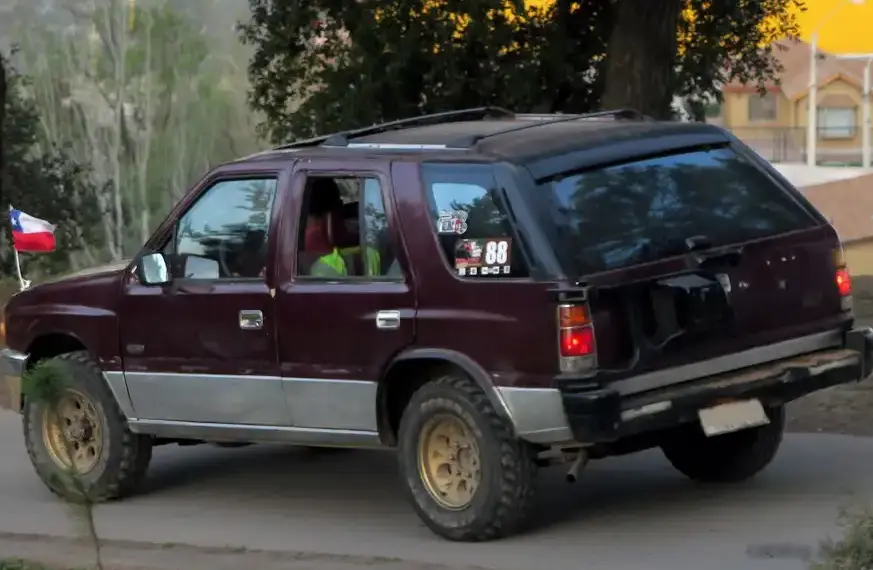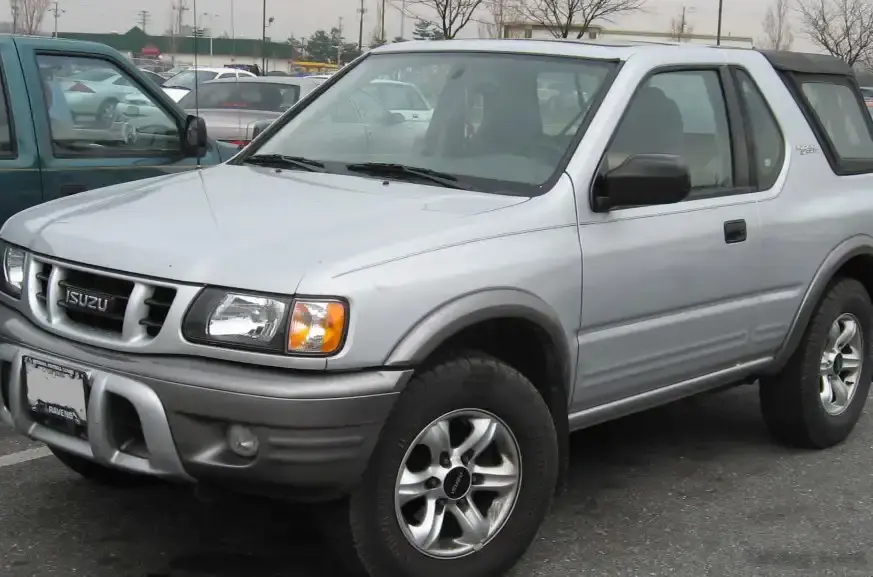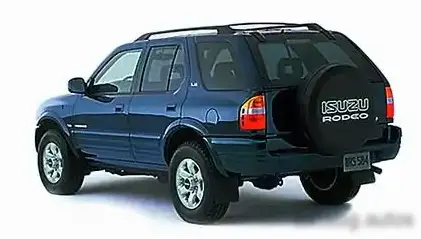
The Isuzu Rodeo (UTS-145) 3.2i V6 24V L 4WD, produced between 1998 and 2004, represents a significant iteration of Isuzu’s mid-size SUV offering. Positioned within the second generation of the Rodeo, which utilized the Isuzu-Honda U platform, this variant aimed to provide a balance of capability, comfort, and value in the competitive North American SUV market. The “L” trim designation typically indicated a mid-range offering, slotting above base models and below more luxurious trims. This particular configuration, featuring a 3.2-liter V6 engine paired with a four-speed automatic transmission and four-wheel drive, was a popular choice for buyers seeking a versatile vehicle suitable for both daily driving and light off-road adventures.
Technical Specifications
| Brand | Isuzu |
| Model | Rodeo |
| Generation | Rodeo (UTS-145) |
| Type | 3.2 i V6 24V L 4WD (208 Hp) Automatic |
| Start of production | 1998 |
| End of production | 2004 |
| Powertrain Architecture | Internal Combustion engine |
| Body type | SUV |
| Seats | 5 |
| Doors | 5 |
| Fuel consumption (urban) | 14.7 l/100 km (16 US mpg, 19.2 UK mpg, 6.8 km/l) |
| Fuel consumption (extra urban) | 11.8 l/100 km (19.9 US mpg, 23.9 UK mpg, 8.5 km/l) |
| Fuel Type | Petrol (Gasoline) |
| Maximum speed | 185 km/h (114.95 mph) |
| Weight-to-power ratio | 8.4 kg/Hp, 119.2 Hp/tonne |
| Weight-to-torque ratio | 6 kg/Nm, 166.2 Nm/tonne |
| Power | 208 Hp @ 5400 rpm |
| Power per litre | 65.7 Hp/l |
| Torque | 290 Nm @ 3000 rpm (213.89 lb.-ft. @ 3000 rpm) |
| Engine layout | Front, Longitudinal |
| Engine Model/Code | 6VD1-W |
| Engine displacement | 3165 cm3 (193.14 cu. in.) |
| Number of cylinders | 6 |
| Engine configuration | V-engine |
| Cylinder Bore | 93.4 mm (3.68 in.) |
| Piston Stroke | 77 mm (3.03 in.) |
| Compression ratio | 9.1:1 |
| Number of valves per cylinder | 4 |
| Fuel injection system | Multi-port manifold injection |
| Engine aspiration | Naturally aspirated engine |
| Engine oil capacity | 4.7 l (4.97 US qt | 4.14 UK qt) |
| Coolant capacity | 11.1 l (11.73 US qt | 9.77 UK qt) |
| Kerb Weight | 1745 kg (3847.07 lbs.) |
| Max. weight | 2200 kg (4850.17 lbs.) |
| Max load | 455 kg (1003.1 lbs.) |
| Trunk (boot) space – minimum | 933 l (32.95 cu. ft.) |
| Trunk (boot) space – maximum | 2297 l (81.12 cu. ft.) |
| Fuel tank capacity | 80 l (21.13 US gal | 17.6 UK gal) |
| Length | 4510 mm (177.56 in.) |
| Width | 1787 mm (70.35 in.) |
| Height | 1680 mm (66.14 in.) |
| Wheelbase | 2702 mm (106.38 in.) |
| Front track | 1515 mm (59.65 in.) |
| Rear (Back) track | 1520 mm (59.84 in.) |
| Drive wheel | All wheel drive (4×4) |
| Number of gears and type of gearbox | 4 gears, automatic transmission |
| Front suspension | Coil spring |
| Rear suspension | Coil spring |
| Front brakes | Ventilated discs |
| Rear brakes | Disc |
| Assisting systems | ABS (Anti-lock braking system) |
| Power steering | Hydraulic Steering |
| Tires size | 235/75 R15 |
| Wheel rims size | 15 |
Powertrain & Engine Architecture
The heart of the Rodeo 3.2i L 4WD is the 6VD1-W engine, a 3.2-liter, 24-valve V6. This engine is a naturally aspirated design, meaning it doesn’t utilize forced induction like a turbocharger or supercharger. It features a 90-degree V-angle, contributing to a relatively smooth power delivery. The engine employs multi-port fuel injection, delivering fuel directly into the intake ports just before the intake valves. This system, common for its time, provided a good balance of efficiency and performance. The valvetrain utilizes four valves per cylinder (two intake and two exhaust), enhancing breathing and contributing to the engine’s power output. The four-speed automatic transmission, while not as sophisticated as modern transmissions with more gears, was a reliable unit designed to handle the engine’s torque and provide comfortable shifting. It was a conventional torque converter automatic, prioritizing smooth operation over outright performance.
Driving Characteristics
The 208 horsepower and 290 lb-ft of torque produced by the 3.2-liter V6, when coupled with the four-speed automatic, resulted in adequate, but not exhilarating, performance. Acceleration from 0 to 60 mph was typically in the 8-9 second range. The automatic transmission’s gear ratios were tuned for everyday drivability rather than aggressive acceleration. Compared to the available five-speed manual transmission, the automatic offered less driver engagement and slightly reduced fuel economy. However, it provided a more relaxed driving experience, particularly in urban environments. The four-wheel drive system, typically selectable between 2WD, 4HI, and 4LO, provided enhanced traction in slippery conditions and allowed for moderate off-road capability. The Rodeo’s ride quality was generally considered comfortable, though not as refined as some of its unibody crossover competitors.
Equipment & Trim Levels
The “L” trim level of the Isuzu Rodeo 3.2i typically included features such as air conditioning, power windows and locks, a CD player, and cloth upholstery. Optional extras often included a sunroof, upgraded audio systems, and alloy wheels. The interior design was functional and straightforward, prioritizing practicality over luxury. The dashboard layout was typical for the era, with clearly labeled controls and a relatively simple instrument cluster. Safety features included dual front airbags and ABS (Anti-lock Braking System).
Chassis & Braking
The Rodeo utilized a body-on-frame construction, providing a robust and durable platform. The front suspension consisted of coil springs and independent double wishbone setup, while the rear suspension employed coil springs and a solid axle. This configuration provided a good balance of ride comfort and off-road capability. Braking duties were handled by ventilated discs at the front and solid discs at the rear. The ABS system helped to prevent wheel lockup during hard braking, enhancing stability and control. The Rodeo’s steering was hydraulically assisted, providing relatively light and easy steering effort.
Market Reception & Comparison
The Isuzu Rodeo 3.2i V6 Automatic was generally well-received by automotive critics as a competent and reliable SUV. However, it often faced criticism for its somewhat dated interior design and lack of refinement compared to newer, unibody crossover SUVs. Fuel economy was also a concern, with the 3.2-liter V6 consuming a significant amount of gasoline, especially in urban driving. Compared to other trims in the Rodeo lineup, the 3.2i V6 offered a significant performance upgrade over the smaller four-cylinder engines, but at the cost of increased fuel consumption. The 3.2L engine was often seen as a good compromise between the base engine and the more expensive, and sometimes less reliable, supercharged variants.
Legacy
The Isuzu Rodeo 3.2i V6 Automatic has proven to be a relatively durable and reliable vehicle, particularly when properly maintained. The 6VD1-W engine is known for its longevity, although it can be prone to oil leaks as it ages. The four-speed automatic transmission is also generally reliable, but may require servicing over time. In the used car market, these Rodeos are often sought after by buyers looking for an affordable and capable SUV. While not a collector’s item, well-maintained examples continue to provide dependable transportation for those seeking a rugged and practical vehicle.