
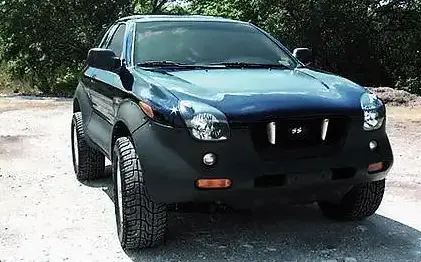
The Isuzu VehiCross, produced between 1997 and 2001, represents a unique and somewhat unconventional entry into the growing sport utility vehicle (SUV) market of the late 1990s. Based heavily on the Isuzu Wizard/Bighorn platform (known as the Rodeo in North America), the VehiCross distinguished itself with aggressive styling, a powerful V6 engine, and a sophisticated four-wheel-drive system. It was primarily marketed in Japan and Europe, with limited imports to other regions, including the United States. The 3.2 i V6 24V 4WD variant, equipped with a four-speed automatic transmission, occupied the top-tier position in the VehiCross lineup, offering a blend of performance and capability aimed at drivers seeking a distinctive and capable SUV.
Technical Specifications
| Brand | Isuzu |
| Model | VehiCross |
| Generation | VehiCross |
| Type | 3.2 i V6 24V 4WD (3 dr) (215 Hp) |
| Start of production | 1997 |
| End of production | 2001 |
| Powertrain Architecture | Internal Combustion engine |
| Body type | SUV |
| Seats | 5 |
| Doors | 3 |
| Fuel consumption (urban) | 18 l/100 km (13.1 US mpg, 15.7 UK mpg, 5.6 km/l) |
| Fuel consumption (extra urban) | 10 l/100 km (23.5 US mpg, 28.2 UK mpg, 10 km/l) |
| Fuel Type | Petrol (Gasoline) |
| Maximum speed | 170 km/h (105.63 mph) |
| Weight-to-power ratio | 8.1 kg/Hp, 122.9 Hp/tonne |
| Weight-to-torque ratio | 6.2 kg/Nm, 162.3 Nm/tonne |
| Power | 215 Hp @ 5600 rpm |
| Power per litre | 67.9 Hp/l |
| Torque | 284 Nm @ 3000 rpm (209.47 lb.-ft. @ 3000 rpm) |
| Engine layout | Front, Longitudinal |
| Engine displacement | 3165 cm3 (193.14 cu. in.) |
| Number of cylinders | 6 |
| Engine configuration | V-engine |
| Cylinder Bore | 93.4 mm (3.68 in.) |
| Piston Stroke | 77 mm (3.03 in.) |
| Compression ratio | 9.4:1 |
| Number of valves per cylinder | 4 |
| Fuel injection system | Multi-port manifold injection |
| Engine aspiration | Naturally aspirated engine |
| Valvetrain | DOHC |
| Kerb Weight | 1750 kg (3858.09 lbs.) |
| Trunk (boot) space (minimum) | 393 l (13.88 cu. ft.) |
| Trunk (boot) space (maximum) | 1426 l (50.36 cu. ft.) |
| Fuel tank capacity | 85 l (22.45 US gal, 18.7 UK gal) |
| Length | 4130 mm (162.6 in.) |
| Width | 1790 mm (70.47 in.) |
| Height | 1710 mm (67.32 in.) |
| Wheelbase | 2330 mm (91.73 in.) |
| Front track | 1515 mm (59.65 in.) |
| Rear track | 1520 mm (59.84 in.) |
| Drive wheel | All wheel drive (4×4) |
| Number of gears | 4 |
| Gearbox type | Automatic transmission |
| Front suspension | Double wishbone |
| Rear suspension | Trailing arm |
| Front brakes | Ventilated discs |
| Rear brakes | Disc |
| Assisting systems | ABS (Anti-lock braking system), Hydraulic Power Steering |
| Tires size | 245/70 R16 |
Powertrain & Engine Architecture
The heart of the VehiCross 3.2 i is Isuzu’s 6VE1 engine, a 3.2-liter naturally aspirated V6. This engine, part of Isuzu’s ‘VE’ series, features a 90-degree V-angle and a cast-iron block with aluminum cylinder heads. The 6VE1 utilizes a multi-port fuel injection system and a double overhead camshaft (DOHC) valvetrain with four valves per cylinder. This configuration contributes to a relatively high specific output of 67.9 horsepower per liter. The engine’s 215 horsepower and 284 Nm (209.47 lb-ft) of torque were considered substantial for its time, particularly in a vehicle of this size and intended purpose. Paired with the engine is a four-speed automatic transmission, which, while not offering the latest in gear ratios, provided smooth and relatively quick shifts. The transmission was chosen to balance ease of use with the engine’s torque characteristics, making it suitable for both on-road driving and moderate off-road conditions.
Driving Characteristics
The VehiCross 3.2 i Automatic delivers a driving experience that leans towards comfortable and capable rather than outright sporty. The four-speed automatic transmission, while reliable, doesn’t offer the responsiveness of a manual gearbox or a more modern automatic with additional gears. Acceleration is adequate, with the 215 hp engine providing sufficient power for highway merging and overtaking. However, the vehicle’s weight (1750 kg / 3858.09 lbs) does limit its outright performance. The automatic transmission’s gear ratios are geared towards providing good low-end torque for off-road situations, which can result in slightly higher engine speeds during highway cruising. The four-wheel-drive system, featuring a selectable low range, provides excellent traction in challenging terrain. The suspension, tuned for a balance of comfort and control, absorbs bumps reasonably well, but the relatively short wheelbase can result in a slightly choppy ride on uneven surfaces.
Equipment & Trim Levels
The VehiCross 3.2 i Automatic was generally well-equipped for its time. Standard features typically included air conditioning, power windows and locks, a decent audio system, and alloy wheels. Interior upholstery was typically a combination of cloth and leather, with a focus on durability. Optional extras included a sunroof, upgraded audio systems, and various cosmetic enhancements. The dashboard layout was functional and straightforward, prioritizing ease of use over elaborate styling. The VehiCross aimed for a premium feel, but it didn’t quite reach the level of luxury offered by some of its competitors.
Chassis & Braking
The VehiCross utilizes a body-on-frame construction, providing a robust and durable chassis. The front suspension features a double wishbone setup, while the rear employs a trailing arm configuration. This suspension design provides a good balance of on-road comfort and off-road capability. Braking duties are handled by ventilated discs at the front and solid discs at the rear. An anti-lock braking system (ABS) was standard, enhancing safety and control during hard braking. The steering is hydraulically assisted, providing a reasonable level of feedback and ease of use. The tires, typically 245/70 R16, are designed to provide good grip on both paved and unpaved surfaces.
Market Reception & Comparison
The Isuzu VehiCross received mixed reviews upon its release. Critics praised its distinctive styling, powerful engine, and capable four-wheel-drive system. However, some criticized its relatively high price, the somewhat dated four-speed automatic transmission, and its limited practicality due to its three-door configuration. Compared to other SUVs in its class, such as the Honda CR-V or the Toyota RAV4, the VehiCross offered a more rugged and performance-oriented experience. However, it lacked the practicality and fuel efficiency of those more mainstream options. Against more dedicated off-road vehicles, like the Suzuki Samurai, it offered a higher level of comfort and refinement, but at the expense of extreme off-road capability. Fuel economy was also a weak point, with reported figures of 18 l/100 km (13.1 US mpg) in urban driving.
Legacy
The Isuzu VehiCross, despite its relatively short production run, has gained a cult following among enthusiasts. Its unique styling and capable powertrain have made it a desirable vehicle in the used car market. The 6VE1 engine, while not without its quirks, is generally considered to be reliable when properly maintained. Common issues include oil leaks and occasional sensor failures. The four-speed automatic transmission is also generally durable, but regular fluid changes are essential. Today, the VehiCross is appreciated for its individuality and its ability to blend on-road comfort with off-road capability. It represents a bold and unconventional approach to SUV design, and its rarity has contributed to its growing popularity among collectors and enthusiasts.
