
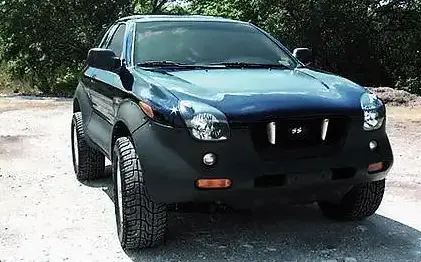
The Isuzu VehiCross, produced between 1998 and 2001, represents a unique and somewhat unconventional entry into the burgeoning sport utility vehicle (SUV) market of the late 1990s. Built on a modified Isuzu Wizard/Bighorn platform (known as the Rodeo in North America), the VehiCross aimed to blend off-road capability with a sporty, almost rally-inspired aesthetic. It was primarily marketed in Japan and Europe, with limited imports to the United States, making it a relatively rare vehicle today. The 3.5i V6 24V 4WD variant, equipped with a 3.5-liter V6 engine and a four-speed automatic transmission, was the top-of-the-line offering, positioned as the performance-oriented choice within the VehiCross range.
Technical Specifications
| Brand | Isuzu |
| Model | VehiCross |
| Generation | VehiCross |
| Type | 3.5 i V6 24V 4WD (3 dr) (215 Hp) |
| Start of production | 1998 |
| End of production | 2001 |
| Powertrain Architecture | Internal Combustion engine |
| Body type | SUV |
| Seats | 5 |
| Doors | 3 |
| Fuel consumption (urban) | 15.7 l/100 km (15 US mpg, 18 UK mpg, 6.4 km/l) |
| Fuel consumption (extra urban) | 12.4 l/100 km (19 US mpg, 22.8 UK mpg, 8.1 km/l) |
| Fuel Type | Petrol (Gasoline) |
| Acceleration 0 – 100 km/h | 8.8 sec |
| Acceleration 0 – 62 mph | 8.8 sec |
| Acceleration 0 – 60 mph | 8.4 sec |
| Maximum speed | 185 km/h (114.95 mph) |
| Weight-to-power ratio | 8.1 kg/Hp, 122.9 Hp/tonne |
| Weight-to-torque ratio | 5.6 kg/Nm, 178.3 Nm/tonne |
| Power | 215 Hp @ 5400 rpm |
| Power per litre | 61.5 Hp/l |
| Torque | 312 Nm @ 3000 rpm (230.12 lb.-ft. @ 3000 rpm) |
| Engine layout | Front, Longitudinal |
| Engine displacement | 3494 cm3 (213.22 cu. in.) |
| Number of cylinders | 6 |
| Engine configuration | V-engine |
| Cylinder Bore | 93.4 mm (3.68 in.) |
| Piston Stroke | 85 mm (3.35 in.) |
| Compression ratio | 9.1:1 |
| Number of valves per cylinder | 4 |
| Fuel injection system | Multi-port manifold injection |
| Engine aspiration | Naturally aspirated engine |
| Valvetrain | DOHC |
| Kerb Weight | 1750 kg (3858.09 lbs.) |
| Max. weight | 2110 kg (4651.75 lbs.) |
| Max load | 360 kg (793.66 lbs.) |
| Trunk (boot) space – minimum | 393 l (13.88 cu. ft.) |
| Trunk (boot) space – maximum | 1426 l (50.36 cu. ft.) |
| Fuel tank capacity | 85 l (22.45 US gal, 18.7 UK gal) |
| Length | 4130 mm (162.6 in.) |
| Width | 1790 mm (70.47 in.) |
| Height | 1710 mm (67.32 in.) |
| Wheelbase | 2330 mm (91.73 in.) |
| Front track | 1515 mm (59.65 in.) |
| Rear (Back) track | 1520 mm (59.84 in.) |
| Drive wheel | All wheel drive (4×4) |
| Number of gears and type of gearbox | 4 gears, automatic transmission |
| Front suspension | Double wishbone |
| Rear suspension | Trailing arm |
| Front brakes | Ventilated discs |
| Rear brakes | Ventilated discs |
| Assisting systems | ABS (Anti-lock braking system), Hydraulic Power Steering |
| Tires size | 245/60 R18 |
INTRODUCTION
The Isuzu VehiCross, launched in 1998, was a bold attempt to create a unique SUV that stood apart from the increasingly homogenous competition. It was based on the Isuzu Wizard/Bighorn, but heavily modified with distinctive bodywork, a more powerful engine, and a sophisticated all-wheel-drive system. The 3.5i V6 4WD model represented the pinnacle of the VehiCross lineup, offering a combination of performance and off-road capability. Its limited production run and unique styling have since made it a sought-after vehicle among enthusiasts.
Powertrain & Engine Architecture
The heart of the VehiCross 3.5i is the 6VE1 engine, a 3.5-liter naturally aspirated V6. This engine, part of Isuzu’s V-series, features a 60-degree V-angle and a dual overhead camshaft (DOHC) valvetrain with four valves per cylinder. The engine utilizes multi-point fuel injection and boasts a compression ratio of 9.1:1. The engine code is often referenced as 6VE1. The four-speed automatic transmission, a common unit in Isuzu vehicles of the era, was specifically tuned to handle the V6’s torque output and provide smooth shifts. While not a particularly advanced transmission by modern standards, it was considered reliable and well-suited to the VehiCross’s intended use. The engine’s longitudinal mounting and the all-wheel-drive system contribute to a balanced weight distribution, enhancing handling characteristics.
Driving Characteristics
The VehiCross 3.5i, with its 215 horsepower and 230 lb-ft of torque, offered brisk acceleration for its time. The 0-60 mph sprint was achieved in approximately 8.4 seconds, and it could reach a top speed of 115 mph. The automatic transmission, while providing convenience, did result in some power loss compared to the available five-speed manual transmission. Gear ratios were optimized for a balance between acceleration and fuel economy, but the VehiCross was not known for its exceptional fuel efficiency, averaging around 15-19 mpg in mixed driving. The all-wheel-drive system, featuring a Torsen limited-slip center differential, provided excellent traction in a variety of conditions, making it capable both on and off-road. The suspension, tuned for a slightly firmer ride than the standard Wizard/Bighorn, contributed to a more engaging driving experience.
Equipment & Trim Levels
The 3.5i V6 model was the most well-equipped VehiCross. Standard features included air conditioning, power windows and locks, a premium sound system, and alloy wheels. The interior featured comfortable seating upholstered in a combination of cloth and leather. Optional extras included a sunroof, upgraded audio systems, and various cosmetic enhancements. The dashboard layout was functional and straightforward, with easy-to-read gauges and intuitive controls. The distinctive exterior styling, with its flared wheel arches and aggressive front fascia, set the 3.5i apart from other SUVs of the period.
Chassis & Braking
The VehiCross utilized a robust chassis derived from the Isuzu Wizard/Bighorn, but with significant reinforcement to handle the more powerful engine and increased stresses of off-road driving. The suspension featured independent double wishbones at the front and a trailing arm setup at the rear. Braking duties were handled by ventilated discs on all four wheels, providing ample stopping power. An anti-lock braking system (ABS) was standard, enhancing safety and control. The steering was hydraulically assisted, offering a responsive and precise feel.
Market Reception & Comparison
The VehiCross received generally positive reviews from automotive critics, who praised its unique styling, strong engine, and capable all-wheel-drive system. However, its relatively high price and limited availability hindered its sales success. Compared to other SUVs in its class, such as the Honda CR-V or Toyota RAV4, the VehiCross offered a more rugged and performance-oriented experience. Against more luxurious SUVs like the Lexus RX, it lacked some of the refinement and features. The 1.8L versions of the Wizard/Bighorn were significantly less powerful and targeted a different demographic – those prioritizing fuel economy and affordability over performance. The VehiCross’s fuel economy was also notably worse than the smaller-engined variants.
Legacy
The Isuzu VehiCross, despite its short production run, has gained a cult following among automotive enthusiasts. Its distinctive styling and capable powertrain have made it a desirable vehicle in the used car market. The 6VE1 engine is generally considered reliable, although regular maintenance is essential. Parts availability can be a challenge due to the vehicle’s rarity, but a dedicated community of owners and online resources help to mitigate this issue. The VehiCross remains a unique and memorable example of late 1990s SUV design, representing a bold attempt to break away from the conventional.
