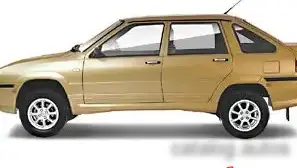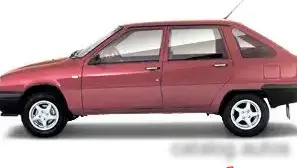
The Izh 2126, produced between 1993 and 2005, represents a significant, though often overlooked, chapter in the history of Soviet and early post-Soviet automotive manufacturing. Positioned as a compact hatchback, the 2126 was intended to modernize the IzhAvto plant’s offerings, building upon the foundations of the earlier Izh 2125. The 1.7-liter, 85 horsepower variant, equipped with a five-speed manual transmission, was a mainstay of the lineup, representing a balance between affordability and usability for the Russian market. It was built on a modified version of the older 2125 platform, and while mechanically simple, it filled a crucial niche as a relatively modern, domestically produced vehicle during a period of economic transition.
Technical Specifications
| Brand | Izh |
| Model | 2126 |
| Generation | 2126 |
| Type (Engine) | 1.7 (85 Hp) |
| Start of production | 1993 |
| End of production | 2005 |
| Powertrain Architecture | Internal Combustion engine |
| Body type | Hatchback |
| Seats | 5 |
| Doors | 5 |
| Fuel consumption (urban) | 9.5 l/100 km (24.8 US mpg) |
| Fuel consumption (extra urban) | 6.9 l/100 km (34.1 US mpg) |
| Fuel Type | Petrol (Gasoline) |
| Acceleration 0 – 100 km/h | 15 sec |
| Acceleration 0 – 62 mph | 15 sec |
| Acceleration 0 – 60 mph | 14.3 sec |
| Maximum speed | 150 km/h (93.21 mph) |
| Weight-to-power ratio | 11.5 kg/Hp |
| Weight-to-torque ratio | 7.4 kg/Nm |
| Power | 85 Hp |
| Power per litre | 50 Hp/l |
| Torque | 133 Nm (98.1 lb.-ft.) |
| Engine layout | Front, Longitudinal |
| Engine displacement | 1700 cm3 (103.74 cu. in.) |
| Number of cylinders | 4 |
| Engine configuration | Inline |
| Cylinder Bore | 85 mm (3.35 in.) |
| Piston Stroke | 75 mm (2.95 in.) |
| Compression ratio | 8.5:1 |
| Number of valves per cylinder | 2 |
| Fuel injection system | Carburettor |
| Engine aspiration | Naturally aspirated engine |
| Valvetrain | OHC |
| Kerb Weight | 980 kg (2160.53 lbs.) |
| Max. weight | 1380 kg (3042.38 lbs.) |
| Max load | 400 kg (881.85 lbs.) |
| Trunk (boot) space – minimum | 300 l (10.59 cu. ft.) |
| Trunk (boot) space – maximum | 958 l (33.83 cu. ft.) |
| Fuel tank capacity | 45 l (11.89 US gal) |
| Length | 4053 mm (159.57 in.) |
| Width | 1660 mm (65.35 in.) |
| Height | 1357 mm (53.43 in.) |
| Wheelbase | 2470 mm (97.24 in.) |
| Front track | 1390 mm (54.72 in.) |
| Rear (Back) track | 1370 mm (53.94 in.) |
| Drivetrain Architecture | Rear wheel drive |
| Drive wheel | Rear wheel drive |
| Number of gears and type of gearbox | 5 gears, manual transmission |
| Front suspension | Spring Strut |
| Rear suspension | Coil spring |
| Front brakes | Disc |
| Rear brakes | Drum |
| Steering type | Steering rack and pinion |
| Tires size | 175/70 R13 |
Powertrain & Engine Architecture
The heart of the Izh 2126 1.7 was the UMZ-4178 engine, a 1.7-liter inline-four cylinder powerplant. This engine, while relatively simple in design, was a workhorse, known for its durability, if not its refinement. It utilized a carburetor fuel system – a common feature for vehicles of this era and market – rather than fuel injection. The overhead camshaft (OHC) valvetrain operated two valves per cylinder. The engine produced 85 horsepower and 133 Nm (98.1 lb-ft) of torque. The longitudinal engine placement and rear-wheel drive configuration were a carryover from earlier Izh models, representing a traditional layout for Soviet-era vehicles. The five-speed manual transmission was the standard offering, providing a reasonable spread of gears for both city driving and highway cruising. The transmission itself was not particularly sophisticated, but it was robust and relatively easy to maintain.
Driving Characteristics
The 1.7-liter, 85 hp engine in the Izh 2126 delivered modest performance. Acceleration to 100 km/h (62 mph) took approximately 15 seconds, and the top speed was around 150 km/h (93 mph). Compared to potential upgrades like a more powerful engine, the 1.7L offered a more economical and accessible option. The rear-wheel drive layout provided a somewhat engaging driving experience, particularly in slippery conditions, but also required careful throttle control to avoid oversteer. The gear ratios in the five-speed manual transmission were spaced to prioritize fuel economy and usability over outright performance. The car felt relatively light and nimble, but the carburetor-fed engine lacked the responsiveness of more modern fuel-injected systems. The suspension, while adequate, was not particularly sophisticated, resulting in a somewhat bumpy ride on uneven surfaces.
Equipment & Trim Levels
The Izh 2126 1.7 was typically offered in a fairly basic trim level, reflecting its position as an affordable vehicle for the mass market. Standard features included cloth upholstery, a simple dashboard layout, and basic instrumentation. Power steering and air conditioning were generally not available, even as optional extras. Later models sometimes featured upgraded interior trim materials and improved sound insulation. The focus was on functionality and durability rather than luxury or advanced features. The rear seats folded down to increase cargo capacity, adding to the vehicle’s practicality.
Chassis & Braking
The Izh 2126 utilized a relatively simple chassis design. The front suspension consisted of a MacPherson strut setup, while the rear suspension employed a coil spring arrangement. The braking system featured disc brakes on the front wheels and drum brakes on the rear. The steering was a rack-and-pinion system, providing reasonable steering feel. The tires were typically 175/70 R13, a common size for vehicles of this class. The suspension was tuned for comfort and durability rather than sporty handling, and the braking performance was adequate for normal driving conditions.
Market Reception & Comparison
The Izh 2126 was generally well-received in the Russian market as a domestically produced alternative to imported vehicles. Critics praised its affordability and practicality, but also noted its lack of refinement and relatively low performance. Compared to other trims in the Izh 2126 lineup, the 1.7-liter version offered a good balance between fuel economy and usability. It was more economical to operate than the more powerful variants, but also offered sufficient performance for most everyday driving needs. Reliability was generally good, although the carburetor fuel system required periodic maintenance. Fuel economy was reasonable for the time, averaging around 9.5 liters per 100 kilometers in urban driving and 6.9 liters per 100 kilometers on the highway.
Legacy
The Izh 2126, particularly the 1.7-liter variant, remains a common sight on Russian roads today, a testament to its durability and affordability. The UMZ-4178 engine is known for its robustness and relative ease of repair, making it a popular choice for those seeking a simple and reliable vehicle. In the used car market, the Izh 2126 is valued for its low price and straightforward mechanical design. While it lacks the sophistication of more modern vehicles, it represents a significant piece of Russian automotive history and continues to provide affordable transportation for many.