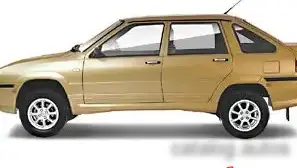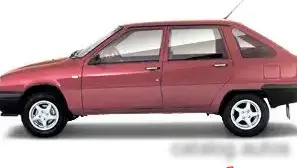
The Izh 2126, produced between 1993 and 2005, represents a significant, though often overlooked, chapter in the history of Soviet and early post-Soviet automotive manufacturing. Positioned as a compact hatchback, the 2126 was intended to modernize the IzhAvto plant’s offerings, building upon the foundations of the earlier Izh 2125. The 1.8-liter, 85 horsepower variant, while not the most powerful option available, was a mainstay of the lineup, aimed at providing affordable and relatively practical transportation for a broad segment of the Russian market. It was built on a modified version of the older 2125 platform, and represented a transitional vehicle as the factory struggled with modernization and economic challenges.
Technical Specifications
| Brand | Izh |
| Model | 2126 |
| Generation | 2126 |
| Type (Engine) | 1.8 (85 Hp) |
| Start of production | 1993 |
| End of production | 2005 |
| Powertrain Architecture | Internal Combustion engine |
| Body type | Hatchback |
| Seats | 5 |
| Doors | 5 |
| Fuel consumption (urban) | 9.1 l/100 km (25.8 US mpg, 31 UK mpg, 11 km/l) |
| Fuel consumption (extra urban) | 7.1 l/100 km (33.1 US mpg, 39.8 UK mpg, 14.1 km/l) |
| Fuel Type | Petrol (Gasoline) |
| Acceleration 0 – 100 km/h | 16 sec |
| Acceleration 0 – 62 mph | 16 sec |
| Acceleration 0 – 60 mph | 15.2 sec |
| Maximum speed | 157 km/h (97.56 mph) |
| Power | 85 Hp |
| Power per litre | 46.8 Hp/l |
| Torque | 135 Nm (99.57 lb.-ft.) |
| Engine layout | Front, Longitudinal |
| Engine displacement | 1816 cm3 (110.82 cu. in.) |
| Number of cylinders | 4 |
| Engine configuration | Inline |
| Number of valves per cylinder | 2 |
| Fuel injection system | Carburettor |
| Engine aspiration | Naturally aspirated engine |
| Valvetrain | OHC |
| Trunk (boot) space – minimum | 300 l (10.59 cu. ft.) |
| Trunk (boot) space – maximum | 958 l (33.83 cu. ft.) |
| Fuel tank capacity | 45 l (11.89 US gal, 9.9 UK gal) |
| Length | 4053 mm (159.57 in.) |
| Width | 1660 mm (65.35 in.) |
| Height | 1357 mm (53.43 in.) |
| Wheelbase | 2470 mm (97.24 in.) |
| Front track | 1390 mm (54.72 in.) |
| Rear track | 1370 mm (53.94 in.) |
| Drivetrain Architecture | The Internal combustion engine (ICE) drives the rear wheels of the vehicle. |
| Drive wheel | Rear wheel drive |
| Number of gears and type of gearbox | 5 gears, manual transmission |
| Front suspension | Spring Strut |
| Rear suspension | Coil spring |
| Front brakes | Disc |
| Rear brakes | Drum |
| Steering type | Steering rack and pinion |
| Tires size | 175/70 R13 |
Powertrain & Engine Architecture
The heart of the Izh 2126 1.8 was the ZMZ-406 engine, an inline four-cylinder, 1.8-liter (1816 cc) gasoline engine. This engine, while relatively simple in design, was a workhorse, known for its durability, though not its refinement. The 85 horsepower output was achieved through a relatively low compression ratio and a carburetor fuel delivery system – a technology increasingly outdated by the 1990s. The engine featured an overhead camshaft (OHC) valvetrain with two valves per cylinder. The longitudinal engine placement and rear-wheel drive configuration were carryovers from earlier Izh models, representing a distinctly older engineering philosophy compared to the increasingly prevalent front-wheel drive layouts of Western European and Japanese competitors. The 5-speed manual transmission was the standard offering, providing a reasonable spread of gears for the engine’s power band.
Driving Characteristics
The 1.8-liter, 85 hp Izh 2126 was not a performance car. Acceleration was leisurely, taking approximately 16 seconds to reach 100 km/h (62 mph). The carburetor contributed to a somewhat sluggish throttle response, and the engine needed to be revved to extract its maximum power. The rear-wheel drive layout provided a different driving experience than most contemporary compact cars, offering a degree of handling balance that was uncommon in its price range. However, the relatively soft suspension and limited grip of the 175/70 R13 tires meant that spirited cornering was not its forte. Compared to potential upgrades like a more powerful engine, the 1.8L offered a balance of affordability and usability, making it a practical choice for everyday driving.
Equipment & Trim Levels
The Izh 2126 1.8 was typically offered in a fairly basic trim level. Standard features included cloth upholstery, a simple dashboard layout, and manual windows and door locks. Heating and ventilation were standard, but air conditioning was rarely fitted. Optional extras were limited, often consisting of upgraded audio systems or minor cosmetic enhancements. The interior was functional but spartan, reflecting the car’s focus on affordability. The emphasis was on providing a reliable and practical means of transportation rather than luxury or comfort.
Chassis & Braking
The Izh 2126 utilized a relatively simple chassis design. The front suspension consisted of a MacPherson strut setup, while the rear employed a coil spring and trailing arm arrangement. Braking was equally straightforward, with disc brakes at the front and drum brakes at the rear. The steering was a rack and pinion system, providing reasonable precision, though it lacked the power assistance found in many Western cars. The suspension was tuned for comfort rather than handling, resulting in a somewhat soft and compliant ride. The rear drum brakes were a cost-saving measure, and their effectiveness was limited compared to disc brakes.
Market Reception & Comparison
The Izh 2126 1.8 was primarily sold within Russia and other former Soviet republics. It was positioned as an affordable alternative to imported used cars, and it found a niche among buyers who prioritized practicality and reliability over performance and refinement. Critics generally acknowledged its affordability and durability but criticized its outdated technology, lackluster performance, and basic interior. Compared to other trims in the Izh 2126 lineup, the 1.8-liter version offered the best fuel economy and the lowest purchase price, making it an attractive option for budget-conscious buyers. However, it lacked the performance of the more powerful engine options.
Legacy
The Izh 2126, and particularly the 1.8-liter variant, holds a unique place in the automotive history of Russia. While not a technologically advanced or particularly desirable car by Western standards, it provided affordable transportation for millions of people during a period of significant economic and social change. The ZMZ-406 engine proved to be remarkably durable, and many examples of the 2126 remain on the road today, often maintained by dedicated enthusiasts. In the used car market, the Izh 2126 1.8 is valued for its simplicity, affordability, and ease of maintenance. It represents a tangible link to a bygone era of Soviet automotive engineering, and it continues to evoke a sense of nostalgia for those who grew up with it.